The almost invisible innovations


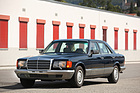
When the Mercedes-Benz S-Class of the W 126 model series was presented at the IAA in Frankfurt in September 1979, the shape and exterior details were discussed for the first time. The gray plastic bumpers and side panels caused a stir. Compared to the traditional W 116, the predecessor of the W 126, this was certainly the most obvious and also the most controversially debated external difference.
However, the new S-Class had a lot going for it behind the ears, or rather under the bodywork. It was more stable and accident-proof than its predecessor, stronger and at the same time lighter. Above all, however, the W 126 offered many barely visible innovations, such as the windshield wipers completely recessed under the hood, which reduced air resistance when not in use.

The height-adjustable anchoring points for the seat belts and, from 1981, the airbag in the steering wheel in conjunction with the belt tensioner were also new.
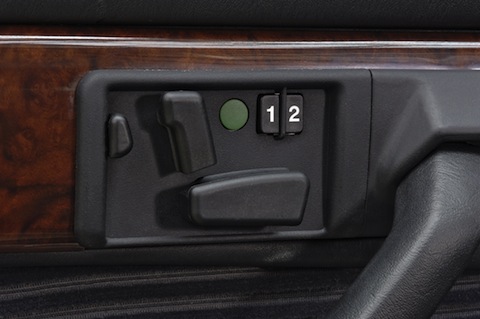
However, something that was actually obvious was widely copied, namely the electric seat adjustment by means of a switch modeled on the seat shape, which has since been copied many times and is still valid today in its comprehensibility and simplicity. However, it was precisely this finesse that many S-Classes did not have on the road, because of course this electrical aid cost extra money, as did a hundred other things, such as the airbag ( then still called an "airbag") with combined belt tensioner, which was available from 1981.

More on the innovative S-Class from 1979 can be found in the recently published vehicle report on the Mercedes-Benz 500 SE.