Progress? Three generations of top class in comparison


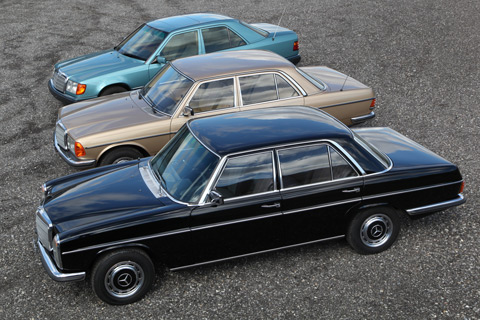
Not even the journalist colleagues from back then were allowed to do that! Driving three S-Class generations from three decades within a few days. They were the saloon benchmark of the sixties, seventies and eighties, the Mercedes-Benzmodel series W 108/109, W 116 and W 126.

The W 108/109 was built from 1965 to 1972, the top model was called the 300 SEL 6.3 with air suspension and a six-liter V8 engine (M 100 from the 600).

This was followed by the W 116, produced from 1972 to 1980, which was again available as the 450 SEL 6.9 with the now even larger V8 M100 with a displacement of 6.9 liters.
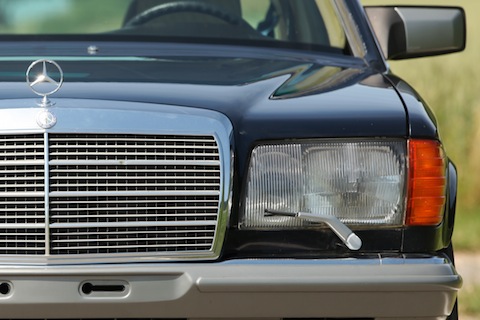
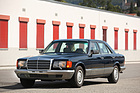
Its successor, the W 126, was presented in 1979 and was fitted with a light-alloy five-liter V8 engine right from the start, which meant that the old M 100 engine was no longer needed. After all, there was also a 560 SE/SEL from 1985 to 1991.
So how do these cars compare? In terms of character, they are surprisingly similar. Even with the top-of-the-range engines, they are hardly tempting to speed, but they are always fast gliders. They all roll comfortably and can be driven without any effort. They impress with their smooth running and good manners. And with "value", tangible quality based on careful development and production. Even today.

If you move from one of these S-Classes to the next, starting with the W 109, you can clearly see the triumph of plastic, but also the trend towards firmer, more supportive seats.

The steering wheels became thicker, but even the S-Class of the 1980s was not yet allowed to have a leather steering wheel. Comfort electrics increased with each new variant.

Whereas rear-view mirrors in the 1960s and 1970s were still adjusted manually and without electrical assistance, in the 1980s electricity was already helping, at least with the passenger mirror. Heating/ventilation systems became increasingly sophisticated and the radio also became much more convenient.
Visually, the differences are greater. From the delicate chrome and restrained face of the W 108/109 to the almost ostentatious appearance of the W 116 and the functional exterior of the W 126, the prevailing opinions and objectives of the time can be seen directly. Better does not always mean more beautiful, faster does not always mean more elegant.
The S-Class was always a pioneer. Innovations that were first introduced in the large Mercedes-Benz model series were often found 3, 5 or 10 years later in the mid-size class and a few years later in many small cars. Perhaps that is why these saloons seem so modern, especially the 30-year-old W 126.
It would be best to put all three of them in the garage right away, as almost perfect contemporary witnesses ...