Animated advertising in 2D and on paper

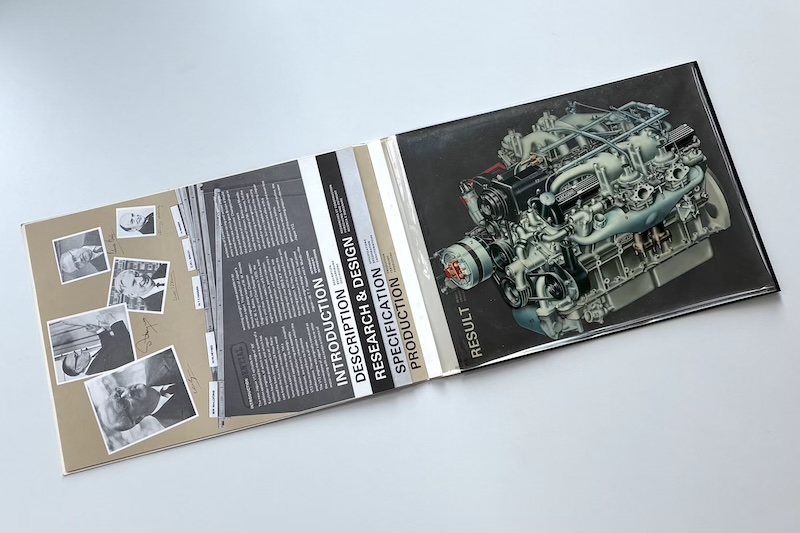
The cutaway image has a special significance in technical literature and also in advertising. The explanatory to voyeuristic look inside follows the well-known saying that a picture explains more than a thousand words.
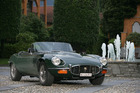
This also seems to have convinced Jaguar's advertising department in 1971, when they presented the first new engine since the legendary XK, the Jaguar E V12 Series 3, to the world public to accompany the premiere of this very V12.
The V12, now equipped with a single overhead camshaft, was accompanied by a new production facility for this engine. Jaguar was particularly proud of this. William Lyons, founder of Jaguar, had bought the old machines for the DOHC-XK engine from the then Standard Motor Company director John Black for £6,000 in 1942 in a cloak-and-dagger operation. The deal had gone through so quickly that Lyons had to inform his previous supplier for engines and chassis that all the material had already been transported away when the astonished Black changed his mind again. He had thought that no one would want to buy an inline six-cylinder after the war, but then changed his mind again - too late.
Lyon's coup was widely admired in the industry. But these engines were no longer state-of-the-art even when the XK went into production in 1949 and were badly worn out by the end of the 1960s. With the V12, however, Jaguar was back in tune with the times.
This was certainly one more reason to publish a separate brochure just for the new engine. It tells how a small team under Lyons was responsible for this V12. Bill Heynes, Wally Hassan, Claude Bailey and Harry Mundy are pictured in it. There are also pictures of the new production facilities. The whole thing is designed as a separate folding section with integrated pages, strange but useful.
The highlight, however, are the printed foils in the second part of the booklet. This allows the new V12 to be dismantled layer by layer, giving you a view of the inside of the aluminum machine. At the time, nobody could have predicted that this would one day become the most-built V12 in the world. Test driver Norman Dewis later commented on the new engine: "The V12 wasn't really necessary". But Dewis probably had other reasons for saying this, as he was only lucky to survive the accident involving the XJR13, the prototype with the four-camshaft V12, at the British automotive industry's MIRA test center.
The unique brochure on the Jaguar production V12 - even in German! - but now complements our constantly growing collection of historical advertising material and can be viewed HERE .
_RM.jpg)