"Like the brontosaurus" and similar workshop ideas

Comparisons with the thunder lizards - which is what Brontosaurus actually means - are usually not particularly flattering. In fact, I'm not always in the mood for flattery when it comes to a specific car in my fleet. "No wonder", many will say. If you have a Jaguar from the 1980s, you don't need to complain if it gives you cause for annoyance. But for once I have to give the all-clear, there are also positive surprises:
The end of the 2024 season meant a short drive for the Jaguar from the office to Auto Zürich in Oerlikon in November. On the way, the battery light had started to glow, but the charge indicator was still reasonably well within the charging range. Nevertheless, the idea of breaking down somewhere in Zurich's city traffic was not very uplifting.
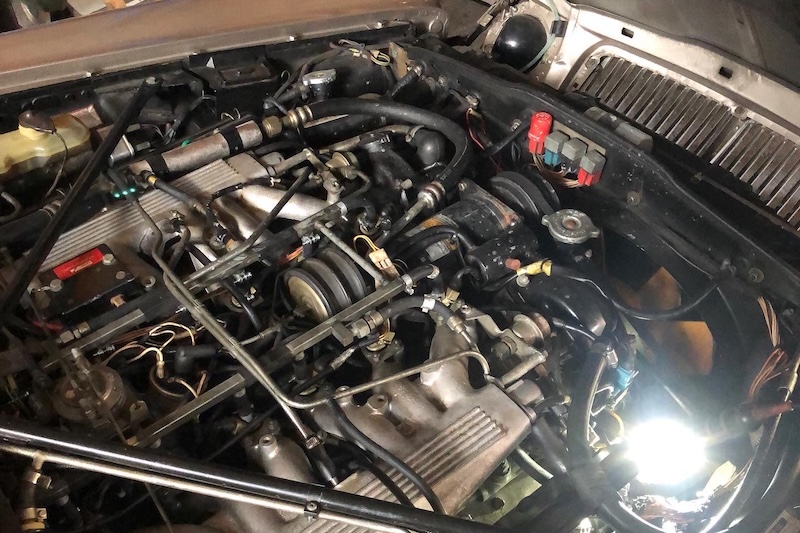
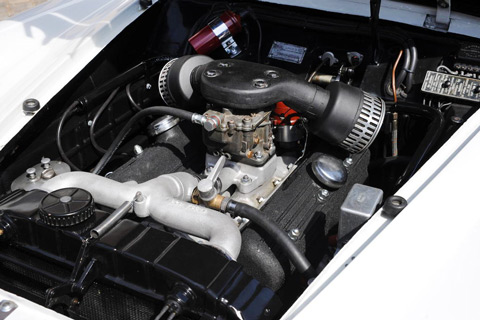
Engine compartment of a Jaguar XJ12 - a look into the snake pit, the alternator sits to the right of the engine block, below where the workshop light dazzles
What was strange, however, was that the electrical system showed no weaknesses whatsoever. Neither did the light dim after the engine stopped, nor did the starter motor have any trouble restarting the engine.
Despite the light being on, the journey home went without a hitch. And just as I sometimes solve my automotive problems, the Jaguar also went into winter storage untouched after these events - I would do that later. I had checked the alternator connections again beforehand, but the findings remained the same: The alternator charges reasonably well, but the light is still on.
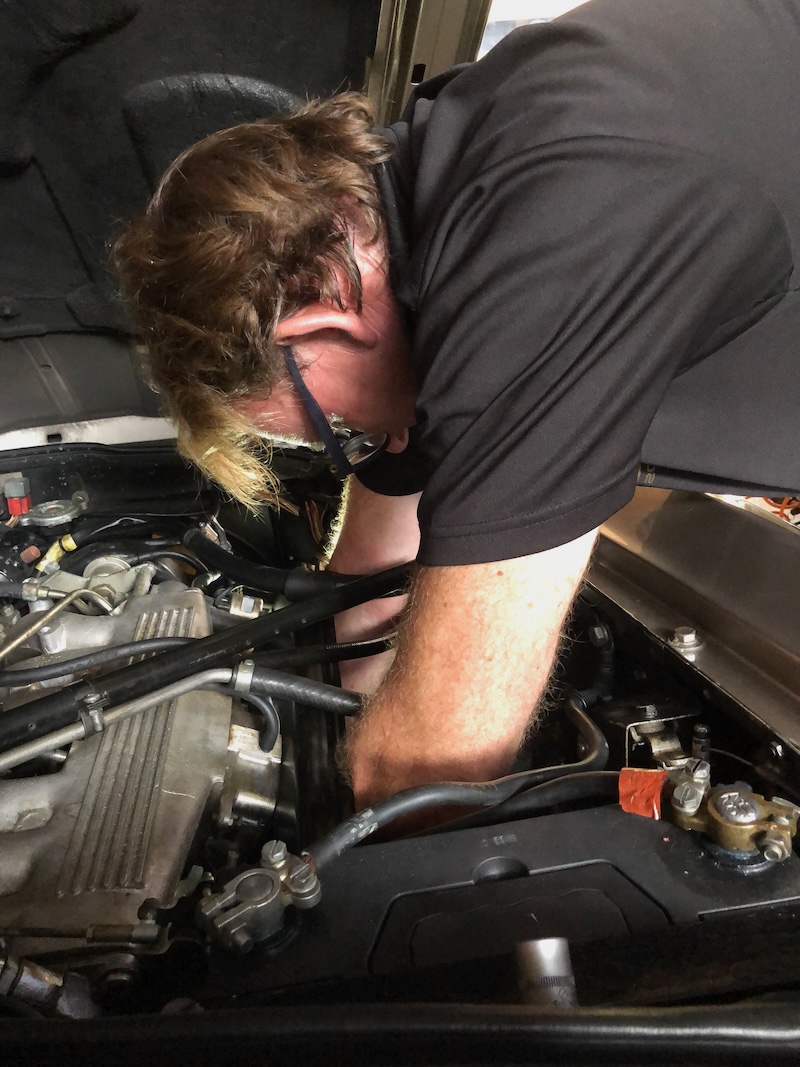
My hands were down there somewhere too...
With the approach of spring, my desire to get the Jaguar out again was - of course - awakened. But not before I had gotten to the bottom of the problem. Right from the start, I suspected that the cable for the alternator's excitation current was badly connected or had fallen off. In fact, this cable had already been extended with a piece inserted in between. Whether this happened at the factory remains uncertain. In any case, I reinstalled and secured the whole thing. The result was the same for both the charging indicator and the battery light! Thanks to a little courage and persistence, I nevertheless decided to go for a longer test drive.
And indeed: As if a copper worm had released a blockage somewhere, after a few kilometers the charge indicator did shoot up and the battery light went out. "Just like a brontosaurus!" the thought flashed through my mind. Just like when someone stepped on its tail back then: with a considerable delay until the signal arrived where it was supposed to. Certain dinosaurs supposedly had an extra nerve node in their spinal cord, a kind of second or auxiliary brain, so that the most important reflexes could be pre-processed there and transmitted subito to the giant's fist-sized brain - or so it is thought.
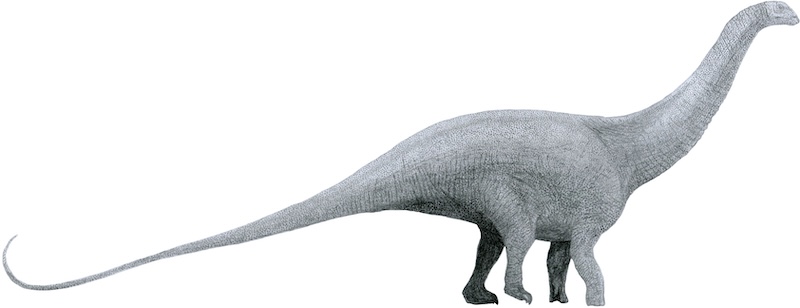
Allegedly had a long reaction time: Brontosaurus ©Wikipedia by John Parker
My burning question, along with some thoughts and memories of dinosaurs - my second passion as a child after cars - is now whether I repaired my car myself thanks to the new exciter power cable, or whether the Series 3 XJ Jaguar, which I still don't quite understand, simply knows how to repair itself. If this was the case, it happened with a delay, as with the Sauropod.
But don't underestimate them, the dinosaurs! We know that of all the large animals, they have inhabited this planet the longest. They could therefore have benefited from having a literally long line: Even when the Tyrannosaurus was long on their backside, they simply trotted on undaunted and - instead of panicking - saved their skin, for example when they rejoined their herd. The herd then joined forces to put the short-armed gobbler to flight.
But watch out! I'm just realizing that my imagination is running wild, so let's get back to my really important workshop topics: The DeSoto is still exactly as I brought it home from Lapalisse - the brake master cylinder should finally be replaced...