Could have just been a Bible ...

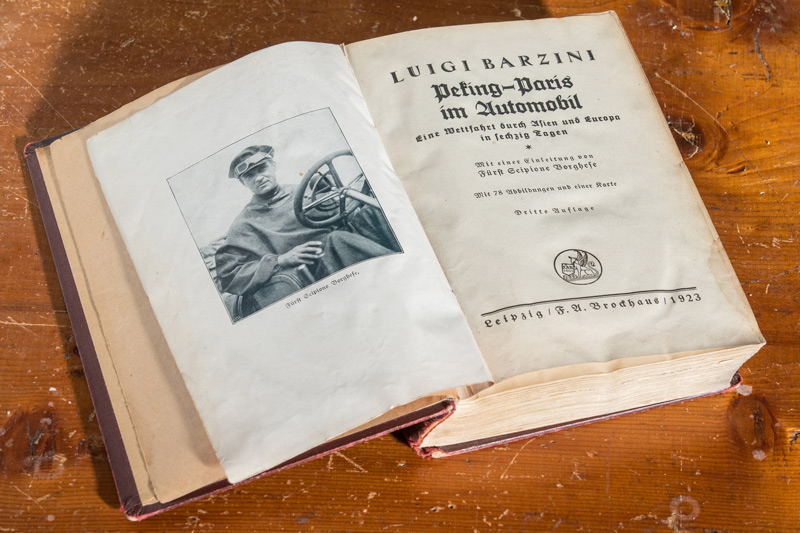
While the 8th Peking-Paris Rally is now on its way to the French capital via Mongolia, Kyrgyzstan, Uzbekistan, Kazakhstan and Azerbaijan, I found a book from 1923 in my father's estate that describes the first rally from 1907. It is already the third edition of the book documenting this early car race. The Parisian newspaper "Le Matin" advertised the 16,000 km race on January 31, 1907, for which there were no roads, let alone maps, but in the end only five teams took the boat trip to Beijing.
Although the rally was actually canceled due to too few participants, the five teams that arrived in Beijing started the adventure on their own. A magnum bottle of Mumm champagne awaited them in Paris as a prize. Fuel was transported in barrels on camel backs and spare parts on the "Trans-Siberian Railway" to predetermined stations. In the end, the Italian Prince Scipione Borghese and his mechanic Ettore Guizzardi won the "race" with the 7.5-liter Itala with 45 hp. They arrived in Paris on August 10, 1907, 20 days (!) before the second-placed Spyker 15 HP with Charles Goddard and Jean du Taillis.
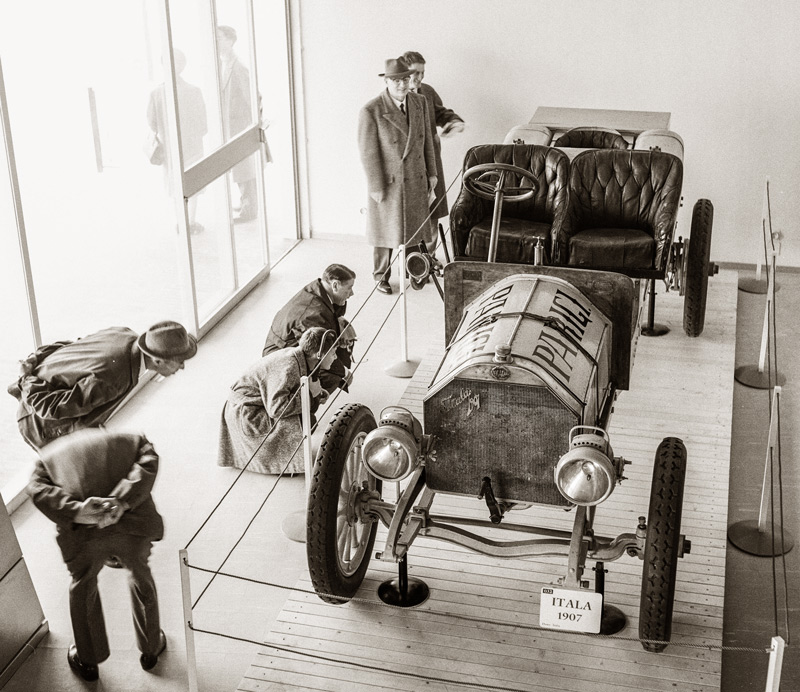
A reporter from the "Corriere della Sera" named Luigi Barzini also traveled with the winning team, who documented the entire journey and published the book "Peking-Paris in an automobile: a race through Asia and Europe in sixty days" in 1908.
Scipione Borghese wrote the following in the introduction to the book, which was still written in the old German script, in September 1907:
"When I accepted the challenge of the Parisian 'Le Matin', I had the following goal in mind: to show that a well-built automobile, managed with prudence and care, is capable of actually replacing draft animals on long journeys across terrain, with or without roads. What does it do if the automobile is pulled a few meters by human arms; what does it do if it has to be pulled out of the swamp or sand from time to time with the help of ropes and levers or loaded onto a ferry or a barge to cross watercourses that cannot be forded? Once these brief hindrances, which mean a few hours of delay, are over, the machine is once again capable of its usual power development, which no draft animal could withstand for so long and so continuously, but which it survives without significant damage in reliable, continuous work performance.
So after all this - despite our two months of effort, despite the rocks, rivers, deserts and forests, swamps and banquets that we have covered - someone has come along who claims that our journey has only proved one thing: that it is impossible to travel from Peking to Paris in an automobile! There is something barbaric in the sincerity of that sentence. But, let's admit it, it is literally true, and we proved that nowadays it is impossible to travel from Beijing to Paris in an uninterrupted journey, leaning back in the soft cushions of the vehicle, using only the engine of an automobile. It would therefore not be advisable from a financial point of view, based on our experience, to set up a regular automobile line to transport the small, highly elegant Chinese chansonettes from the capital of the Celestial Empire to the Moulin Rouge in Paris without tiring their tiny feet in the slightest."
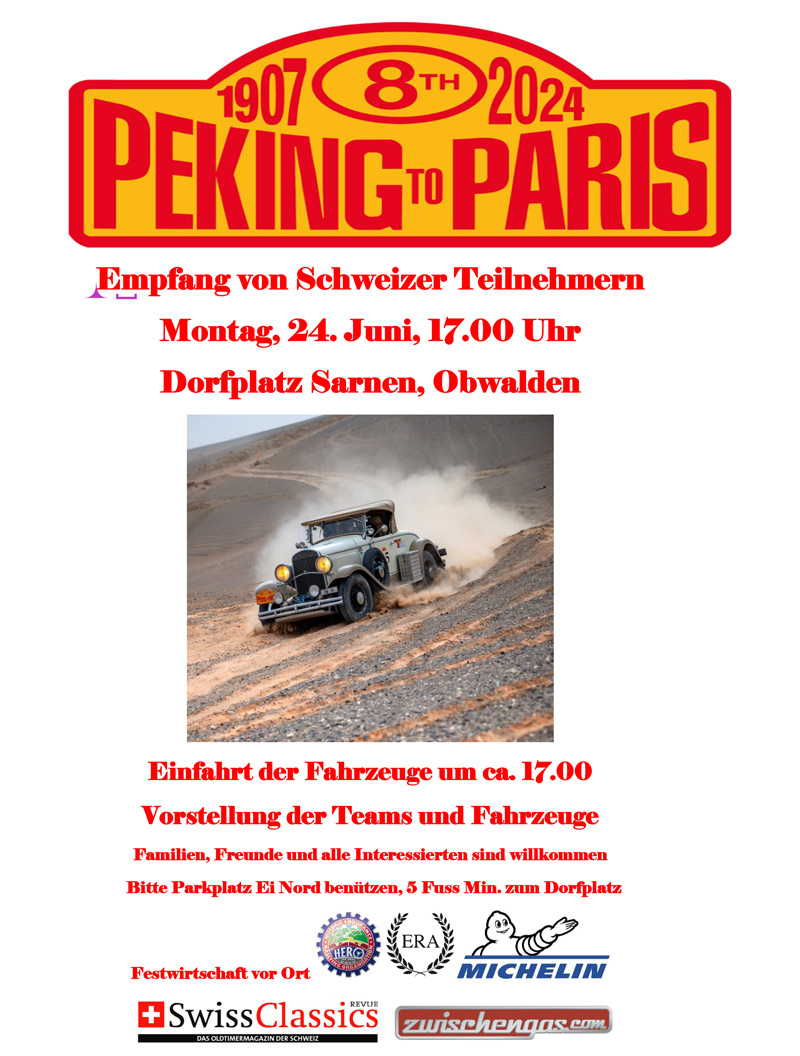
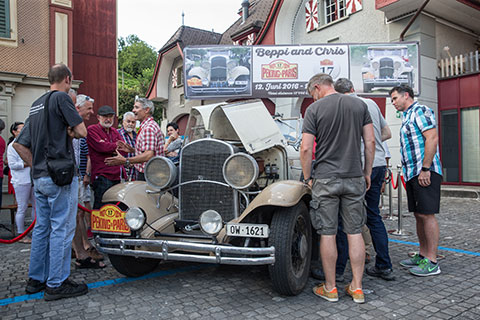
If you want to find out more about the 16,000 km adventure journey, you can meet the Swiss teams in Sarnen (Canton Obwalden) next Monday, June 24. From 17:00, they will be expected (with their vehicles, of course) directly from Paris on the village square.