Diesel back then - preheating 40 seconds


For people who started driving in the new millennium, diesel in passenger cars is a matter of course. However, this was not always the case. We quickly forget that 30 or 40 years ago you often had to fill up with diesel fuel at the truck fuel pumps. Or that every second passer-by wanted to warn you not to pour diesel into your beautiful VW Golf or baby Mercedes-Benz.
However, anyone who used a diesel engine in their car at the end of the 1940s was almost an exotic. At the time, diesel engines were almost on a par with their petrol alternatives when it came to power and torque. They even had a clear lead in terms of fuel consumption.
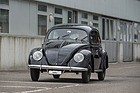
Automobil Revue tested the Mercedes-Benz 170 D in 1950 and proved precisely these advantages. However, because a diesel engine in a passenger car was still something special at the time, the magazine did not stop at measurements, but explained the peculiarities of the diesel on a total of three large newspaper pages. One point was the "ease of starting":
"Thanks to the use of powerful glow coils in the pre-chambers and the improvement in mixture formation, the engine has a significant ease of starting. Preheating takes place by pushing the glow starter switch from its zero position to the right and takes less time than the manufacturer specifies. At an outside temperature of 0° C, the engine started in a test after just 25 seconds and not after 40 seconds (as prescribed), and the warm engine started repeatedly without preheating. A pleasing characteristic of the diesel engine is its rapid readiness to drive; after the first engine revolutions, the vehicle can, indeed should, be driven away, although of course full throttle is not applied until a normal cooling water temperature is reached. The cold gasoline engine does not stop and kick back; the diesel engine is particularly suitable for vehicle owners who need to drive away immediately. For starting the completely cold engine in winter, a small opening is provided on the air filter for injecting a dose of gasoline, but this never had to be used, although the test vehicle was left outside several times during frosty nights."
In the 21st century (and before), no buyer would accept what is praised here. The "preheating" is only known from old books (and magazines), modern diesels start immediately and do not require manual injection of gasoline. However, diesel cars have remained economical to this day, but this has less to do with the outstanding engine technology than with the fuel. And here we remember engineer Michael May (known from the Ford Capri May Turbo), who expressed his opinion in Auto Motor und Sport in 1980:
"Cars with diesel engines should only be used in limited numbers in densely populated areas. They pollute the environment to an intolerable extent with solid emissions - soot and the like. In addition, the gasoline engine has the better overall efficiency. It achieves more kilometers per ton of crude oil for the same amount of crude oil. As long as we burn crude oil for heating, there is no reason to think about diesel engines at all - especially not in the displacement class below 1600 cm3.
Gasoline, we should not forget, is a waste product of mineral oil processing. There must be consumers for it."
Yes, a lot has happened since then, but not everything that was thought and written back then was wrong.
Incidentally, we have just published a comprehensive driving report on the petrol version of the Mercedes-Benz 170 V .