The first plastic - Bakelite

Bakelite, a fully synthetic plastic, was patented as early as 1906. It was a phenol-formaldehyde resin and was the brainchild of the enterprising Belgian inventor/chemist Leo Hendrik Baekeland. This was not Baekeland's first groundbreaking development, as he had already developed a new type of photographic paper that he was able to sell to Eastman Kodak, making him a successful businessman. He then began to work with electrochemistry and to investigate natural materials such as resins and fibers and to experiment with polymers. And so Bakelite was born. Bakelite was produced from 1909 by Bakelite GmbH in Germany, and later also by Union Carbide.
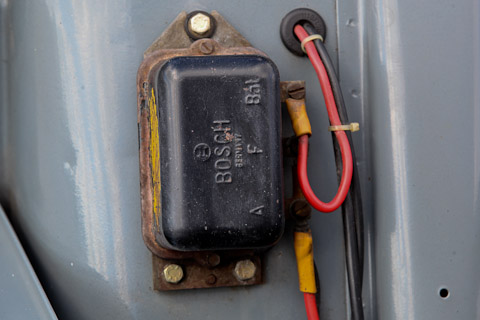
This material, which has the disadvantage of being brittle and fragile but provides electrical and thermal insulation, was used to create many objects that would otherwise have been unthinkable. The housings of telephones, radios and other electrical appliances were soon molded from Bakelite, but Bakelite was also used for operating elements, sockets, spark plug connectors, distributor caps and carburetor insulation. Phenolic resins reinforced with cotton fibers were even used for car bodies, namely for the East German Trabant.
And even today, since there are of course a large number of other plastics with improved properties, Bakelite is still used, for example in the manufacture of computer circuit boards. And early Bakelite objects are already sought after as collector's items anyway