When you still had prospects
01/31/2018
We've already discussed the view to the front a few times, but this time we're turning our attention to the rear. We are sitting in an estate car and want to reverse into a parking space, for example. More than 40 years ago, this was not a problem, as the models of the time had huge side and rear windows.
The Volvo 145, for example, had an almost luxurious glass house that was hardly disturbed by the B and C pillars.
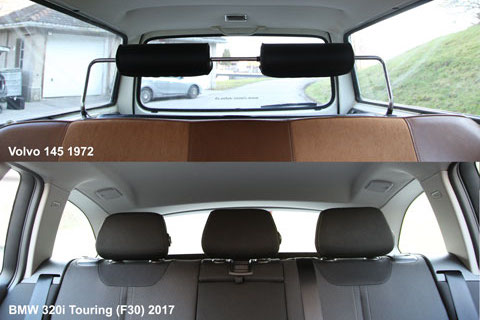
In modern times, as shown by the current BMW 320i Touring of the F30 series, this looks quite different. Not only has the amount of glass decreased, it is also made even more invisible by significantly wider B- and pillars. Headrests also obstruct the view. The 1972 Volvo did not even have these on the rear seats. What you can see in the picture are the headrests of the third row of seats, which could of course be folded down.
But even 10 or 20 years after the Volvo 145, the views to the rear were still much better, as the example of the Mercedes-Benz T model of the W123 series clearly shows.
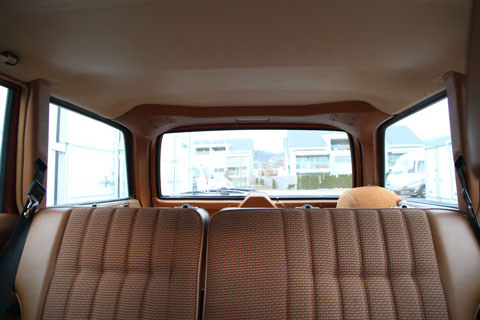
And BMW also had much clearer Touring models than the current ones, such as the E30 Touring or the E43 Touring. It was only when estate cars had to become ever flatter and sportier and the beltlines slid upwards in line with the saloons that visibility was lost. Of course, safety aspects also contributed to this. For example, a modern estate car should offer significantly more protection in the event of a rollover, but being able to "look out" is also part of safety and modern estate cars perform much worse in this respect ...
P.S. The pictures shown here were all taken from the driver's seat and with the same focal length.