Safe is safe


In 1973, the safety debate had reached a climax. Some vehicle manufacturers showed the way forward and presented studies to demonstrate what was conceivable and feasible in terms of passive safety.
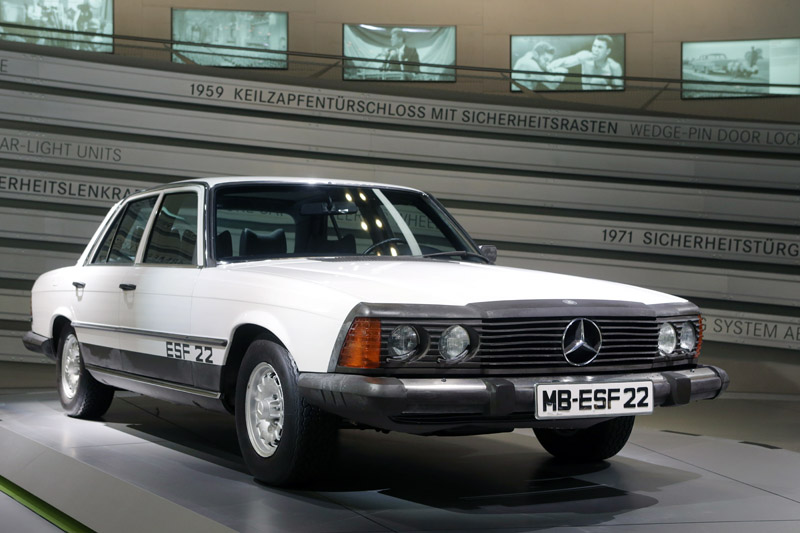
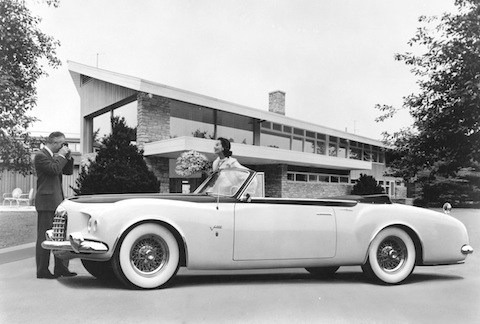
Mercedes-Benz, for example, built a safety test vehicle based on the 450 SE, the ESF 22( pictured above), which "looked appealing" and massively increased the chances of survival in the event of a frontal collision with a wall at speeds of up to 65 km/h. Equipped with seat belts with automatic retractors and force limiters and other safety features, however, it weighed over two tons and was 30 cm longer than the standard saloon, offering only four seats and would have been immensely expensive to produce.
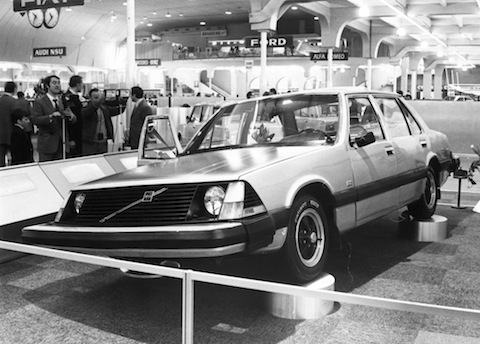
Volvo did not stand back and showed a safety car with massive rear and front overhangs designed as crumple zones to provide maximum protection for the car's occupants in the event of an accident.
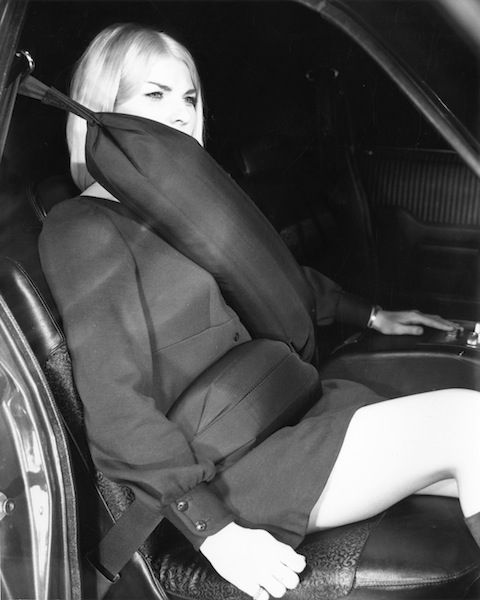
Experiments were also carried out on the inside, with one manufacturer proposing an airbag integrated into the seatbelt, for example.
The Automobil Revue commented in AR 15/1973 on the occasion of the fourth ESV conference in Kyoto: "The 'safety car' remains a research object far removed from reality, but technical accident safety can still be significantly improved.
Hardly any researcher at the time could have imagined the solutions and possibilities that 40 years later are installed in every car, starting with ABS, ESP, crumple zones integrated into the car structure, side impact protection, pedestrian protection, eight or more airbags, belt tensioners, fatigue warning systems, lane departure warning systems, etc..
But one thing has remained the same. Safety gains usually have to be paid for with considerable additional weight, as was the case in 1973.