Will future cars endanger classic cars?

Over the first 100 years or so, the automobile has undergone evolutionary development. Of course, many improvements have been made and the successor models were usually better than their predecessors. For example, braking distances from 100 km/h were reduced from 100 meters and more to a good 30 meters today. Engines became more powerful and active and passive safety increased. However, earlier vehicles were never excluded from traffic, even if certain restrictions on use had to be accepted, e.g. when only rear-wheel brakes were fitted.
But what lies ahead of us in the future could well spell the end of the classic car in normal road traffic. Since the end of the 1970s, electronics have been finding their way into cars, and for some years now, veritable computers (once called "electronic brains"!) have been added, which regulate or even enable more and more functions. It started with ABS, the anti-lock braking system, followed by ESP and increasingly sophisticated systems that mainly improved driving safety in borderline situations and are now capable of doing things that even an excellent driver can only respect, e.g. braking a single rear wheel to stabilize the vehicle (or trailer). These systems were followed by assistance systems, some of which have a warning function, but more and more of which intervene directly and actively in the control of the vehicle and, for example, initiate emergency braking autonomously.
All these systems work in relation to one car at a time. The future, however, will bring more and more technologies in which vehicles communicate with each other and are thus able to avoid accidents before they come to the worst, or allow entire convoys to travel long distances economically and in the smallest possible road space. " Car-to-car communication, sensors, cameras and powerful computers are the key to ultimately self-driving cars in which the driver reads the newspaper or is part of a conference call instead of worrying about changing direction or braking. Brave new world! And not science fiction, because all the things described are already working in the laboratory and to some extent in normal road traffic (as a test).
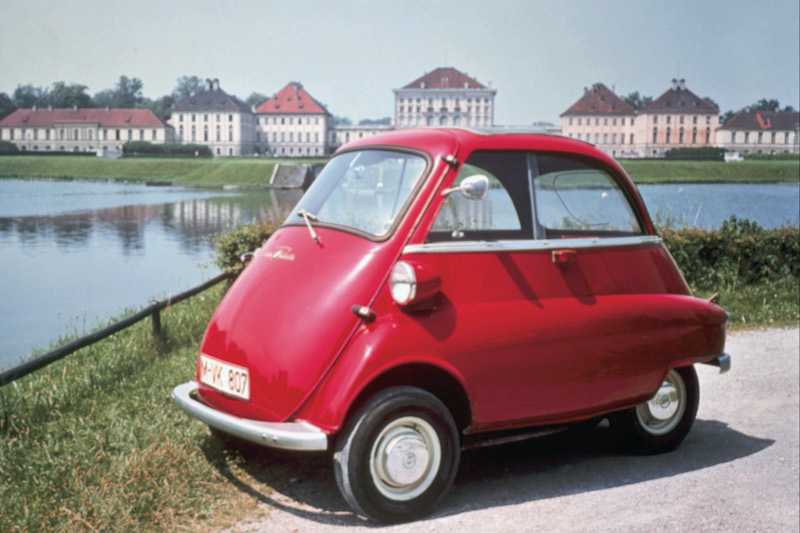
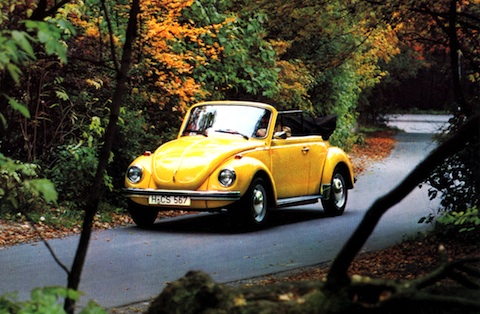
But what does this mean for our beloved classic cars, which have no electronic circuits whatsoever and would never think of "talking" to another car? How can a VW Beetle convertible fit into a convoy gliding along the freeway at 100 km/h with a distance of two meters from vehicle to vehicle and how will the future vehicle of the year 2025/2030 (these heralds of the future are hardly much further away) react if a Porsche 356 unexpectedly arrives from the right at a blind junction without first communicating car-to-car and therefore does not even exist from the point of view of the modern car?

In the worst case scenario, classic cars are then banned from the "normal" road and perhaps tolerated in cordoned-off areas. But perhaps older cars can simply be equipped with a minimal version of the electronic communication package so that they can at least marginally participate in the traffic of the future, albeit with restrictions.
Well, we'll know in ten, twenty or thirty years' time. Until then, we can still enjoy our classic cars on the roads of today.