Body shapes, or how a convertible becomes a roadster

This week, a contemporary car magazine features a "roadster comparison test". Vehicles with retractable sheet metal or fabric roofs are compared. None of the vehicles in the test have retractable windows; in fact, the side windows are retracted with modern electric motor assistance. And whether the emphasis is mainly on open-top operation can certainly be questioned.
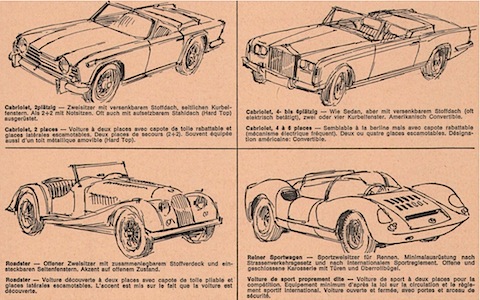
The definition of a roadster would be clear. If we look in the AR catalog from 1972, it says here: "Open two-seater with folding fabric top and retractable side windows. Accent on the open state." Of the vehicles currently on sale, at best a Morgan still meets these requirements, but certainly not a Z4 or SLK. According to the editors of Automobil-Revue, there were three types of open-top vehicle in 1972: 2-seater convertible, 4 to 5-seater convertible and roadster. The pure sports car did not count for the normal car consumer.
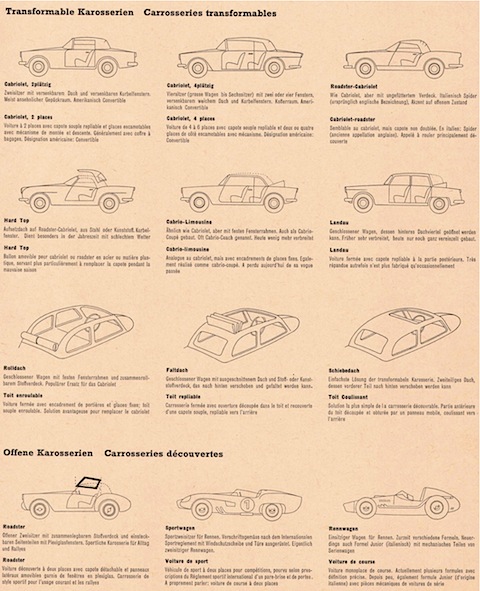
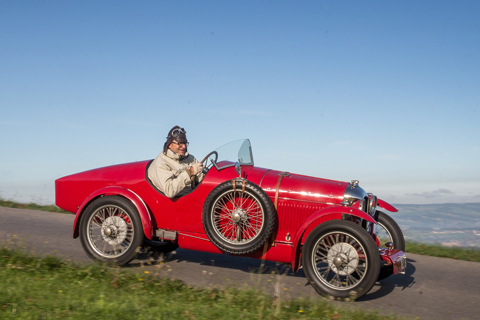
Over 50 years ago, the categorization of open-top vehicles was much more diverse. Back then, a distinction was made between "transformable" and"open" bodies. The pure roadster counted as an open body, and at that time it was allowed to have a folding fabric top and insertable Plexiglas windows . The (open) sports car still had a windshield, but there was no soft top. Today, we sometimes call these vehicles "barchetta".
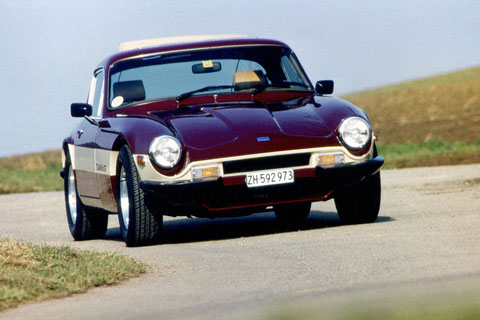
The usual convertibles were classified as transformable bodies at the time. These included the 2- or 4-seater convertible, the roadster convertible (now with an unlined top, unlike the convertible, also known as a spider), the convertible saloon (with a fixed window frame), the landau (only the rearmost part can be opened), as well as vehicles with a hard top, roll-top, folding roof or sliding roof. To be fair, the latter can no longer be described as truly open vehicles.
Long story short. It is (or was) actually clear what makes a roadster, even if modern marketing specialists would have us believe otherwise.