An (un)known car
Edward Hopper created paintings that speak of a deep loneliness that only those who know the endless expanse of the American landscape can paint. Born in New York in 1882, Hopper was an important representative of so-called American realism. Each of his paintings is a fleeting snapshot of a person's fate, lost in a rapidly changing society.
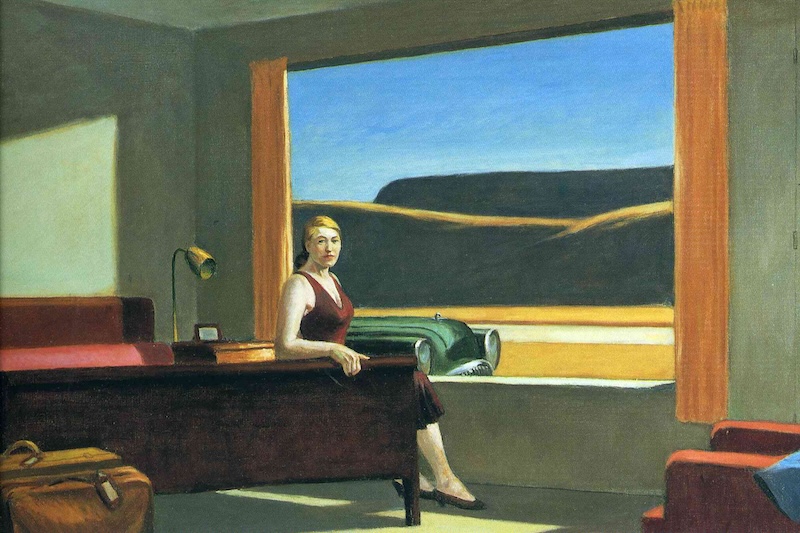
"Western Motel" from 1957 is one of his better-known pictures and shows a woman in an elegant red dress sitting on the edge of a hotel bed. She is tensely holding on to the end of the bed with her hand, ready to get up at any moment. Presumably she has been looking out of the window until just now, now she turns her gaze expectantly towards the viewer, perhaps in the direction of the room door. Will someone enter at that moment? Perhaps her new husband, with whom she is moving away from her home town?
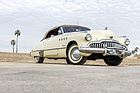
However, the woman is not at the center of the picture, but a car. The dark green hood of a car parked in front of the motel can be seen half hidden in the window. The brand emblem is missing. In the articles on Hopper's "Western Motel", nobody has bothered to identify the car more closely. But that wouldn't be so difficult, because with its striking silhouette and oval headlights, the Buick Special built in '53 is easy to recognize - the last Buick with an inline eight-cylinder engine. Its eye-catching "waterfall grille" with vertical chrome bars is only just visible.

At the time, the Buick Special was at the lower end of the model range, but still more expensive than a Chevrolet or Ford. Despite this, almost 900,000 units were sold between 1945 and 1953. The clientele was probably mainly middle-class couples and families who wanted to afford a classy means of transportation. The luggage in front of the bed suggests that Hopper imagined the Buick as a station wagon when he painted it.
The play of light and shadow is typical of Hopper. The position of the sun reveals that it is still early in the morning. After a less than restful night in the motel, the bags are packed and the bed is made. The man who might be coming in the door at this moment will now carry the luggage to the trunk of the Buick and hold the passenger door open for his wife. Then they speed along the country road towards the sun, heading east.
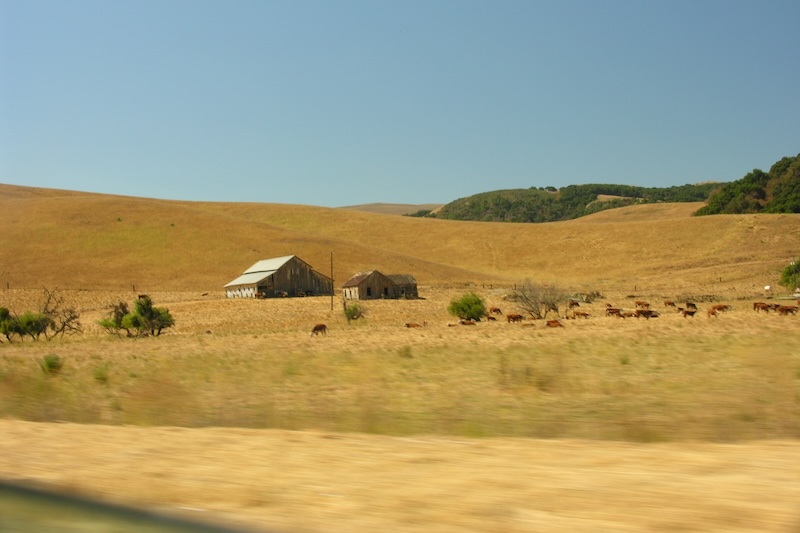
Bare hills pass by on the left, glowing golden in the sun. These hills are known as "golden hills" in California and are formed when the grass, which was still green in spring, withers in late summer. Hopper himself had traveled the West Coast by car and therefore knew these landscapes well. The road takes the Buick away from the big coastal cities like San Francisco or Los Angeles and further and further into the sparsely populated hinterland.
That would at least explain the wistfulness in the woman's eyes. The vibrant city of her youth disappears in the rear-view mirror, the road leads to an uncertain future in the countryside. Will she regret putting on the high heels when she gets out of the car? The Buick drives on, a symbol of the dreams of the aspiring middle class who want to build a new life for themselves: a car, a house, a family.