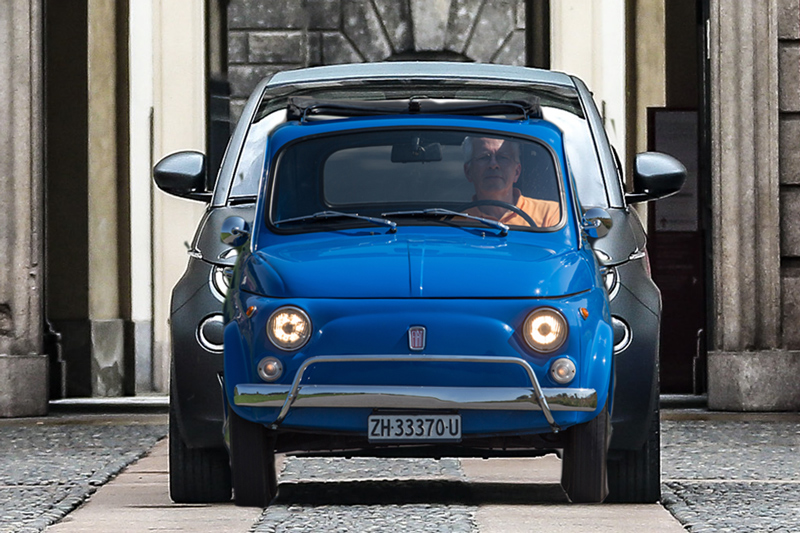
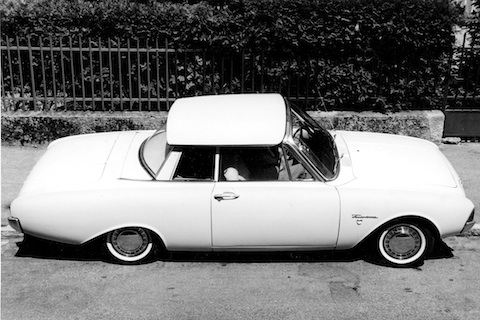
Not only ever wider, but also ever higher

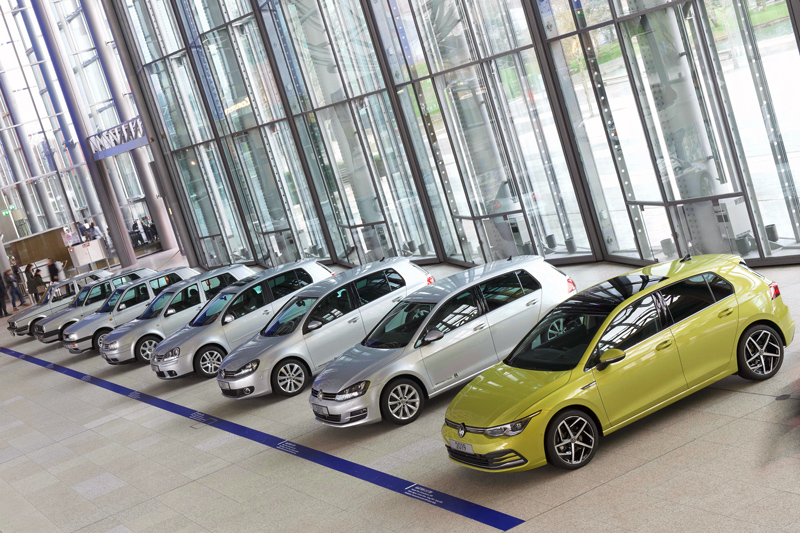
The fact that cars are getting wider and wider is a much-discussed topic. However, the steady increase in height is somewhat overlooked. And this is by no means about the SUV category. Let's take the Golf and the height specifications for the eighth generation plus the ID-3 as an example:
- Golf 1: 1390 mm
- Golf 2: 1395 mm
- Golf 3: 1405 mm
- Golf 4: 1439 mm
- Golf 5: 1470 mm
- Golf 6: 1461 mm
- Golf 7: 1442 mm
- Golf 8: 1458 mm
- ID-3: 1564 mm
With a few exceptions, the "ordinary" Golf has always been higher, almost seven centimeters in total. The ID-3 goes one better with an additional nine centimeters.
The phenomenon also affects classic business saloons, as a comparison of the Siebner series from BMW shows:
- BMW 7 Series E23: 1430 mm
- BMW 7 Series E32: 1400 mm
- BMW 7 Series E38: 1425 mm
- BMW 7 Series E65: 1491 mm
- BMW 7 Series F01: 1479 mm
- BMW 7 Series G11: 1467 mm
- BMW 7 Series G70: 1544 mm
Here, too, there are almost 15 centimeters between the minimum and maximum.
The recent increase in height is largely due to the batteries installed in the floor, but on the whole it is always about comfort and the feeling of space. The popular sunroofs probably also led to increasing height requirements. Of course, people and their own growth also contributed to the development.
Higher cars are advantageous from the inside, but they have disadvantages for the automotive system. The additional centimeters in height increase air resistance due to the larger cross-sectional area. In addition, the higher car's center of gravity increases, which can be suboptimal for driving characteristics. And finally, loading a roof rack can become more difficult the higher it is mounted.
What do you think, dear readers, about the height increase of the automobile? Were cars high enough for you in the past or do you welcome more height? Leave your comments!