Classic cars are slow

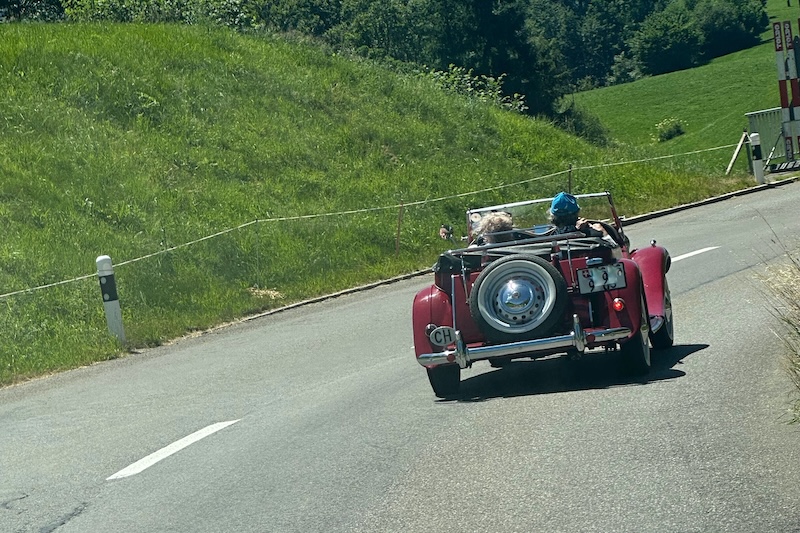
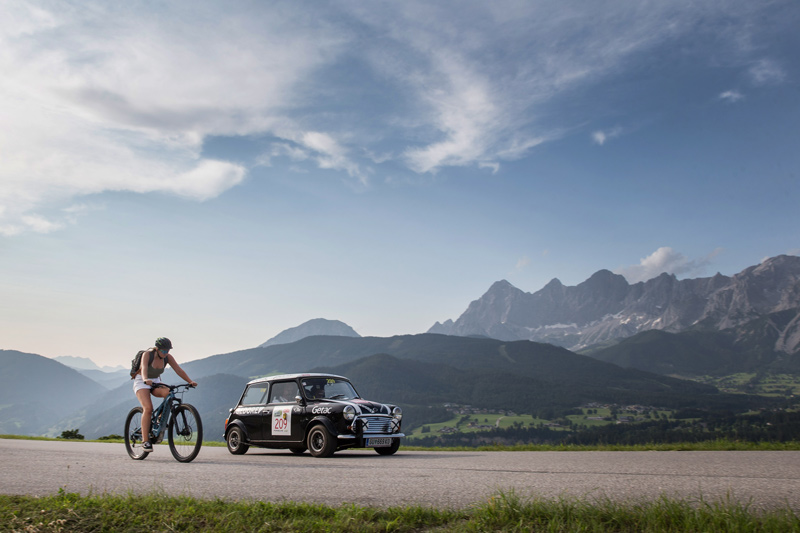
Summer heat and a blinding sun may cause you not to drive up to the legal speed limit. In Switzerland, this is 80 km/h outside built-up areas. However, there are also technical reasons for not venturing that far in a classic, for example with pre-war cars. My Graham-Paige, for example, easily marches past the eighty mark in a straight line, the 4.8-liter six-cylinder engine revs comfortably and the hydraulic brakes on this 1929 car inspire confidence. However, anyone who remembers the Pope story will know that the chassis of the American upper mid-range car of the time was not particularly good. This means that you have to take a lot of momentum out of the car before cornering and absorb energy. This may occasionally irritate those behind. However, if this is done with foresight and consideration, then everyone can adjust to it. I usually let the annoyed drivers pass me after the bend before opening the throttle again myself. The same applies to the VW Transporter, by the way. Yes, the T1s are slow - classic cars are slow and...
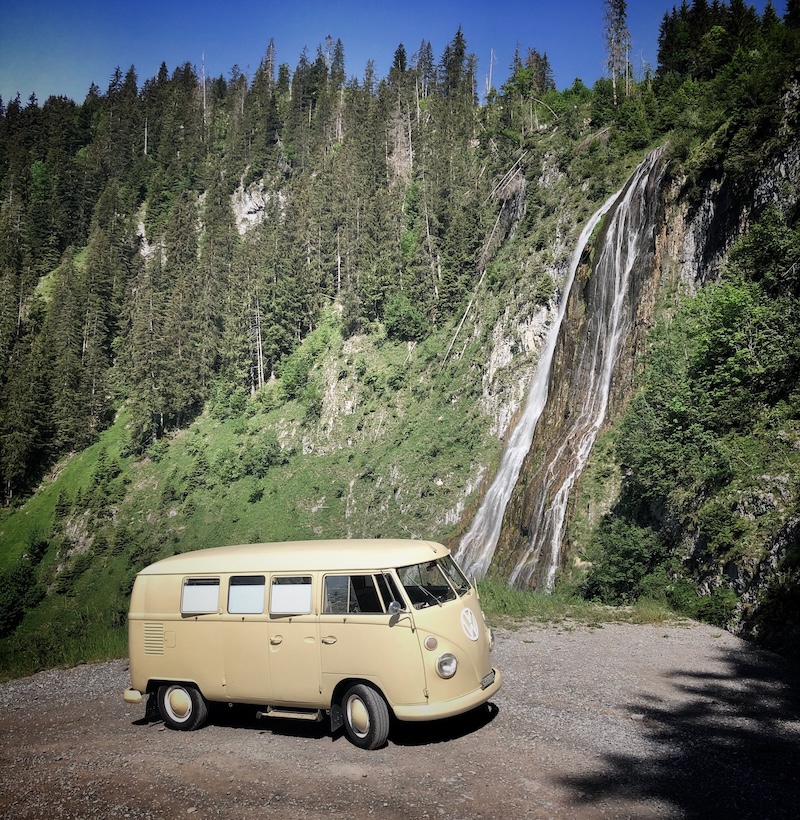
Terribly slow, especially uphill!
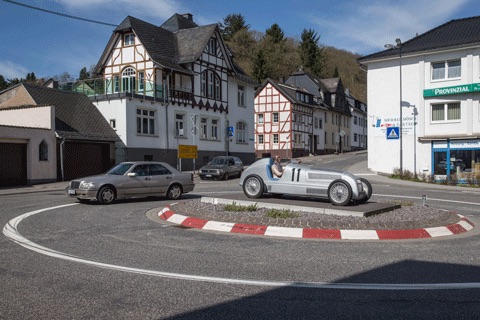
Really all of them? Of course not! Anyone who has ever been overtaken by an Alfa Romeo 6C 1750 GS or a Bugatti 35 knows this, not to mention anyone who has ever had the privilege of driving one themselves. However, sometimes the environment - in other words - the dear fellow motorists don't seem to want to take any notice of this. How many times have I been cut off at the traffic circle at the very last second, or has someone turned quickly into the road in front of me, even though there was no traffic behind? Yes, classic cars ARE slow... That means we usually approach at a snail's pace. There's still plenty of time to pull in. Or - much worse - the poor, coerced fellow motorist is threatened with having to look at the back of our car for a while while driving at a crawl. Of course, this must not happen, so always be ready to brake when we are on the road in the old car. The more exposed the headlights or mudguards, the more...
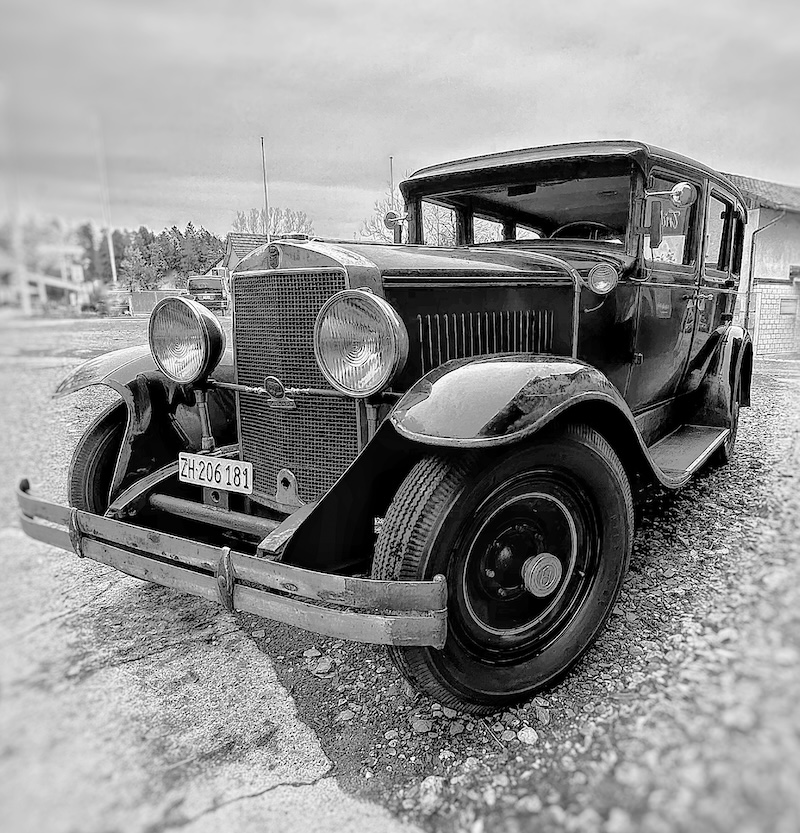
Exposed mudguards and headlights = enough time to turn into the traffic circle just before it...
But: A speed of 80 km/h can be achieved reasonably unspectacularly with most post-war cars. So it's not absolutely necessary to speed along the country road at 40 to 60. Of course, anyone who wants to do this should not be tempted to drive beyond their own limits, but I recommend that you indulge in comfort and take frequent breaks. You can do this by pulling to the side and letting the mile-long queue pass somewhere behind you. I also like to give this recommendation to those pass riders who, for various reasons, are not able to ride uphill at more than 40 km/h. If this is for fear of overheating, for example, I can say from my own experience that there is much less risk of the coolant boiling if you drive quickly in the medium speed range. But everyone is free to decide how they want to drive. The only thing is that you should use the specially designated parking spaces - or at least look in the rear-view mirror from time to time.
Speaking of rear-view mirrors! I remember a trip over the Klausen Pass with a friend in his MG BGT V8, incidentally one of only seven press vehicles with left-hand drive. We had just passed Unterschächen in the direction of Bürglen when a Lotus Elan overtook us at full speed on the bend. The car was a few years older than our MG from 1973 - a classic car, but driven in the right way.