Caught in the wild

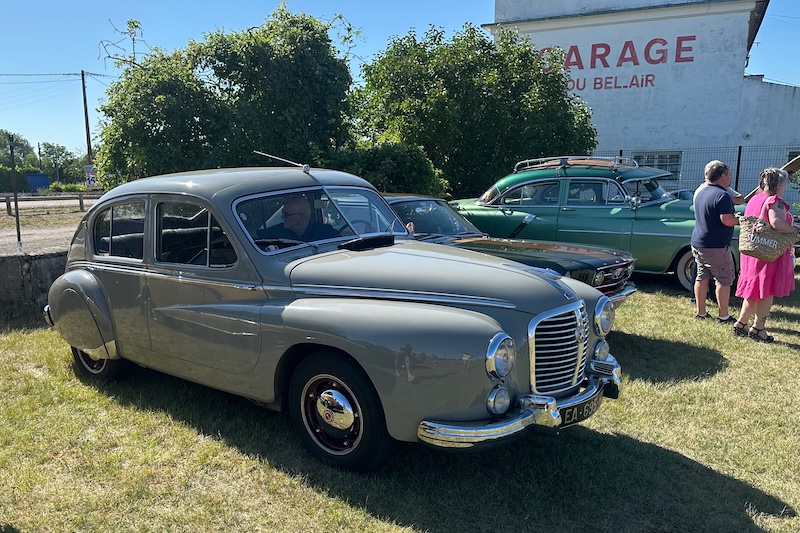
There are cars that we have often read about that deserve recognition because they represent an engineering masterpiece. Or they were remarkably crazy, somehow simply completely different. Or they were all of the above. The Hotchkiss-Grégoire is one such car. It is true that the essential principles of automobile construction have been adhered to in this car. But from the four-cylinder boxer engine to the cast aluminum body structure or the suspension with extra-long wishbones at the front and trailing arms at the rear, also made of aluminum of course - Jean Albert Grégoire had decided to go his own way in 1947. He did this after he had developed a lightweight small car, the Dyna X, for the Panhard family, for example, with which they were able to re-enter the automobile business, which now looked completely different in France after the Second World War. Actually, the idea was to offer this car to Mr. Pigozzi from Simca. But that is not the point here.
Hotchkiss in Paris was a company that found it just as difficult to come to terms with the events in the Hexagon after 1945, and was also unable to find its new place in the highly regulated market of the Fourth Republic. Grégoire ended up there in 1949 - and not for the first time. The whole story can be found here. In short - or bref, as the French say - around 250 Hotchkiss-Grégoire cars were built, because it was a huge flop, completely over-engineered and massively too expensive. It cost around 25,000 francs in Switzerland in 1950, a car with a 2.2-liter displacement and 70 hp. An Alfa Romeo 6C 2500 was not far behind. No wonder, then, that hardly anyone had ever seen such a car anywhere, let alone one that drove perfectly.
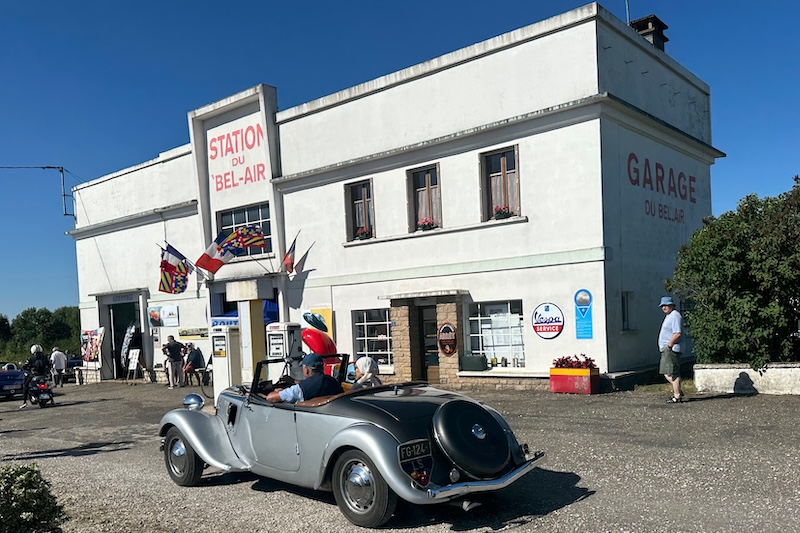
I felt the same way, until today: a strange roaring noise was heard outside the Station du Bel-Air when we went to look at this old garage on the former Nationale 6 in France, about 20 kilometers from Beaune. The occasion was the monthly classic car meeting of the AOC (Automobiles d'Origine et de Collection, Beaune) around this magical place. And lo and behold, a Grégoire drove onto the square behind the workshop. "Gray like the car in the catalog," said the owner, explaining how he had found the car in Tunisia. The four-door saloon was in absolutely perfect condition, a real tour de force by the restorer on a car for which there is virtually nothing and whose components you can hardly get very far with the usual specialist knowledge. Of course, there is a lot more to tell about our visit to the Station du Bel-Air, but when asked about our first impression after a 700-kilometer trip in two days, this car - and its strangely roaring exhaust note - probably came first.