Clunk-O-Matic - the disadvantages of both?

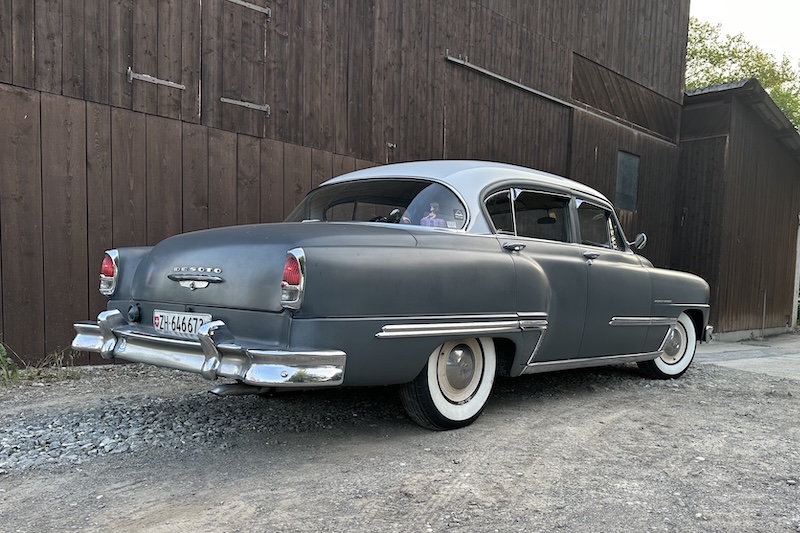
It's in the nature of things when you're out and about in more unusual cars that you're asked questions at every opportunity. Some of these questions are obvious, such as the make or origin, the year or the fuel consumption - others less so. My 1953 DeSoto is naturally conspicuous just because of its expansive size, but a keen observer once noticed that the car obviously changes gears with a loud "clack" - almost like a classic Vespa. The experts among you may know the cause of this. I suspect that this should not be the normal case with the Vespa. With the DeSoto it is - normal. The gearbox shifts with a loud noise. This earned the peculiar box the nickname "Clunk-O-Matic" back in the 1940s, when Chrysler first used it in the two top divisions Chrysler and DeSoto in 1946.
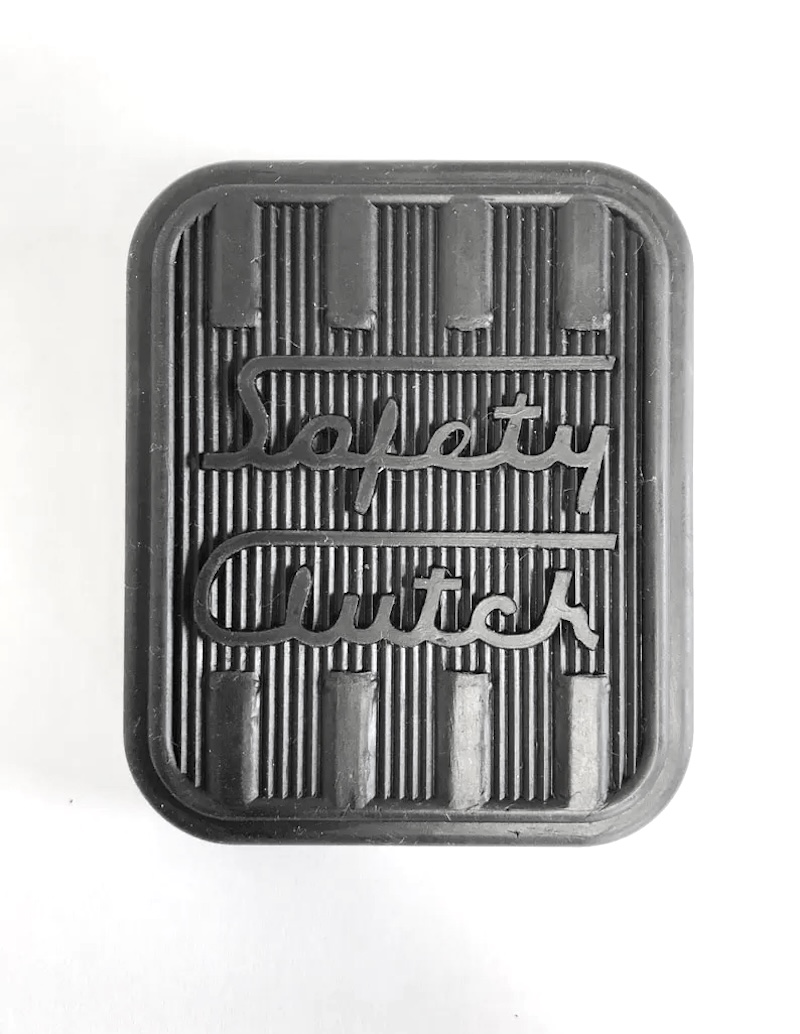
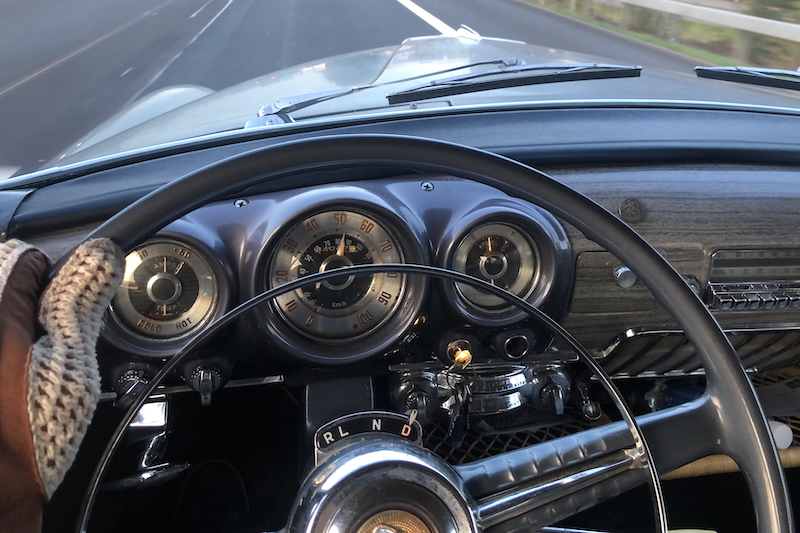
But not all gear changes are noisy. What's more, not all gear changes are automatic. Despite a quadrant on the steering wheel labeled "R-L-N-D", there is a clutch pedal. It even says "Safety Clutch" on it. But you don't need to press it when stopping, because the car also has a fluid clutch - in tandem with the normal single-plate dry clutch.
That all sounds terribly complicated, doesn't it? In a way, it is. On the other hand, anyone who can see behind the secrets of this gearbox - called Chrysler-Intern M6 - is amazed at its simplicity compared to a Hydramatic from Cadillac or Oldsmobile from the same period.
Double game
The M6 has de facto four gears, but you usually only need two or three of them. When starting with "L" for "Low", the first gear of the manual transmission with two mechanically actuated gears and an additional underdrive - that's right, the opposite of an overdrive - is engaged. If the driver now accelerates and lifts their foot at a speed above around 15 km/h, the underdrive disengages with a loud "clack" and gear number 2 is engaged. When accelerating further, it is now necessary to operate the clutch and move the delicate gearshift on the steering column to "D". The mechanical 2nd gear is then engaged. In other words, it is effectively 4th gear. This is the direct gear with a ratio of 1:1. If the 1.7-ton, 118-hp vehicle encounters an incline, the driver can also use kick-down to select 3rd gear. You never get there directly during a normal acceleration process.
This means that the underdrive is engaged upstream. This is activated electro-hydraulically in the M6 transmission. Its predecessor still relied on pneumatic activation of the underdrive. To protect the entire mechanism, it has a freewheel to prevent load change impacts. In addition, the ignition is briefly interrupted during the shift process. Chrysler called this transmission in its models "Presto-Matic", at DeSoto it was this or the "Tip-Toe-Shift". Dodge received the same system in 1948 as Gyro-Drive and the low-budget Plymouth brand did not achieve it as "High-Drive" until 1953. But from the end of 1953, the top divisions already had the choice of a two-speed fully automatic transmission, the "Powerflite" with torque converter. This torque converter was also fitted to the last semi-automatic models on request.
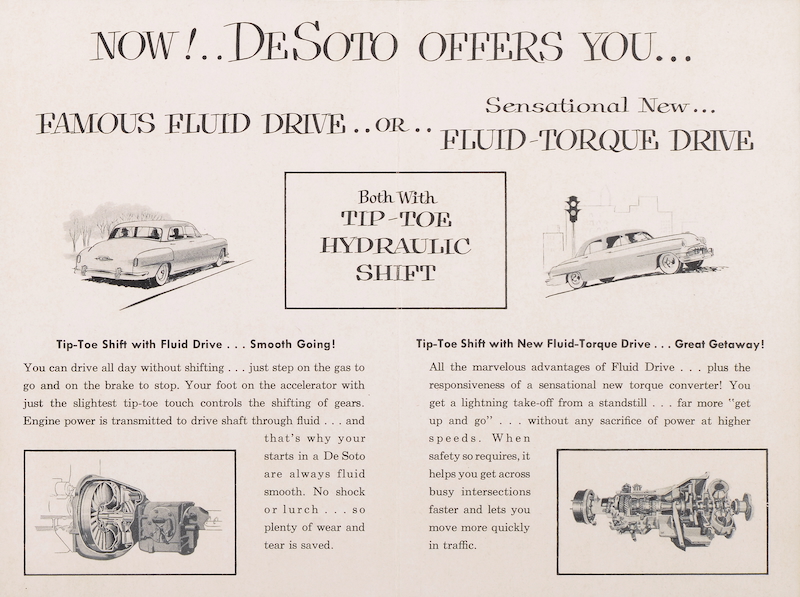
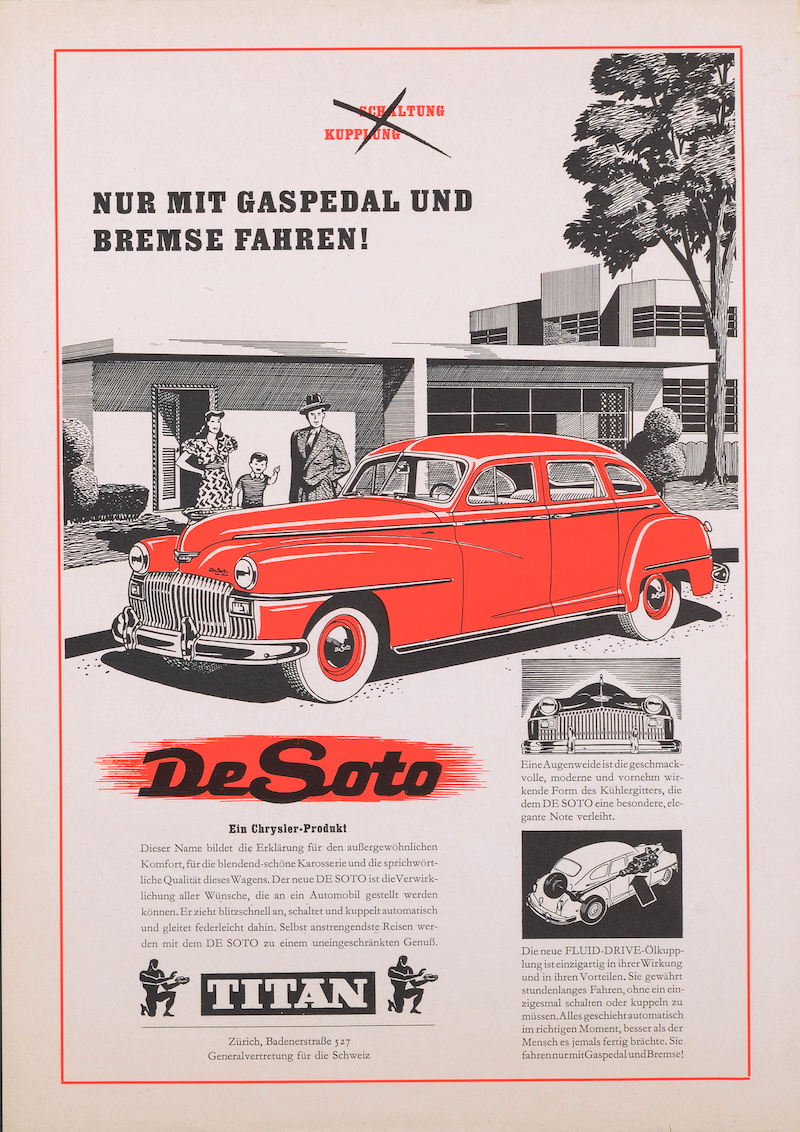
So, everything should be clear now, right? No, wait, I haven't yet explained the simplicity in question. In short: the gearbox has a simple mechanism and a hydraulic piston for the underdrive, no complicated valves, no brake bands and the like. In terms of sealing technology, only the fluid coupling bush presents a certain challenge. It has a graphite ring, but this can be bought new. The transmission is lubricated with 10 W engine oil. The fluid coupling requires a hydraulic oil with antifoam, similar to that used in old tractor hydraulics, in accordance with ISO 32. The old Chrysler Mopar fluid is no longer available and ATF - automatic transmission fluid - definitely doesn't belong in there. That's it. No, I almost forgot something else: It says "Fluiddrive" on the dashboard of the car. Some people confuse this with the semi-automatic transmission. But this only refers to the clutch, as it was also available with a conventional, manual three-speed gearbox.
But why did I choose such a car? And did I know what I was getting myself into? The answer is yes, I knew exactly what was built into it. The reason is relatively simple: I wanted to tow a caravan. At the time, a 1954 DeSoto, a Firedome V8 with the early Hemi engine, a 4.5-liter with 170 hp for the 1954 version, would also have been available. But the Powerflite gearbox, which more or less does what it wants, was attached to it. The Tip-Toe-Shift gearshift, on the other hand, can be influenced directly. The driver determines when to upshift and when to downshift. Before a hairpin bend, for example, the transmission can be shifted down with feeling like a manual gearbox, so that the power is available at the right time to pull the car out of the bend. I like that - just like the "click" sound.