American cars or cars from America?

Trump wants to go through with it and increase tariffs on imported cars and car parts by 25 percent from April 3. He hopes that this will bring more added value back into the country and expects this to lead to re-industrialization. However, the fact that around 50 percent of all cars sold in the USA today come from abroad is to a large extent not the "fault" of foreign manufacturers, if this word can be used at all in this context. The US manufacturers have been pushing for their own car industry to move abroad from a very early stage.
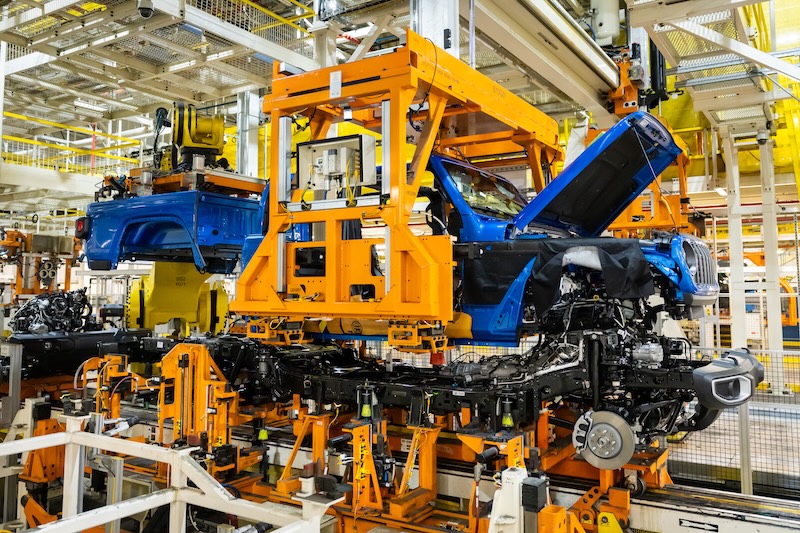
Jeep production in Toledo (Ohio) in the USA
Admittedly, for a very long time this had to do with the customs and trade policies of those countries in which the US car manufacturers wanted to be present, but in a free market economy it was always the Americans who chose the best and most economically favorable solutions. National sensitivities usually played a subordinate role. The primary goal was to make money, not to emulate patriotic ideas. In recent history, however, the main reason for the withdrawal of production capacities was not more tariffs, but lower production costs abroad (energy and wages).
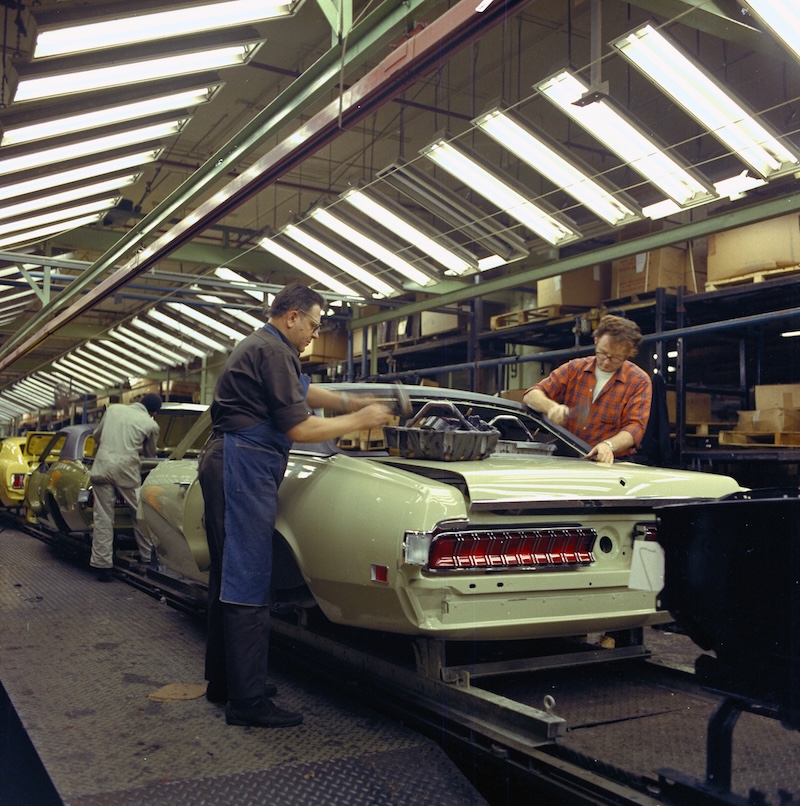
When all seemed right with the world: Mercury Cougar, built in 1973 at Ford's factory in Dearborn MI
Let's take Ford as an example: the manufacturer opened its first overseas factory in Trafford Park in England as early as 1911. This production facility was replaced by Dagenham in 1931. The construction of Ford automobiles began in South America in 1916, and by 1925 there were Ford factories or assembly plants around the globe in almost every reasonably industrialized country, some of which, like the Ford plants in Cologne opened in 1931, were to develop into independent manufacturers with their own models and their own testing department. Even then, Ford's impressive 40 percent share of the world market in the 1920s was not covered exclusively by production in US factories.
Anyone observing the latest events at Ford Europe will notice, however, that the former diversification, the skillful handling of the wishes of individual markets, which began at Ford after the adoption of the standard Model T, the first world car, and continues to this day, is on the wane. Following the disappearance of smaller, almost autonomous "cells" with their own product structure, such as in France as early as 1954 with the sale of the Ford factory to Simca (the Vedette) or in the UK in the 1970s with the unification of the model range with Cologne, and more recently with the complete dissolution of the Ford-dominated car industry in Australia, it now looks as if the "blue plum" in Europe also wants to increasingly withdraw to the USA and develop the models for Europe from there. It remains to be seen how much enthusiasm and effort this will take.

Ford factory in Saarlouis in the 1970s, where the Ford Escort was first built. The end of car production has been announced for November 2025; the site will be taken over by the Saarland Economic Development Corporation.
A similar story could be told about General Motors, although the withdrawal from Europe has already been completed quite thoroughly here; with the sale of Vauxhall/Opel to PSA in 2017, the once largest car manufacturer in the world in Europe - with marginalia such as the Corvette or Cadillac - has become a marginal note. Meanwhile, Korean manufacturers have gained a foothold in Europe, and not just with production facilities. It is no coincidence that the "Hyundai Motor Technical Center Europe" is located where a GM branch once employed a large staff of development engineers: In Rüsselsheim.
So if you want to venture a look into the future, the sealing off of the US market through higher import duties can only mean one thing: The market will shrink because cars will become more expensive, not only those that are imported but also those that are produced locally, because dealers will certainly not differentiate between imported and US-produced cars in the general trend of price increases. In addition, it is no longer easy for buyers to get a clear picture, as some models that are assumed to be US cars are actually built in Canada or Mexico. In addition, around 60 percent of all components used in US cars are also manufactured abroad. At Chrysler, for example, the situation looks like this: Of a total of 31 production plants in North America, 18 are located in the USA, 7 in Mexico and 6 in Canada. The plants abroad in particular also produce key models of the brand, such as the Saltillo plant in Mexico for the large RAM trucks or Windsor in Canada for the Pacifica or Voyager minivans. So far, this has not been a problem, neither for the manufacturer nor for car buyers.
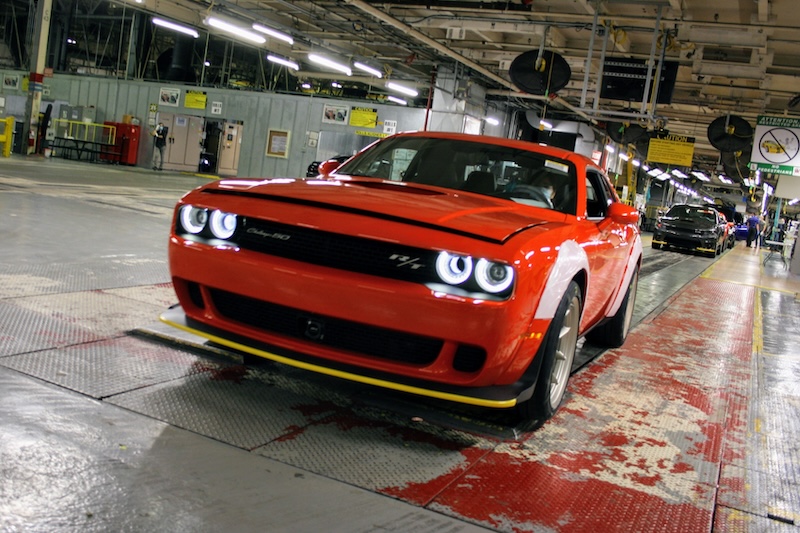
A Dodge Challenger R/T rolls off the production line at the Brampton plant in Canada
So what is looming is not only a car sales crisis, but also a further loss of importance for the US car industry. This is because, by isolating itself, it will also distance itself further from the currently most active drivers of automotive development. These are no longer based in Detroit, nor necessarily in Wolfsburg, Munich or Stuttgart, but in China. And the Chinese are evaluating locations and forging alliances with the aim of building models in Europe.
Even without knowing the details of the complex interrelationships of a densely interwoven international industry, there is only one appropriate term for the current development of international car trade between the world and the USA - disrupted by massive manipulation: "Bullshit!"