Why does racing have to be so expensive?

It is now absurd how expensive racing has become. While a go-karting season in the Swiss championship costs around CHF 70,000, an FIA world championship season (from the age of 12) costs around EUR 250,000. These are now sums that require a really rich father. Unfortunately, it's no longer possible to make ends meet with small jobs alongside school, such as delivering pizzas or collecting PET bottles like in Siffert's day.
If you then show talent in karting, the logical next step is to move up to a formula car.
Formula BMW
In the junior formula a few years ago, a Formula BMW cost around EUR 50,000 to 60,000, including a spare parts package. However, the cars were only sold to teams that had registered for one of the three championships (USA, Asia and Europe). The driver had to buy into one of these teams, which initially cost just under EUR 200,000 and eventually, with increasing testing and engineering support, came to around EUR 300,000. Also included was a varied training and coaching program for the young drivers. Major damage caused by the drivers themselves was not included.
Formula V
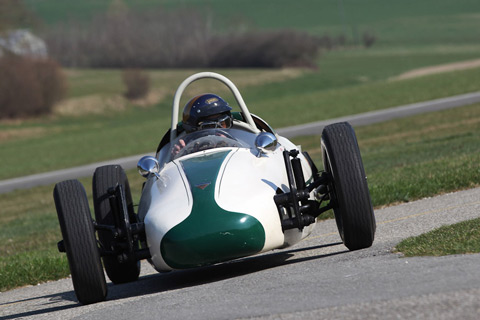
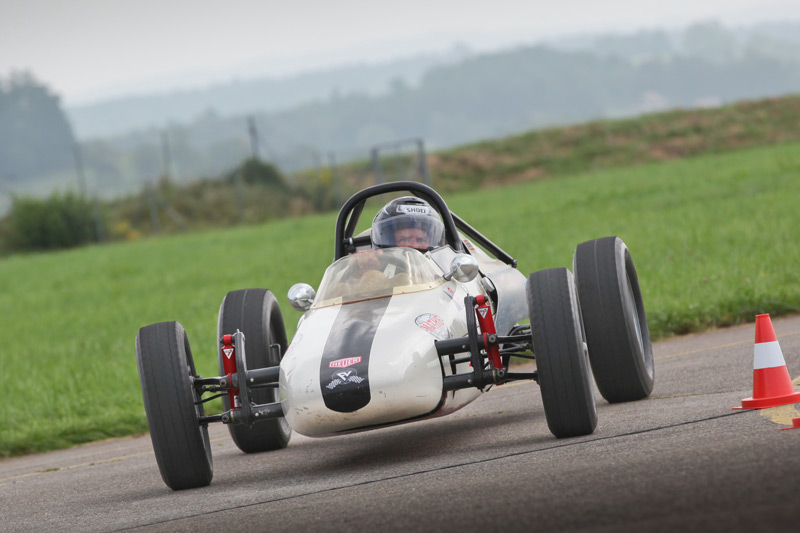
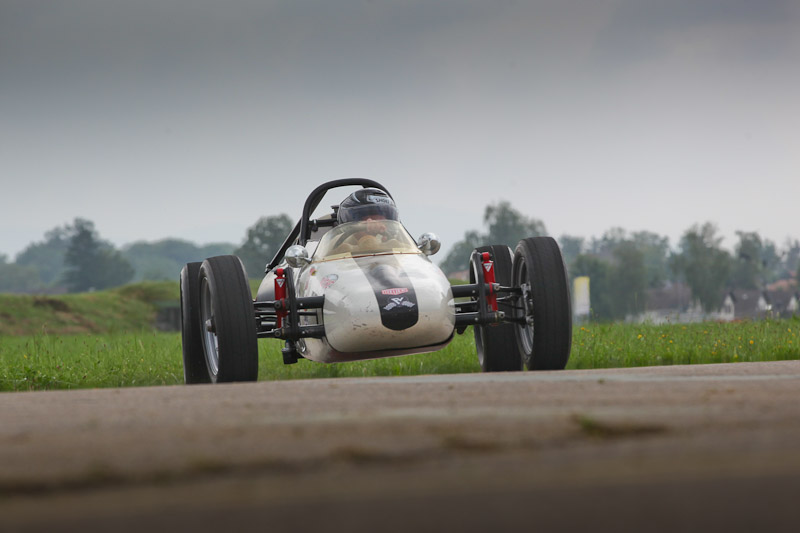
Rainer Braun wrote: "In 1965, Porsche's racing baron Huschke von Hanstein brought six Beach and six FormCars with VW technology from the USA to Germany and thus offered young Formula drivers an inexpensive field of activity for around DM 10,000. Apart from the fairing (and the tubular frame), almost all the parts used were original VW parts. The cars looked like undersized bathtubs, which was particularly true of the clunky-looking FormCar. For the German race premiere on the first weekend in July 1965 at the Norisring, the twelve VW racers were transported to Nuremberg by Porsche racing mechanics on VW flatbed trucks and looked after."
Over the years, the premiere fun and the bulbous 1.2-liter VW racing cars with a meager 34 hp became sleek, chic Formula Vee racers that produced around 120 hp on the asphalt in their prime. And from 1971, the big and even more powerful brother, the "Formula Super V" with 1.6 liter VW engines and 150 hp, made its debut.
Racing for comparatively little money was still possible in Formula Vee and Formula Ford, but both racing series have long been a thing of the past, although they still have a right to exist today. The top racing driver is faster than his rivals in any vehicle, regardless of whether 34 or 500 hp is pushing the car.
Formula 4
The Formula 4 regulations are tailor-made for young drivers. The Dallara monocoque, equipped with high safety reserves, is powered by a 145 hp 1.6-liter engine from Volkswagen and, like all other important technical details, is identical for all cars. With 145 hp, the 1.6-liter FSI engine is powerful and reliable, making it the ideal power source for an effective, high-quality and yet "affordable" junior formula, writes the ADAC, where the car can be ordered at a price of EUR 49,900. The price of the car would be absolutely acceptable, but when you hear from Toto Wolff that the season will cost a million pounds, then I really wonder who can afford it. You have to know, of course, that you can't even be registered privately with a Passat, trailer and formula racing car, so you need a spick and span truck and all the trimmings to take part in one of these championships.
Lirim Zendeli (21) F2 driver from Bochum complains on "motorsport.com" about his career: "Especially when it went one step up, i.e. from Formula 4 to Formula 3 and from Formula 3 to Formula 2, it was even more difficult because then double or triple the amount of money had to be raised."
The budget for the highest junior series in motorsport is often the biggest hurdle for young talents who want to make it into professional racing without a large financial background. Toto Wolff and Sebastian Vettel have been criticizing the gigantic costs in the lower categories for years and are calling for a rethink. Wolff says: "All the big Formula 1 teams should be able to recognize young talent instead of making it so expensive that a good go-kart season costs 250,000 dollars, a Formula 4 season 500,000 pounds and a Formula 3 season a million dollars. This is completely absurd and has to stop because we want to ensure access."
From personal experience
I've been lucky enough to drive three different Formula Vee cars and a Formula BMW myself.
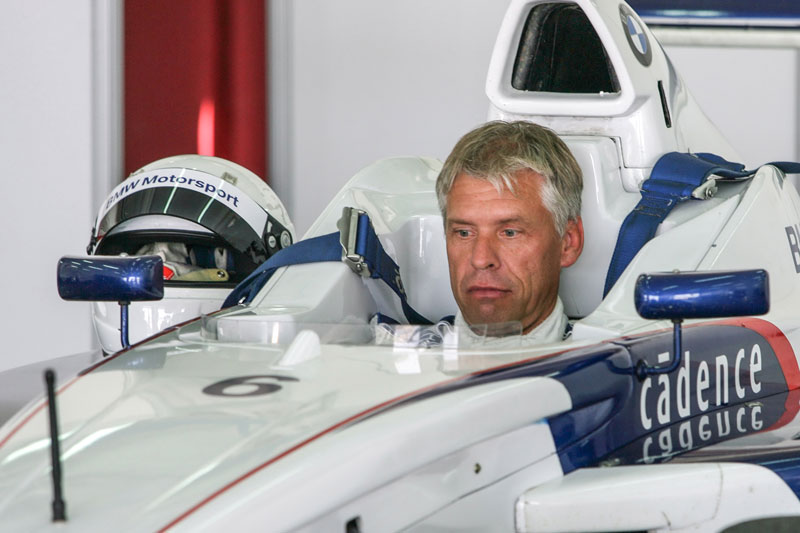
The differences are significant, but that doesn't mean that the 34 hp Formula Vee is any less fun. With Beetle experience, the Formula Vee can be operated immediately and driven quickly without any instruction, which doesn't really work with the Formula BMW. In the modern monoposto, the clutch is only needed for starting and downshifting, the rest can be done without it. There is no H-shift, instead the sequential gearbox is operated by pushing forward and pulling back, similar to a motorcycle. The aerodynamics and the wide slicks result in completely different driving dynamics. At Formula Vee racing speed, the Formula BMW has reached the level of a coffee run. It is much faster, but you need a lot of feeling and experience to get really fast. If, after a few laps of training and the belief that you are going slowly, you are overtaken by Augusto Farfus in a 160 km/h corner on the outside, reality quickly catches up with you.
P.S. Here are the basic characteristics of the entry-level formulas mentioned
-
Formula V
Engine: four-cylinder boxer engine from the VW Beetle with 34 hp at 1200 cc
Gearbox: 4-speed VW gearbox from the VW Beetle (H-shift)
Unladen weight: 430 kg
Vehicle price in 1965: around DM 10,000
Service life: 1965 to 1973 -
Formula Ford
The main difference to the Formula V was the front suspension, which was equipped with wishbones instead of crank arms especially for racing. The first race in Germany took place around 1971.
Engine: 1967 Kent four-cylinder from the Ford Cortina or Escort 1600GT, 105 hp at 1599cc
Gearbox: Hewland 4-speed
Unladen weight: approx. 450 kg
Period of use: 1971 to 1983 -
Formula BMW
Engine: Four-cylinder in-line engine from the BMW K 1200 RS with 140 hp at 1171 cc displacement
Gearbox: Sequential Hewland FTR200 longitudinal gearbox with 6 gears.
Unladen weight: 450 kg
Vehicle price: EUR 50,000 to 60,000
Period of use: 2002 to 2010 -
Formula 4
Engine: Four-cylinder: naturally aspirated max. 2 liters, turbos 1.4 or 1.6l, power max. 145 hp
Unladen weight: 570 kg
Price for a chassis: EUR 33,000
Price for the engine: EUR 9500
ADAC total price: EUR 49,900
Period of use: 2014 to present