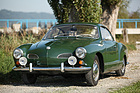
Memories of a time when only flying was more beautiful ...


The classic car hobby means that you can easily transport yourself back to times gone by. I still remember the end of the 1950s, when the Ruhr area - an urban agglomeration with 5 million inhabitants - began to die out as a result of the collieries and new jobs had to be created through restructuring. A short time later, the Ruhr University Bochum was founded as the first German university after the war and began teaching in 1965 with 1215 students - 3000 students were expected for the second semester. Today, 43,000 students study there.
I was also enrolled there in the early 1970s and drove past Opel Plant I almost every day. Opel plants I and II/III were newly built on old colliery land in Bochum in response to the coal crisis.
The Kadett A had been produced in this flagship plant since 1963 as a serious competitor to the Beetle. People in the Ruhr region were proud not only to have universities, but also to build cars!
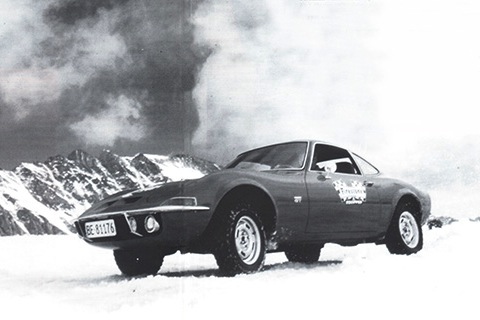
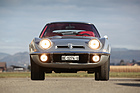
At peak times, 20,000 people worked at Opelin Bochum. In 52 years, almost 14 million cars with the famous Blitz rolled off the production line there. And exactly 103,463 of them were sporty two-seaters based on the Kadett B, known as the Opel GT.
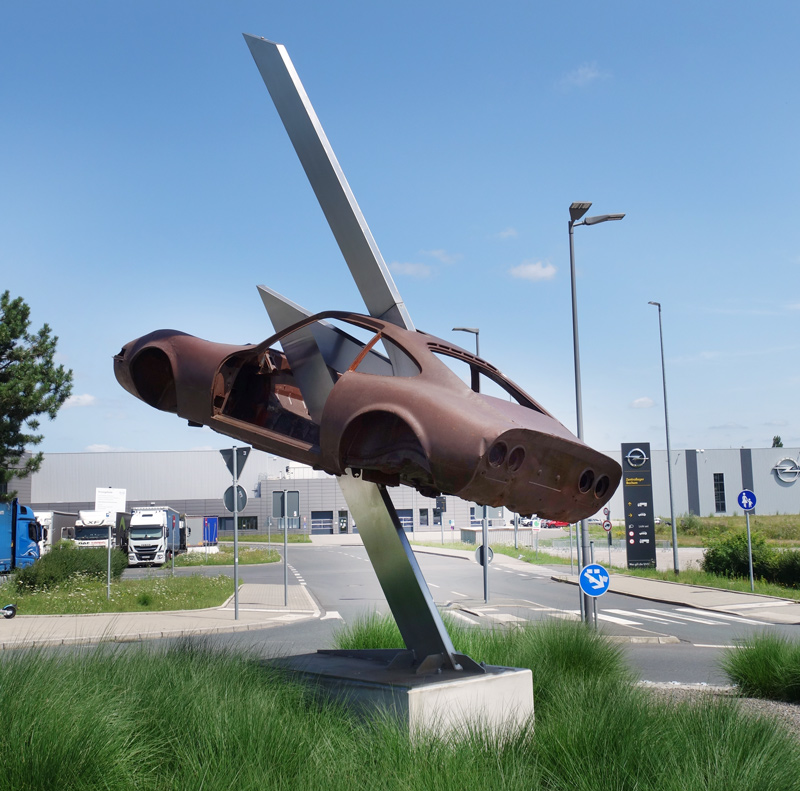
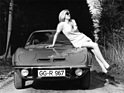
Why am I telling you all this? Well, the print media reported in passing that a monument to the Opel GT was recently erected in Bochum. This was actually overdue. After all, there is a sandstone Trabi memorial in front of the Horch Museum in Zwickau and why shouldn't there also be a monument to automobile production in Bochum? We will not go into the history of the Opel GT or its relationship to the "Coke-Bottle Corvette" again at this point. However, it should be noted that this car, built from 1968 to 1973, was sensational at the time and was certainly not expected by Opel, a company considered to be rather conservative. And the accompanying, catchy slogan: "Opel GT. Only flying is more beautiful" is still familiar to many today. Yes, the Opel GT can certainly be described as a cult car.
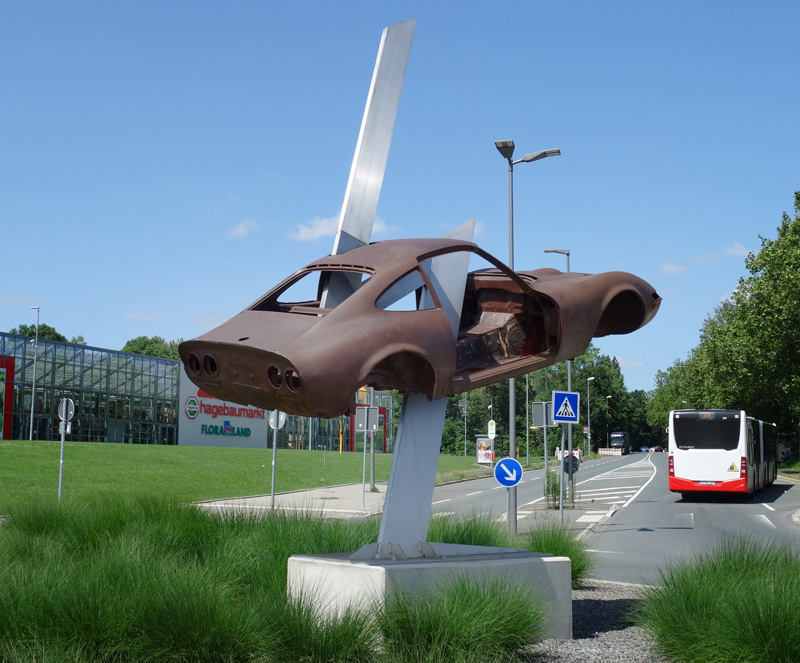
But how did this monument to the GT come about? The two friends Klaus Altfeld and Konrad Goretzka had acquired an Opel GT from a former soccer colleague for the purpose of a thorough restoration. After sandblasting the bodywork and removing several kilos of body filler, they were sobered to realize that it would have been pointless to rebuild the vehicle due to the desolate condition of the sheet metal. However, as disposing of it carelessly was also out of the question, the two decided to create a sculpture. To this end, they brought semi-professional artist Annemieke Schade on board and came up with the concept of combining the body shell with the brand-typical Blitz. However, the path from the idea to the result was laborious, as there was a lot to consider and calculate. From the angle of impact of the Opel lightning bolt and the inclination of the body to the statics and the material to be used, there were a number of hurdles to overcome - details can be found on the project website. The corrosion of the bodywork was artificially accelerated in a brine. After this had been washed off, the sheet metal was preserved with anti-corrosion oil so that it now resembles Corten steel. Contrasting stainless steel from local manufacturer Thyssenkrupp was used for the lightning bolt as a load-bearing element.
The sculpture measures 4.2 x 1.7 x 4.4 m, weighs almost 1000 kg and was presented to the public on the occasion of the Opel GT's 50th birthday. The search for a suitable location then began. With municipal support, this was finally found in Bochum-Langendreer.
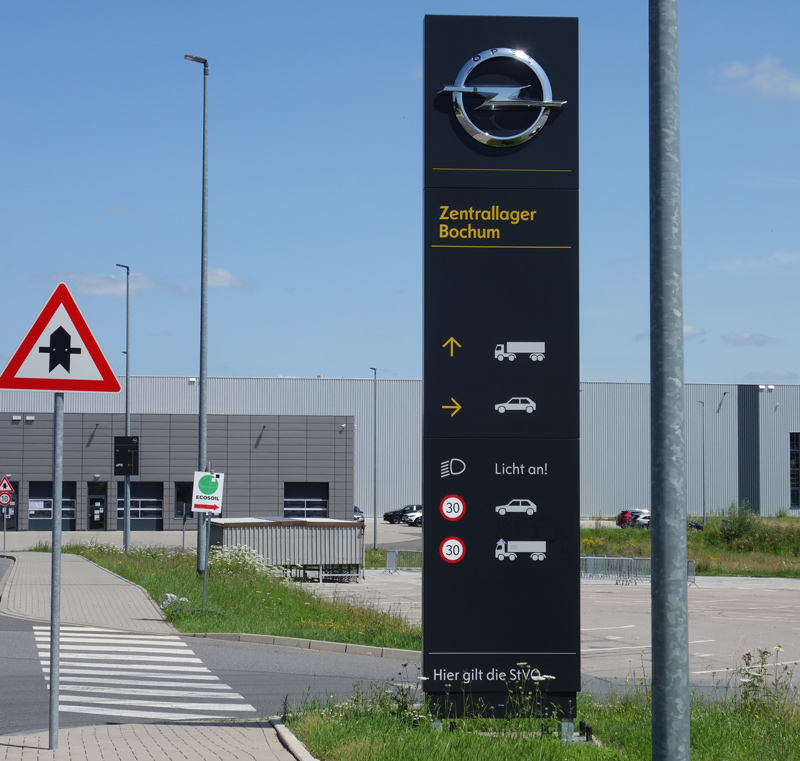
The sculpture now stands on the Bundesstraße 235 next to a DIY store in the middle of a large traffic circle. It is a reminder of the great days when exciting cars like the Opel GT were still being built in the Ruhr region and only flying was better. And finally the circle is complete. Because in the immediate vicinity of the monument there is also one last remnant of days gone by, the Opel goods distribution center. This is still located in Bochum - deep in the west, where the Opel GT was once built.
Further details can be found on the sculpture's website .