Škoda Octavia then and now

The first Škoda Octavia appeared exactly 60 years ago and heralded the start of general mobility in Czechoslovakia. Late, but still. The industry was hardly damaged during the Second World War and was able to produce, so the new regime felt no need to modernize and expand. The necessary foreign currency was also lacking.
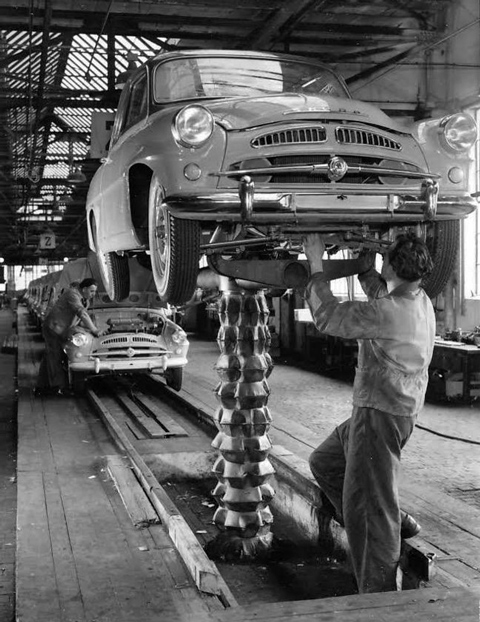
Although seven different types of passenger car were produced after 1945, the quantities were small. This meant that the population's needs could not be met. Many cars were exported as a means of raising foreign currency, mainly to Germany, Holland and Scandinavia, but also to South America and New Zealand, where the Trekka off-road vehicle was produced from Octavia components.
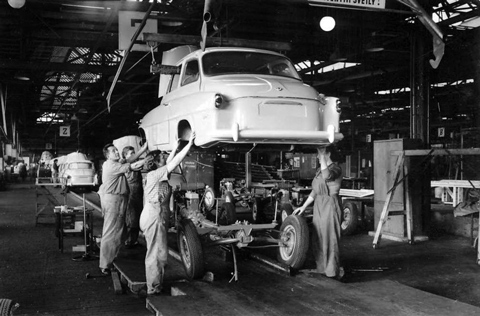
Not only was the technology, e.g. the weak 1.1-liter engine, backward, but production on the assembly lines also proved to be inefficient. It was very reminiscent of the assembly lines at Ford in the early years.
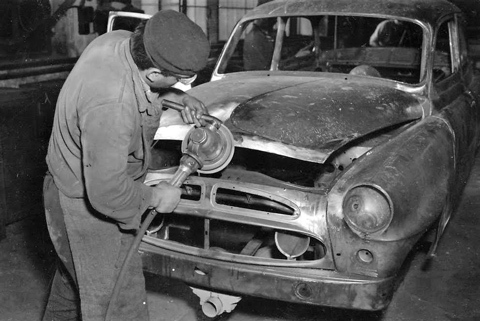
A lot of manual work and improvisation was necessary. There was also a shortage of materials and accessories.
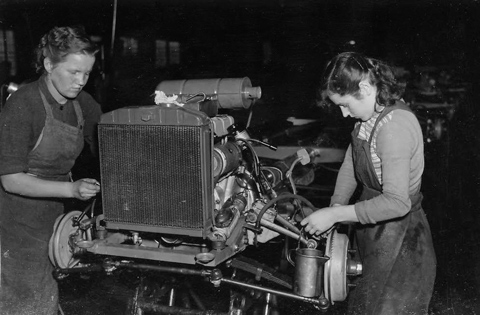
For example, the predecessor of the Octavia, the Spartak Type S 440, was sometimes only fitted with a windshield wiper. The Spartak was produced 75,000 times, the Octavia around 275,000, the Felicia Cabriolet 15^000 and the estate over 50,000 times - a modest output for almost 20 years!
The factory had been using the same names for the car types since the thirties... So there was a Popular, a Rapid or the flagship Superb early on, and then also a Felicia.
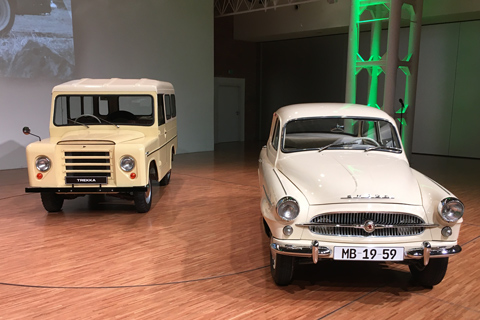
Very few people know how the name Octavia came about. When the first Š 445 cars came onto the market in 1959, this was the eighth model since the world war. The designation 445 disappeared and the words "ochto, octo" were borrowed from Greek and Latin, which is how the name Octavia came about.
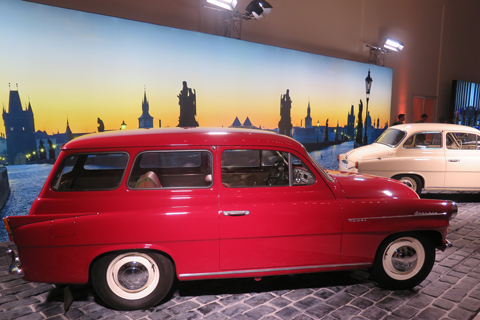
The Škoda STW, a practical estate car, was very popular, but unfortunately also very expensive at the time.
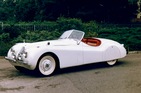
In order to be able to take part in competitions, Škoda homologated the TS 1200 Touring Sport with a more powerful engine in 1960 (picture above). Success at the Monte Carlo Rally did not fail to materialize. In Scandinavia, Škoda was very popular as a cheap and "dressable" car for rallies.

The series was complemented by a smart convertible called the Felicia with the same mechanics, but with two carburetors instead of one.
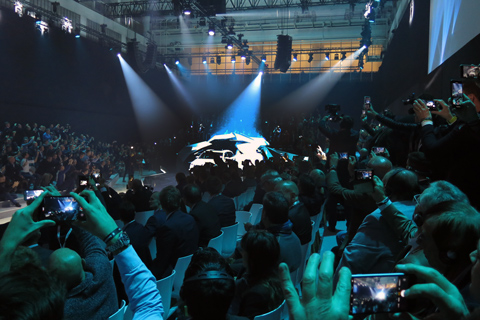
These days, the fourth-generation Octavia was presented to the world in Prague, i.e. not at a motor show. A successful show in the presence of journalists from many countries accompanied the unveiling of the three Octavia body types. Even the Czech Prime Minister Andrej Babis came and stayed the whole time. Almost shyly, he asked if he could sit in the car! And then he just listened to the expert commentary of one of the board members.
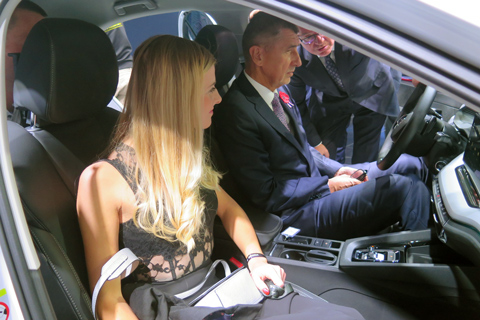
Externally, the new Octavia is only two centimeters longer than its predecessor, and the bodywork touch-ups were carried out very carefully. It is much more important, as Škoda boss Bernhard Maier emphasized, that the car is already equipped for the future today. At first glance, the dashboard is clearer and a 10-inch display offers many functions. The interior has a friendlier design than before and can also be fitted out in bright colors.
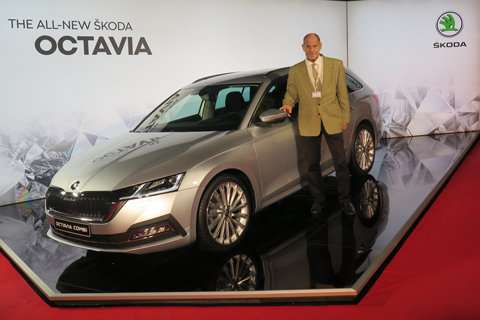
Just like back then, the current Octavia estate is Škoda Auto's best-selling car since Volkswagen took over the company. It remains to be seen whether the Octavia, like the Golf, will one day make it to eight generations. Škoda Auto is now considered more profitable than Audi, which bodes well for a continuation of its successful career.