The Espace space miracle

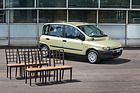
The "Espace" planned by Matra for the future, which was to follow the "Rancho", was primarily intended as a purely French transport vehicle. However, the Fiat 600 "Multipla" from 1956 must be mentioned as a forerunner. Fiat had already realized the idea of a large-capacity car with a convertible interior in the 1950s. Fergus Pollock's idea of the space miracle was taken up by Philippe Guedon with a study penned by Antoine Volants in 1978.
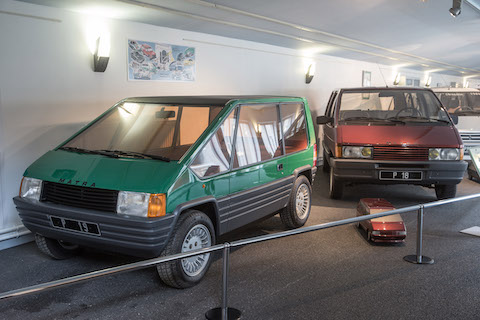
The aim was a 5-door car with front-wheel drive. A two-door pickup should have followed later, but has not yet materialized. The first prototype was completed in 1981.
The P18 shown in the picture was proposed to the management of Peugeot-Talbot, Matra's commercial partner since the takeover of Simca. With the technology available, production could have started the following year.
Peugeot was interested in the project, but unfortunately could not raise the funds to launch a new vehicle. After Peugeot's rejection, Matra's project managers turned to Citroën with the P20, but they also fell out of favor with the company's decision-makers.
It was not until December 1982 that Bernard Hanoi, then CEO of Renault, gave the green light for the P23 prototype and Renault laid the foundations for great success with the "Espace". Various studies and prototypes of the most famous minivan of all can be admired in the Matra Museum in 41200 Romorantin-Lanthenay at 17 Rue des Capucins in France.