Thinking ahead - when the classic car's engine keeps cutting out
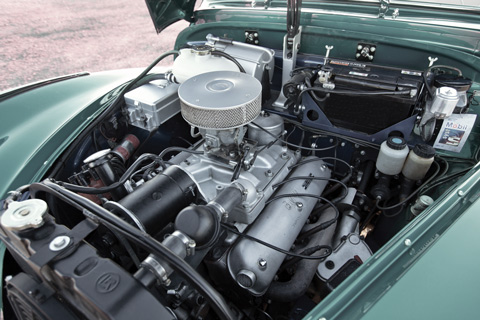
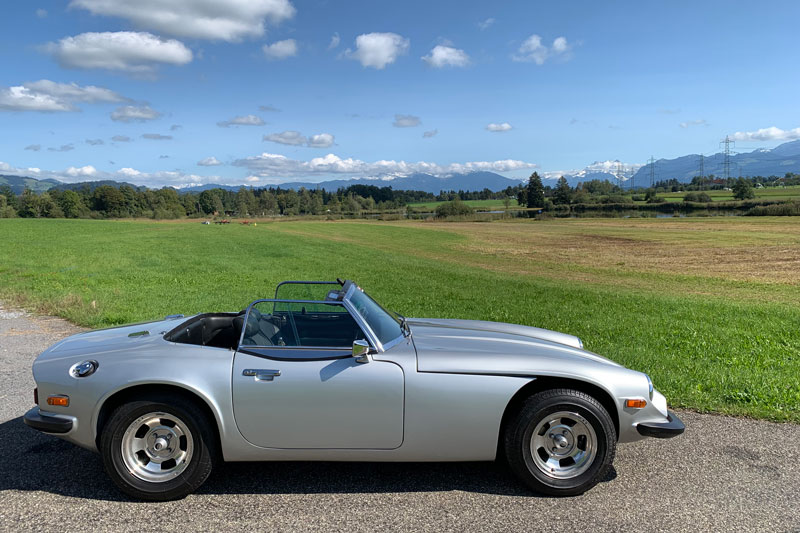
After buying the BMW 502, Baur Cabriolet from 1955, the joy of ownership was soon somewhat dampened, as the vehicle more or less always broke down somewhere, sometimes in the middle of town, occasionally on country roads or on the highway.
The breakdowns occurred at irregular intervals, and there were no precise indications as to why the sprightly classic suddenly broke down.
After a short wait of 15 to 20 minutes, the car could be restarted and the journey could be continued. Naturally, I turned to the experts. They initially blamed the fuel, talked about the formation of steam bubbles as the cause and many other things. Some crazy theories were also developed.
In the end, the mechanical fuel pump was replaced by an electric pump. The fuel lines were relocated to cooler areas in the engine compartment and insulated against heat with heat protection tape from motor racing. The carburetors were checked several times for malfunctions and the ignition was checked several times.
Nevertheless, it was a nightmare to drive the vehicle. Because the breakdowns continued to occur. In between, the car ran perfectly for several months without the actual cause of the engine failure being identified.
Nevertheless, a rally to Alba in Piedmont was booked. We took the highway to Basel, drove through the Gotthard tunnel via Lucerne and spent the night in Ascona. Everything went well until we reached Ascona airfield, where the "tin" stopped once again. After waiting around 15 minutes, everything was running smoothly again.
The next day, the fuel pump was changed in a local workshop and everything ran smoothly again. The onward journey along Lake Maggiore to Stresa went smoothly, we filled up the tank there and then drove 10 km steeply uphill to the highway to Turin. Right at the highway entrance, the BMW stopped again. After 10 minutes it was running like a champ again. So I drove on!!!
Now I started to think for myself, because something similar had happened to me once before with a DKW 3/6 in the sixties. Back then, I removed the rubber seal from the fuel filler cap and the two-stroke ran smoothly again.
So I stopped in a parking bay, unscrewed the fuel filler cap until it was only sitting loosely on the opening, and from then on the "car" actually ran without any problems.
When I got home, I checked the tank and discovered that it has a small tank vent tube that goes through the tank and is open to the road at the bottom.
I cleaned this tank vent tube with a wire and a wire brush and was amazed at what I found: Road dust baked together, a dried up large spider, dried up grasses, leaves and lots of other dirt from 55 years of operation.
What's more, the encrusted dirt had probably come into contact with gasoline during refueling when the tank was filled to the top.
This led to the following explanation: The tank ventilation tube was 95% leak-proof, the remaining 5% was sufficient to dissolve the vacuum that had formed. This is why the engine ran normally again after around 15 to 20 minutes.
Although the vehicle was restored by a restorer who was known to be meticulous, no one apparently thought about the tank and the tank vent tube at the time. Forgivable!
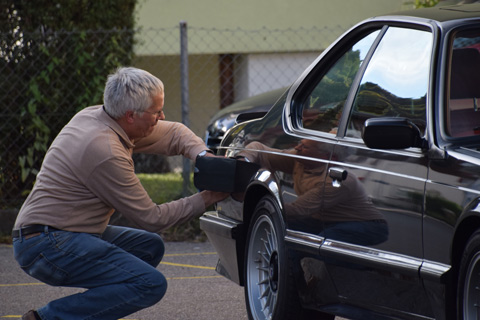
If something similar happens to someone else, you might notice it when refueling, namely when the tank nozzle keeps switching off. The tank ventilation tube may already be partially blocked, so clean it immediately. It is part of the operation of an older car to clean the tank ventilation tube from time to time.
On other types of vehicle, including motorcycles with tank ventilation through the fuel filler cap, the ventilation hole or valve must be cleaned again and again.