The sports engine in a commercial vehicle

In 1954, Alfa Romeo introduced the Giulietta and with it a completely new engine. It was designed according to the latest findings and led Alfa Romeo cars to race victories for decades. Both the engine block and the cylinder head were made of aluminum to make the engine lightweight.

Hemispherical combustion chambers, overhead valves and two overhead camshafts ensured optimum power output, but also future-proofing, as this engine would later also run with two spark plugs and four valves per cylinder. It was a real sports car engine, a bijou! At least that's what it was sold as back then ...

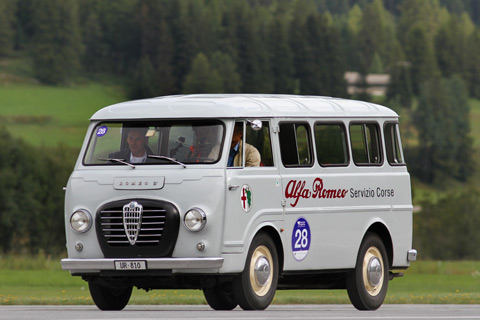
But Alfa Romeo felt compelled to produce the engine as cheaply as possible, so they looked for ways to increase output. So, at the same time as the Giulietta in 1954, they also introduced a transporter, a commercial vehicle called the Alfa Romeo T10 "Autotutto" (which translates as all-purpose vehicle). The engine compartment contained exactly the same engine as in the Giulietta, albeit in a significantly less powerful version with 34 hp. The Transporter was also available as the Romeo 2 and later as the Romeo 3, followed in 1967 by the F12/A12 and the F11/11 respectively, still with the twin-camshaft engine. Production was only discontinued in 1983. Nevertheless, hardly anyone in this country remembers the van with a sports car heart.
The Giulietta-based estate looked less like a commercial vehicle, but it was much rarer. Carrozzeria Colli produced just 91 examples of the practical five-door model. And the engine? The legendary twin-camshaft unit from the normal Giulietta series, of course.

You can read more about the engine, but above all about the Alfa Romeo Giulietta Sprint sports car, in our report on a particularly rare coupé variant .