Classic car auctions are only a limited reflection of real market conditions


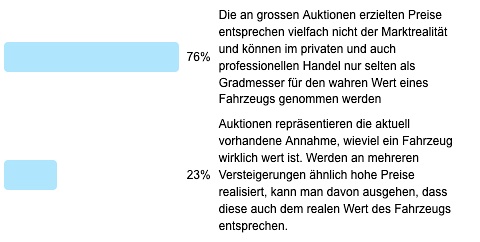
The events of the last few days have probably strengthened the doubters among our readers. This is because 76% of participants in our last question of the weekbelieve that the prices achieved and reported at auctions do not reflect market reality.
Only a quarter believe that the auctions represent the market. We also received a number of letters giving examples of how vehicles repeatedly appeared at auctions or how a vehicle sold at a high price found a new owner at significantly more attractive conditions than reported after an auction.
Nevertheless, it can be assumed that the majority of transactions are actually backed by a real bidder and seller, but Zwischengas readers are obviously very unsure whether this is always the case with all the record prices.
It should be clear that an auction is a special situation compared to a "normal" sales attempt. The number of potential buyers is limited and decisions are made in a matter of seconds or minutes. A certain "gamble" moment plays just as much a role as the behavior of the "opponents". When alcohol is added to the mix, surprises can of course happen. And there are supposed to be people who don't care about one or two million. In addition, the value of a car also depends on what is paid for it and auctions are of course a clear measuring point here.
For documentation purposes, here are the exact results:
And of course we have already asked the next question of the week. This time, we want to find out how high the annual mileage of classic car drivers really isand whether the cars are used more as stationary vehicles or vehicles.