Is the FIVA out to get the classic car?

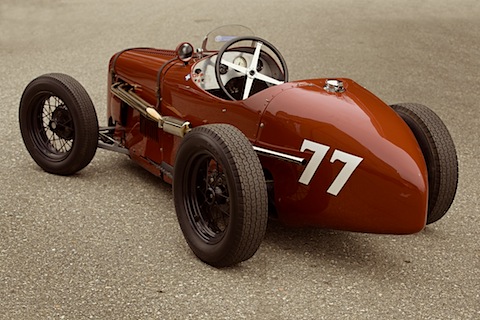
Admittedly, the title is a bit puffery and of course the FIVA, the "Fédération Internationale des Véhicules Anciens", does not aim to decimate the old automobile, but to preserve it. Yesterday's cars on tomorrow's roads - that's one way of putting it, or "protecting, preserving and promoting", as the FIVA website puts it.
However, at the end of last year (on November 8, 2014 to be precise), the FIVA approved the "Technical Code 2015", which is now being implemented. In this document, the FIVA defines what constitutes a classic car worthy of protection and there are already heated discussions about what this document could achieve and how it should be understood.
The Technical Code 2015 defines a historic vehicle (with mechanical drive) as follows:
- At least 30 years old
- Preserved and maintained in historically correct condition
- Not used for daily transportation
- Part of the technical and cultural history
The FIVA attaches great importance to identity and year of manufacture, and this is where the discussions begin. According to the FIVA definition, the year of manufacture (and also the manufacturer) changes if a vehicle has been extensively modified. This is the case if either the chassis or the supporting structure has been materially modified (shortened, made narrower, adapted wheelbase, reinforced) or if at least three of the main components of a vehicle - engine, gearbox, front axle/steering, rear axle, body - have not been modified periodically.
So if, for example, I were to turn a Ford A into a newly bodied coupé today and install a modern five-speed gearbox and power steering, I would be the manufacturer of this vehicle and the year of manufacture would be 2015. And this conversion would of course not be a historic vehicle according to the FIVA definition. An extreme example, admittedly.
And what about a Rolls-Royce 20/25 from 1928, which was fitted with an ambulance body during the war and modified into an airy convertible in 1958? Well, this would probably remain a 1928 Rolls-Royce.
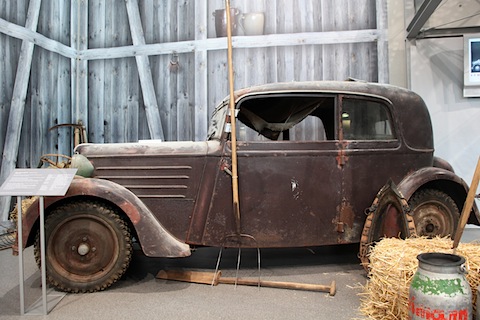
However, many Austin Seven Specials (picture above), which were built in large numbers after the war, would now have to bear years of construction after 1945 and the manufacturer's name of their builder/converter, depending on the modifications.
Is the FIVA going too far with this? In fact, the registration authorities in our part of the world sometimes go much further than FIVA when, for example, the modification of a bodywork is already considered a concept modification and therefore a reason for redefining the year of manufacture. And because the authorities like to have a second opinion in critical cases, they also turn to the FIVA or request a FIVA Identity Card from the owner of the car and then, of course, the FIVA definitions also come into play in the registration process. For the majority of classic cars that are maintained in their original condition or have been faithfully restored, the updated FIVA definition is of course not a problem.
An important term in this context is "period" (i.e. the era in which a car was normally used). The FIVA distinguishes between "period type" and "non-period type" modifications, i.e. modifications made with materials and components from the era of a vehicle or with more modern ingredients. To simplify matters, "period" is defined as 15 years after the year of manufacture; for cars built between 1925 and 1945, the period is extended to 20 years due to the war. So if an engine from 1938 is installed in a Bentley from 1922, this is not a period modification according to the FIVA, whereas the installation of a synchronized MG gearbox from 1968 in an MG A built in 1961 would be a modification in the period.
The significance of a well-documented history is becoming increasingly important, as the new FIVA Technical Code shows. If you want to be on the safe side, you can provide clear evidence of conversions and modifications. However, this can often be difficult or even impossible retroactively over 30, 60 or more years, which can suddenly turn a veteran into a youngtimer with a new manufacturer's designation.
If you would like to find out more, we recommend taking a look at the FIVA Technical Code 2015 .
And what do you think? We look forward to your comments!