The war of the buttons


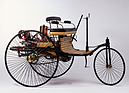
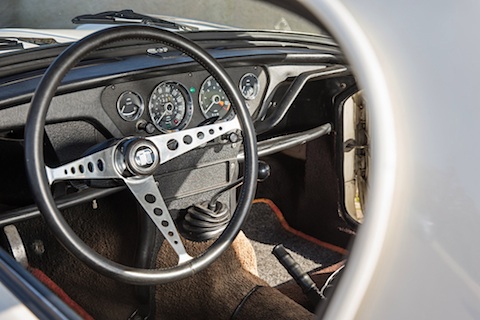
In the sixties and seventies, steering wheels were steering wheels; they were used exclusively to influence the steering angle of the front wheels, at least with very few exceptions.
Then a certain Rainer Buchmann entered the scene with his company bb and presented the multifunction steering wheel in the early eighties.
Buchmann even applied for a patent for the six-button steering wheel and tried to make it palatable to the Volkswagen Group in 1984. However, it was rejected by Mr. Fiala, Mr. Hahn and Mr. Schmidt on the grounds of ergonomics (!) and investment. At the time, they apparently felt that the six simple buttons would be too much for the driver.
Nevertheless, Buchmann installed the steering wheel in some special models with the help of the manufacturer Petri, but this was quite expensive, as the price amounted to DM 1,950 including six relays for controlling up to 32 electronic functions.
In the end, Buchmann sold his patent to Petri. And it was a long time before car manufacturers acquired a taste for it.
Over time, however, it became clear that people could be expected to use much more complex controls.

Even in formula racing, where one would assume that the driver has his hands full keeping the car under control at the limit, there was an incredible proliferation of functions that could be switched on and off on the steering wheel (see BMW Sauber steering wheel from 2009).

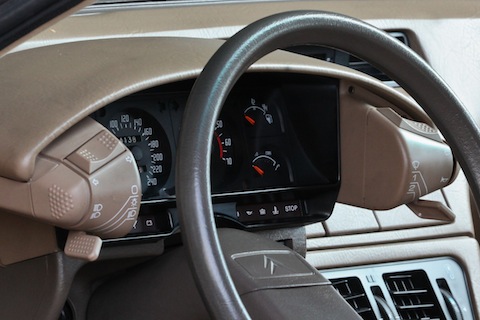
A modern multifunction steering wheel, as is common in most of today's cars (the picture shows the control panel of a Citroën DS5), combines buttons, rocker switches, X-Y switches and much more in an ever-shrinking turntable and thus controls countless functions.
Can you always keep your eyes on the road?
Further observations on the topic of innovation can be found in a specially compiled topic channel.