The blessing and curse of microelectronics


In the mid-1980s, around 30 years ago, everyone was talking about microelectronics. It made it possible to combine many specialized components into simple assemblies and to program the controls instead of soldering them. Car accessory manufacturer Bosch was at the forefront of development and increasingly relied on computer-aided design technology and schematized design methods, as Automobil Revue reported in issue 51/1985.
The progress was also impressive:
In 1973, the control unit for an anti-lock braking system (ABS) still contained 1000 components and weighed 1.2 kg. In 1978, 137 components weighed 0.8 kg, in 1983 it was 60 components and 0.7 kg. And in 1985, 30 components and 0.2 kg were predicted for the future. Instead of many capacitors, individual transistors, resistors and other components, more and more integrated and programmable circuits were being used.
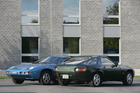
Progress was readily communicated and explained as vividly as possible at motor shows, for example at car shows and other exhibitions, as the picture above shows.
No disadvantages were seen at the time. Hardly anyone thought about durability. It turned out that even the storage of spare parts was not problem-free if they were not operated briefly at least every four years and otherwise stored under nitrogen. In many cases, the source code that would be required for re-production is no longer available (e.g. because the supplier from back then has long since ceased to exist) or the manufacturers refuse to publish it, citing liability risks.
At least there are initiatives, e.g. at the VDA, which are dealing with this problem ...