The classic car driver often doesn't know what time the clock has struck ...

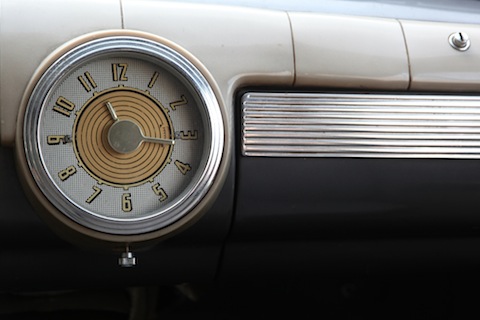
Car manufacturers began installing clocks in their vehicles at an early stage. Initially, the timepieces usually had to be wound by hand, but they were soon electrified and later quartz-controlled or even externally controlled. Clocks hardly ever go wrong in modern vehicles, but this is different in classic cars.

Hardly any clocks still show the correct time if the car has been parked for a long time or the battery has been disconnected to protect it. It is then a typical ritual of classic car driving to set the clock to the correct time again. Moving the hour and minute hands is not always intuitive, as every manufacturer had different ideas.

However, some clocks no longer move at all after years of use and have to be repaired, if a specialist can be found.

And many clocks disappeared at some point, leaving a hole in the dashboard or being replaced by other instruments.

It is not for nothing that the clock on the Mercedes Benz 190 SL, for example, is an important indicator of the car's original condition ... and an expensive spare part at that.

For puzzle foxes, the task here is to see if they can at least determine the make of the vehicles whose clocks are shown in this blog. Good luck!