AMC Pacer, an aquarium on wheels


Around 40 years ago, AMC announced the Pacer, a new passenger car that would leave no one unaffected. Since then, it has repeatedly graced the lists of the ten ugliest cars and its owners must have had a fair amount of self-confidence.
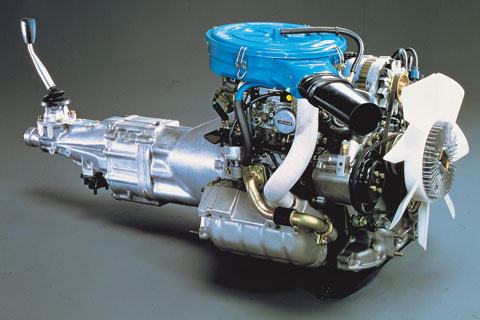
The AMC developers had innovative plans when they launched the Amigo project in 1971. The car was to be safer than its competitors, which is why they gave it excellent all-round visibility and built-in rollover protection. It was to be powered by the small and lightweight Wankel engine and it was to be compact by American standards.
However, when General Motors abandoned the Wankel engine project, AMC also had to look for another solution. They decided to install their own six-cylinder engine and wanted to give it fuel injection to save at least a hint of innovation. However, it was then delivered with carburetor equipment.

The AMC Pacer was then launched as a 1975 model and it looked highly unusual. Road & Track described it as "fresh, bold and functional looking", but the car, which was only 4.3 meters long but over 1.9 meters wide, was not going to win any beauty awards. In addition, the car weighed almost 1.4 tons and the underpowered in-line six-cylinder engine with just under 90 hp had little to counter the weight.
 The Automobil Revue wrote in its 1975 catalog: "Small perhaps for Americans, for us a short, very wide and very spacious car of unusual shape and full of new ideas: Passenger door 10 cm wider than the left door, exceptionally good visibility thanks to huge glass surfaces, very rigid but also very heavy body construction. Also electronic ignition, rack-and-pinion steering, rear door and rear folding seats."
The Pacer was available to buy from February 28, 1975 and 145,528 people opted for this unusual car in the first model year. Just under four years later, AMC stopped production after around 290,000 units. Even the five-liter V8 available from 1978 could not save the luxury compact car and even the somewhat less controversial estate version enjoyed sufficiently high demand from 1977 onwards.
Only a few Pacers found their way to Europe and a small number have probably survived to this day. All the more reason for passers-by to keep their mouths open when one of these vehicles, once ridiculed as Fred Feuerstein's car of the seventies, drives past.