The first turbine-powered road vehicle came from Rover


Pioneering deeds do not always pay off; technologies described with much advance praise often turn out to be dead ends. In the fifties and sixties, several car manufacturers experimented with gas turbines. But the pioneer was Rover. Rover engineers had already gained experience with gas turbines for aircraft construction during the Second World War, but swapped the successful results of their research work with Rolls-Royce in 1942 for plans for a V12 engine that could be installed in tanks.
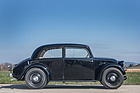
As early as 1945, however, Rover began to develop a gas turbine-powered car. In 1947, the first prototype of the turbine was running. The work was difficult and money was tight. Nevertheless, Rover was able to present the first turbine-powered road vehicle, called the Rover Jet 1, in 1950. 100 hp at 26,000 rpm and a top speed of 85 miles per hour (136 km/h) were the performance data (illustration above).
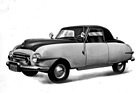
The car was further developed and received a new front design in 1952, as well as a more powerful turbine with 230 hp. This enabled it to set the world record for turbine-powered vehicles at 243.5 km/h. Like its little-known successor, the T2, the Jet 1 was still based on a standard Rover chassis.

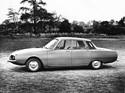
Rover presented the T3 in 1956. The first car to be developed specifically for use with a gas turbine, the T3 featured four-wheel drive, four internal disc brakes and a GRP body. The power output of this civilian-looking but conceptually revolutionary turbine car was 110 hp.

It was later followed by the T4 (1961) and the Rover-BRM, which was designed for Le Mans (1964, 1965). Eventually, efforts to develop this technology were abandoned.
Further (high-resolution) images can be found in the Zwischengas archive.