Concept cars and why they always look a little more boring in series production
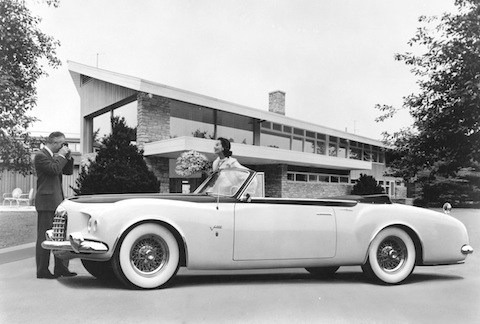
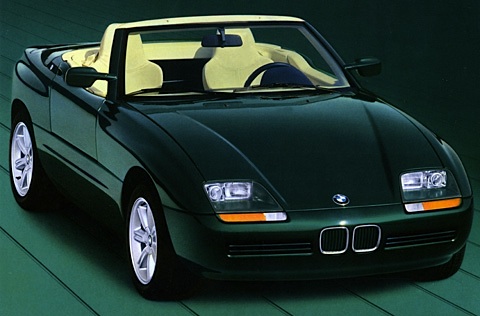
For as long as there have been cars, there have also been show or concept cars. They range from completely far-fetched visions such as the jet-powered "dream cars" of the Americans in the 1950s and 1960s to cars that are absolutely ready for series production but still bear the label "concept car". The latter can be seen in particular at the Geneva Motor Show and the IAA.
A regulation states that all vehicles that are not commercialized within six months of their presentation must be designated as concept vehicles. Information on price, consumption and emission values does not have to be published for these vehicles. The message for such vehicles is clear: they are intended to prepare customers for a model that will soon be launched and prevent them from having already purchased a new model from the competition by the time it arrives at the dealership.

This range from utopian to realistic has always been present in concept cars. They are used to test new technology, design or space concepts and niches that are believed to have been identified with the public. Some are very quickly consigned to the "evidence cellar" or at best to the factory museum.
However, if a manufacturer is serious and the exhibit has passed the public test, it goes back to the development department, where the designers and engineers responsible are given the task of transforming the idea on show into a vehicle ready for series production.
It should be noted that a show car is rarely the beginning of a development process. In the vast majority of cases, the decision for the final production car has already largely been made, and the concept car is more or less a work in progress that is spiced up with all kinds of "tinsel": oversized aluminum rims with specially manufactured tires that match the design, rear-hinged doors and light or color effects inside and out are intended to exaggerate the concept and attract attention.
And then exactly what many car fans have feared happens: when the first photos of the derived production car appear in the media, the end product is much more banal and less exciting than the show car. Why is that?
Adaptations to mass taste
The most common reason is plain and simple: the customer! They are very enthusiastic about the great shape and the daring details. They see the future in the colorful and flashing cockpit. Beautiful! But do you see yourself in it? Do you want to put a product like this in your garage at home and drive it every day? Aren't certain features just a short-lived fashion gimmick that you'll get tired of after two years? No, for an everyday companion it should be a little more discreet. Market research knows that the vast majority of car buyers don't want to stand out. They usually don't even treat themselves to their favorite color, let alone an eye-catching interior. They adapt to current fashion and the mainstream; birds of paradise are in the minority. The result: the manufacturer smoothes the design in the direction of general taste and removes polarizing design features.
Compromises due to technical constraints
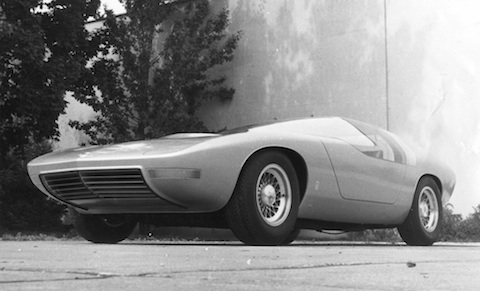
Then there are also technical reasons. Sometimes the wheels on show cars are pressed so tightly under the sheet metal, aluminum or plastic skin that neither snow chains could be fitted nor a usable steering angle could be achieved. Instead of solid side windows, wafer-thin Plexiglas panels are fitted, and no thought has been given to their retractability. Changes to the outer skin would be necessary for series production so that the real windows would have enough space to disappear into the doors. A smooth and aerodynamically designed front end will also not make it into production if the necessary air intakes for engine and brake cooling and interior ventilation have been ignored in the show car. The same applies to "fast" rear ends (hence the word "fastback"), which are pretty to look at at the show, but do not guarantee sufficient headroom or trunk space.
Compromises for cost reasons
Another issue is financial. What good is a great car if you have to invest so much money in its production that the high purchase price puts customers off? Or you set a price that is in line with the market, but no longer earn anything from the product?
This is why platform parts and existing production facilities must be taken into account. If, for example, an existing and proven drive and suspension unit does not fit under the overly boldly designed mudguard, it simply has to be modified. Or if the production of a sheet metal part requires nine press operations, but the production facilities are only equipped with eight presses, then the design must be simplified.
However, this also depends very much on the power structure within a company. Unfortunately, there are enough examples in automotive history where reorganizers, accountants and controllers held the reins and great solutions from the concept car fell victim to the red pencil. If a visionary boss with a love of technology and design is at the helm, designers and engineers can let off steam.

Adaptations to legislation
Since the 1960s in particular, approval and safety regulations have had a massive influence on design. No matter how beautiful the design concept, it falls by the wayside if the tires are not sufficiently covered by the mudguard or the prescribed masses, illumination values and beam angles for rear lights and headlights are not met. All this led to a greater or lesser degree of harmonization when it came to series production, and the original design was often only vaguely recognizable.
American car designers were particularly hard hit from the beginning of the 1970s. Recently, bumpers had to be able to move freely by several centimeters in the longitudinal direction without damaging the bodywork. Patched-in "sacrificial parts" made of plastic, soft, attached plastic noses, bumpers in a railroad track design and horizontally positioned headlight lenses frightened customers in the showroom because the great concept car with flat headlights and integrated bumpers was no longer eligible for registration.
The fact that most of the registration regulations were counterproductive (what use is an intact body if the force of the impact is passed on to the occupants?) and drastically restricted the exportability of such ugly cars was only noticed late on due to the safety hysteria.
The more expensive, the easier
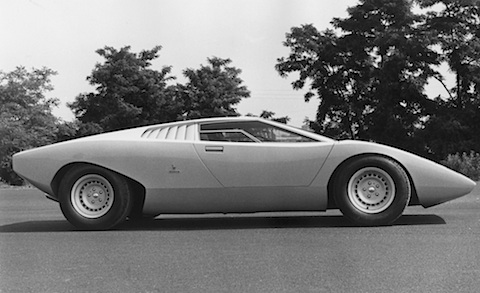
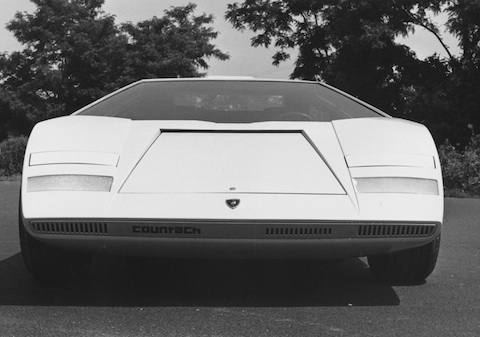
The cheaper the target segment of the show car, the greater the sensitivity to costs, (mass) taste and production constraints, and the more the above-mentioned arguments come into play. Conversely, it can be said that in the high-priced and exclusive segment, concept cars have gone into (small)series production almost unchanged. Take the Lamborghini Countach, for example, whose show car can only be distinguished from the later production car by experts.
So the next time you stand in front of a stunning show car at a motor show, you should ask yourself a second question after the question "Why don't they build the car exactly like this?": "Would I want to buy the car exactly like this?"