All and always!

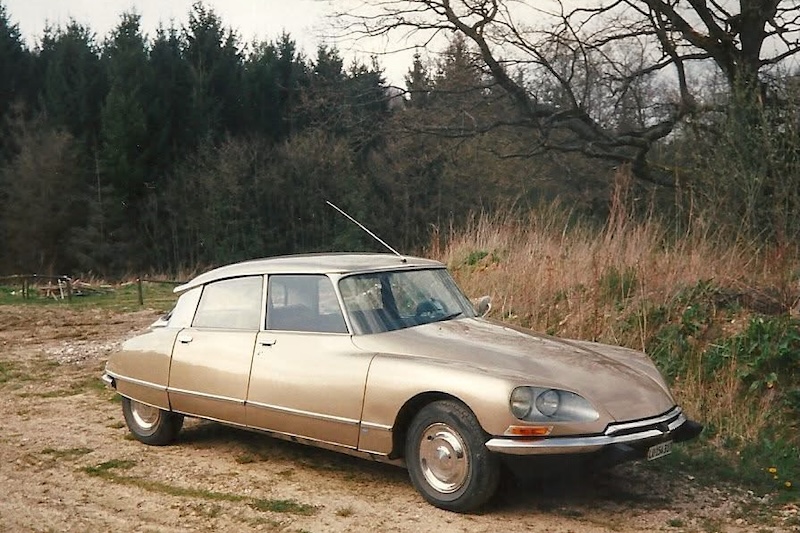
The Americans drink, the Italians rust, the French bitch, the English drip and the Germans last longer. I can't listen to it anymore, because it's rarely really true. Examples? My DS - an injection engine that everyone told me was the stupidest thing about this complicated car - had exactly three breakdowns over almost 100,000 kilometers: Once the cable for the fuel pump fell out of the plug, once the ignition coil blew and once the pressure reducer of the injection system went on the blink. Apart from that, I always got home with it. Of course, there are things that are true. Working on a DS is hell. There are certain things that make you wonder why the engine department hardly ever seems to have spoken to the bodywork department. Yes, I know: boxer and then not a boxer, but the old Traction monolith pimped up. It's possible that there wasn't a lot of talking, just a lot of doing.
Well, sometimes I've fallen for certain clichés myself. For example, that it's quite easy for the English to find the essential parts. That's why I bought the well-maintained 1952 Vauxhall Velox, built in Biel, which I had discovered many years earlier in connection with the purchase of a Land Rover in a barn in the Jura. At the time, I couldn't have the car because the barn from 1765 collapsed when the door was opened. The farmer said he would be in touch when the dilapidated walls had been torn down. In the end, it took six years before the call came: "La voiture est sorti de la grange." I paid 500 francs. The car had gone to the seller when he took over the farm in 1972, but he never drove it. But I was happy - until I realized that there was almost nothing available as a spare part for Vauxhall. Today, the car is hanging somewhere - is it in Biel? - on the ceiling of a bar, just as I passed it on back then. Untouched, but rusty.
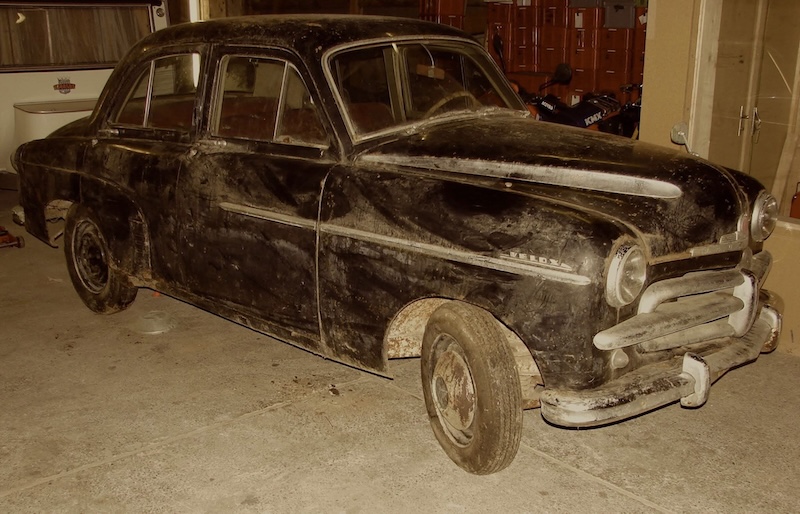
It stood in a barn from 1972 to 2014, but there are hardly any parts for it: Vauxhall Velox EIP from 1952
Incidentally, a Fiat Tipo in the family was hardly rusty - no wonder, as it was the first compact car with a galvanized body. However, our seven Citroën BXs were also very rust-resistant, but they mercilessly ground their rear swing arm bearings into rusty crumbs and all ended up with knock-knees and rubbing rear wheels at the scrap dealer. Yes, they were still able to design stupid double angles in the 1980s. Anyone who has ever looked at the clutch actuation on the transmission side of the 1.9-liter BX models really wonders what they were thinking. Perhaps this: We can make bellcranks, so we make bellcranks, and because it's so nice, we clamp a steel rod in between.
Or maybe this: Germans, they hold. They don't all just do that, and on principle. Some last even less than others. A Mercedes company car (an SLK for a saleswoman at the time - the best, hence the Daimler) had engine damage at 164,000 kilometers. The reason was that the plastic chain tensioner for the timing chain smelled (they probably preferred a timing belt), the chain skipped, the timing went flat, but unfortunately the engine was still "running". The good lady drove to the workshop, where it was discovered that the loose timing chain had milled right through the middle of a bolt that had been perfectly fitted for this purpose and the shavings from it had made a little journey through the engine.
And then there was this: Mercedes is no longer what it used to be. I can remember when the W124 came out how some adults - I was still a teenager - said: "Mercedes isn't what it used to be!" I wonder if, as with prejudices, it doesn't get any truer if you keep repeating it. Incidentally, my current Fiat doesn't rust - and certainly not any faster, if someone keeps coming along and saying that the Italian (which was built by Poles in Tichy...) must surely rust.