Model and reality or: Surprise, the B.V.R.T. Vita-Min exists!

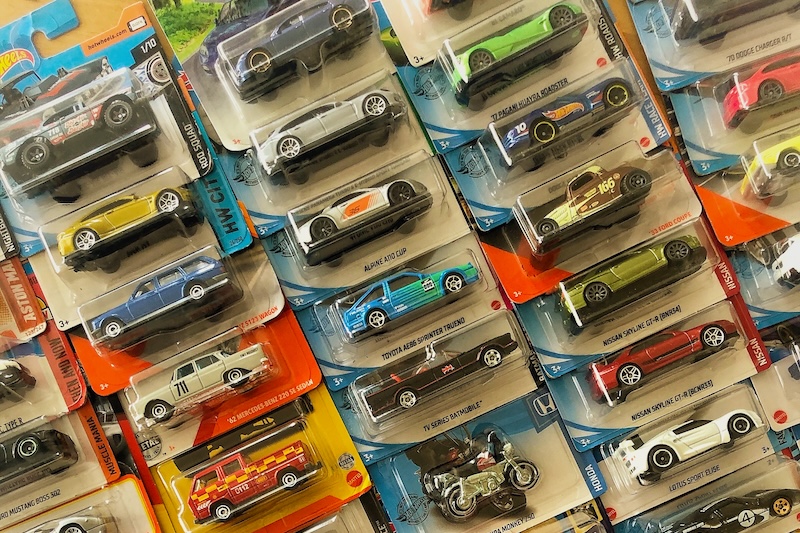
The 1970s were not just a blessing for children like me, who preferred to play with small cars. I liked the true-to-original, wonderful models of the 1960s many times more than the brightly colored Hot-, Whizz- or Speedwheels, Superfast or whatever else they were called, some of which were equipped with absurdly oversized wheels. Many of them still look like a fever dream to me today.
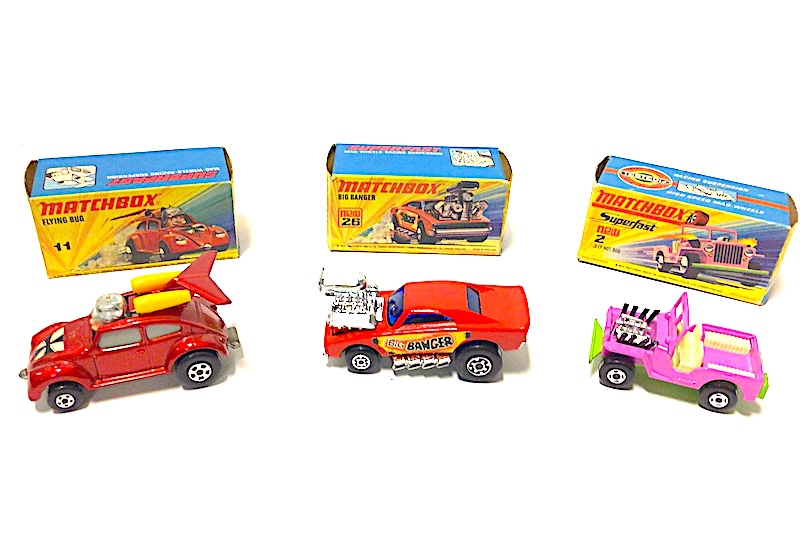
Not my thing! Even as a child, I could thankfully do without fantasy models. They seemed phoney to me because they had no real role model.
Looking back, as an adolescent, I had the impression that we had been cheated somehow. Because most of these brightly colored "racers" didn't even exist in reality. It was therefore completely superfluous to look for their real-life counterparts on the street or even during a visit to the Geneva Motor Show.
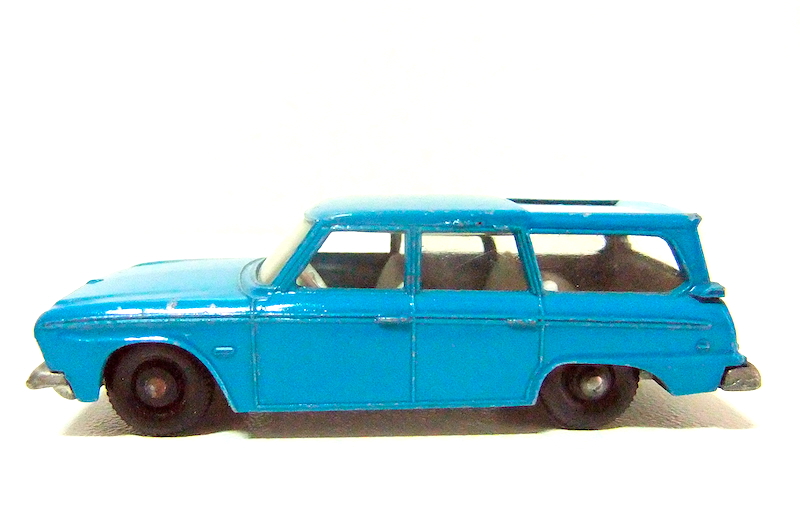
Studebaker Wagonaire from Matchbox - the sliding roof seemed implausible to me as a child and just a form of added play value.
However, there were always surprises. Because very rarely, usually unexpectedly, I came across cars that I thought were the brainchild of a toy maker, only to realize that there was a real model for them.
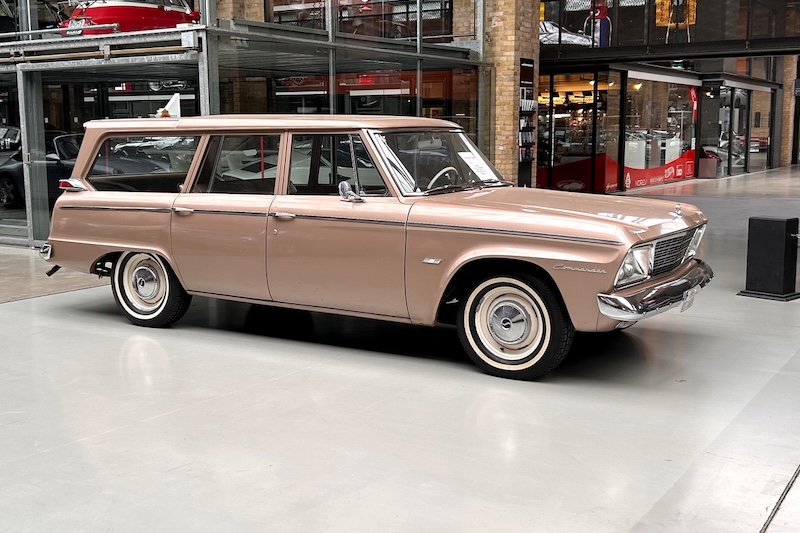
In fact, the Wagonaire with a retractable roof really does exist, like this one from one of our sales advertisements
One such car was the Studebaker Wagonaire. As a child, I was convinced that the retractable roof in the trunk area had only been invented to increase the play value of this model. Until I realized that the Wagonaire was a regular model with this extra feature.

With certain models it took a little longer, a very long time in fact. Corgi Juniors had a Mini painted in metallic purple with the wrong proportions at the front and rear, an engine protruding through the hood and a body that was too flat. The only good thing about the thing was that it always won the races on my rather rudimentary Hot Wheels track. I still don't know why it did that. For a long time, I didn't pay much attention to what was written on the bottom of the car: "B.V.R.T. Vita-Min". Well, that probably wouldn't have persuaded me to check whether there was a model for this fantasy mini. But, as you might guess, there is! And the story behind it is more than remarkable.
Hot rod as a role model
The original idea of not only lowering the roof of a Mini in the style of a hot rod, but also lowering its entire body by a few centimetres, which were cut out horizontally, came from Neville Trickett. The Brit lowered a first used Mini by around 7.5 centimeters. This conversion soon became the talk of the town and Trickett was invited to build 50 more such cars in Rob Walker's Corsley Garage. The whisky heir Walker was not only the owner of a chain of garages, but also the boss of his own racing team. Among other things, he won the first GP victory for Lotus with Stirling Moss in Monaco in 1960 - in a Type 18. Jo Siffert won the 1968 British GP at Silverstone with Rob Walker, also in a Lotus, the first Lotus 49 powered by the legendary Cosworth DFV.
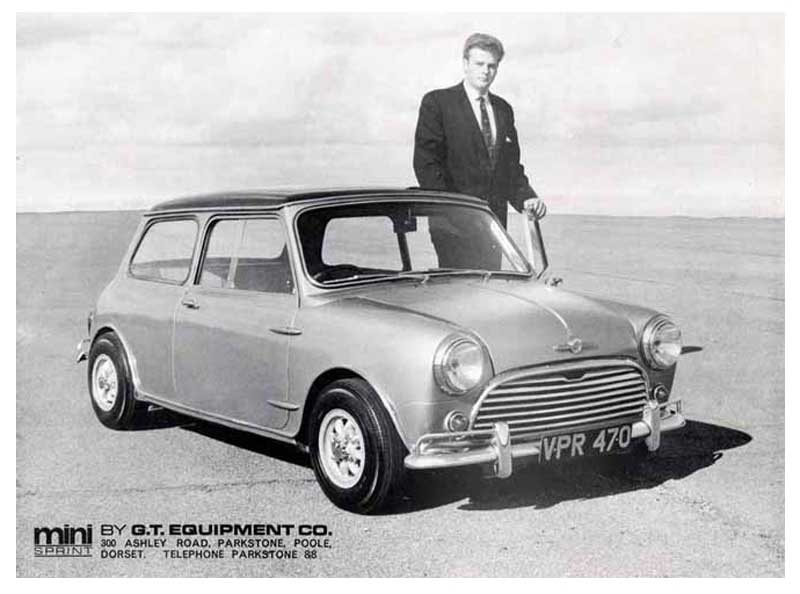
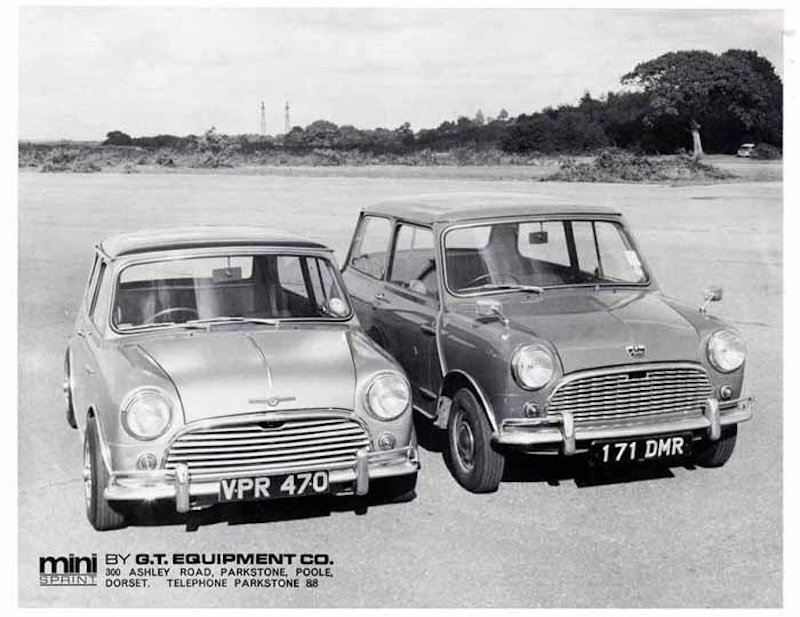
But back to the flat-roof Mini: the conversion known as the MiniSprint was excluded from most racing classes, as it was forbidden to tamper with the body structure in both touring car and rally sport at the time.
B.V.R.T. on the road to success
Jeff Goodliff therefore used the idea of a flat-body mini to build a mountain racing car. His company was originally called British Racing and Tuning BRT, but British Vita, the market-leading - and still existing - manufacturer of foam cores for most British-made car seats, wanted to get into motorsport. This collaboration gave rise to British Vita Racing and Tuning B.V.R.T. In 1968, the team won the British Hillclimb Championship, the Northern Section of the British Touring Car Championship and the up to 1000 cc class of the European Touring Car Championship, all with specially prepared Mini Coopers.
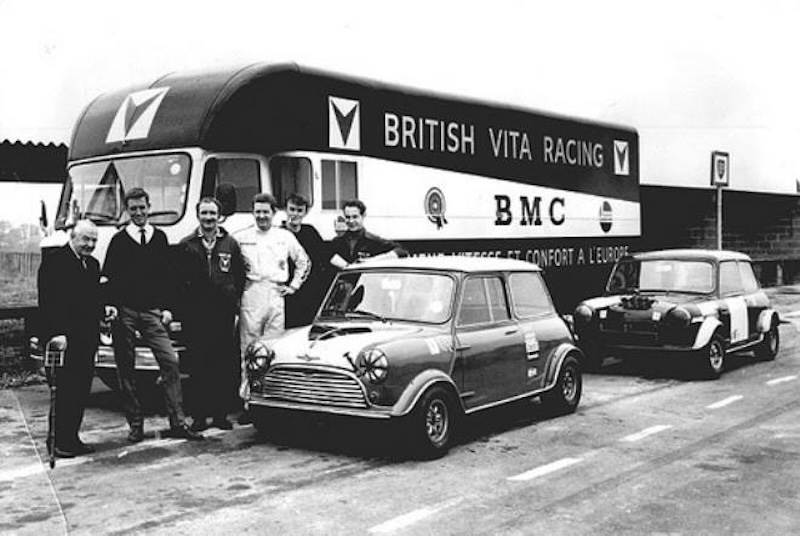
In 1969, a Mini was to compete in the GT class up to 1300 cc, as Goodliff cut his winning car from 1968 into pieces and modified it extensively. The aim was to squeeze as much power as possible out of the engine and save weight. The rear subframe was removed and replaced by a lightweight rigid axle on trailing arms and a reaction triangle with coil springs. And even the brake anchor plates were provided with holes to lighten the weight. The tank, battery and all important components were moved to the front so that the driven front axle was well loaded. As many aluminum panels as possible were added to the bodywork. The engine with an 8-channel cross-flow cylinder head developed by B.V.R.T. also received a supercharger from Godfrey. As a result, the BMC-A engine, or what is left of it, produces around 180 hp. The engine proved to be so reliable that it allegedly never had to be overhauled during the entire 1969 season.
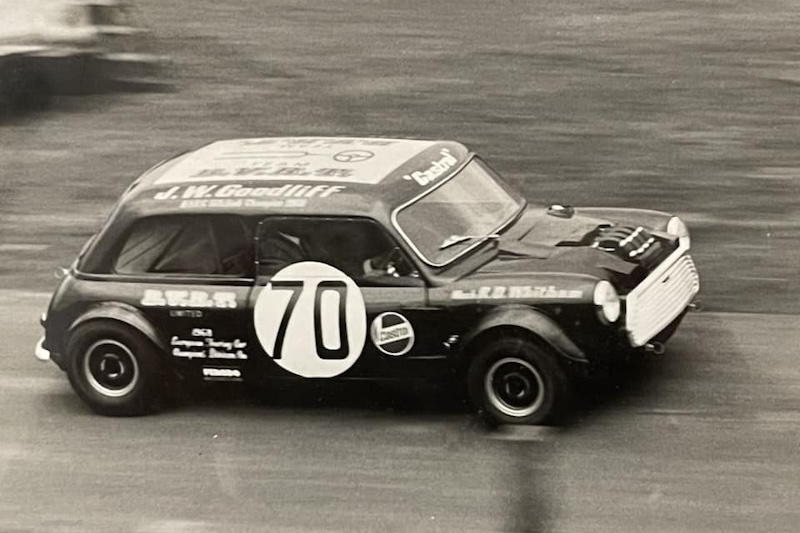
The front hood was made of fiberglass and had to be cut out to make room for the engine's voluminous intake tract and compressor. In the original Mini, the engine draws in its mixture behind the cylinder head in the direction of travel. Those who installed a cross-flow head at that time often left the hood open a wider gap because the carburettor battery, which now sat in front of the engine, usually Weber instead of SU, no longer fitted under the cover. Goodliff, however, simply cut a hole in the front of his car.
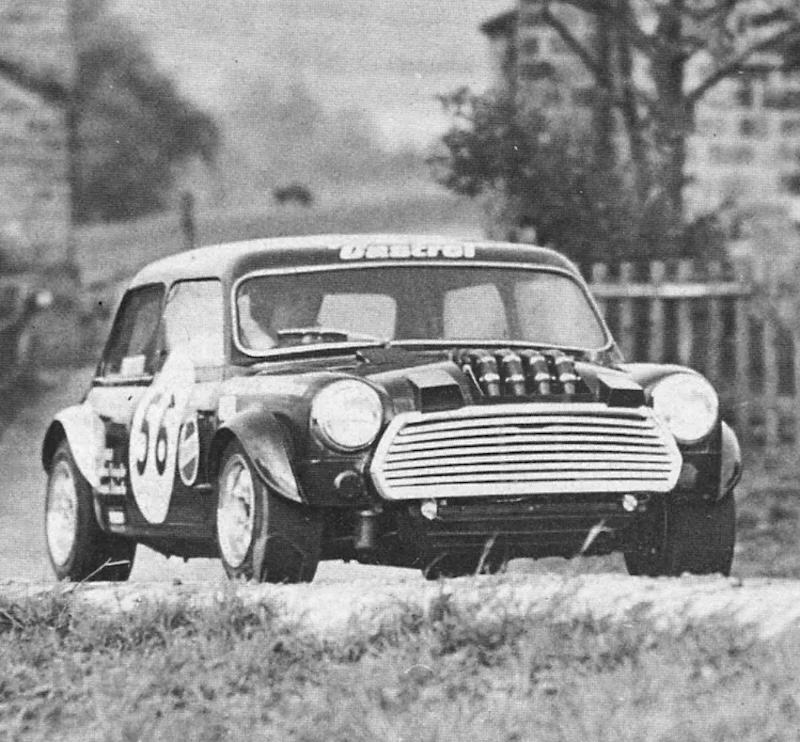
The Corgi-Juniors "Vita-Min" is a fairly accurate reproduction of this racing car, except for the lettering, here with paper stickers, within the possibilities of the Whizzwheels series. The extent of the modifications to this car, which is quite well known in motorsport circles in the UK, left me convinced for a very long time that the toy car was a fantasy product. It's time to get this one out of its box once again.