Away from the combustion engine? Too fast, too soon ...

Classic cars and youngtimers are closely linked to the combustion engine, with the diesel engine playing only a minor role. In the context of climate change, states and communities of states (the EU is currently introducing the "Fit for 55" plan) are prescribing a phase-out date for the sale of cars that burn fossil fuels.
So far so good, but unfortunately in many places the successor technology is also being de facto prescribed and this could lead to a number of problems. The current generation of battery-powered cars is suboptimal and a lot of energy is needed to manufacture them. The materials used are already threatening to become scarce and a smooth supply of electricity to the cars is not yet guaranteed. Car manufacturers are facing an enormous upheaval, as completely different skills and production facilities are suddenly required. Whether this will all work out is highly uncertain.
There are certainly alternatives to achieve the desired effects without having to introduce completely new technologies under so much time pressure.
On the one hand, there are synthetic fuels, which allow existing cars to continue to be driven in a CO2-neutral manner, so to speak. Of course, this is not highly efficient, but the existing cars have already been produced and could therefore continue to be used for a little longer (also as classic and youngtimers).
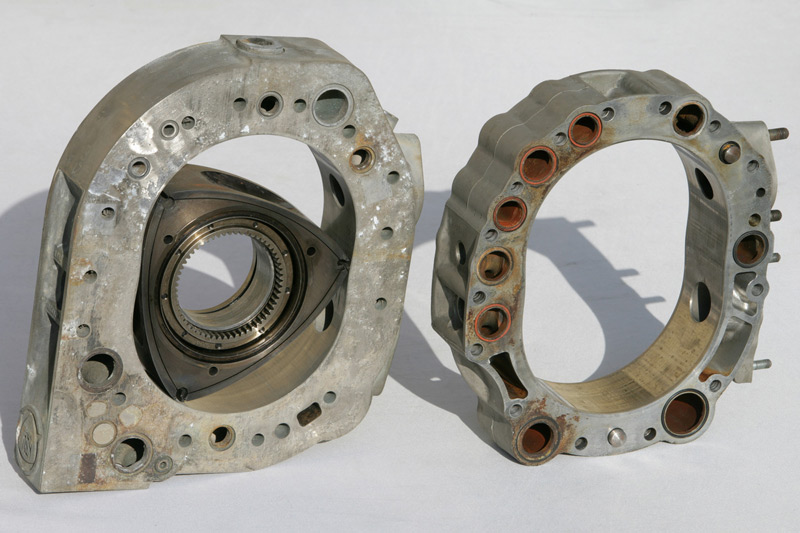
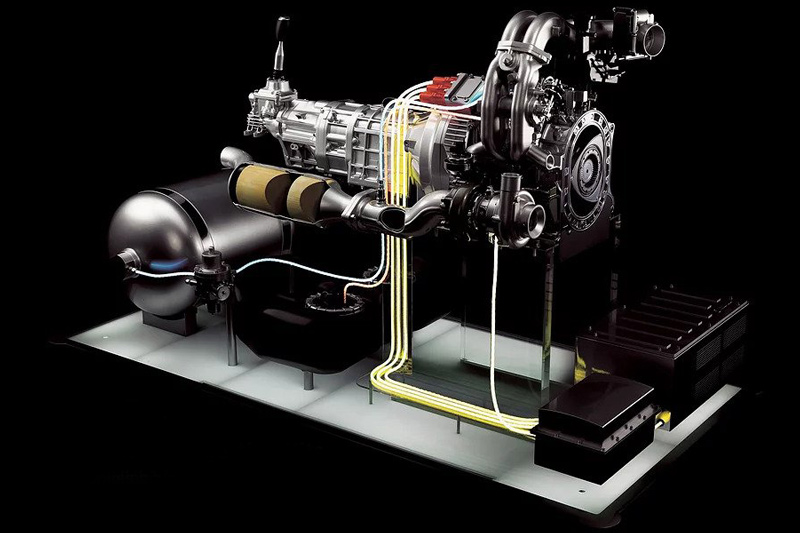
On the other hand, there is the possibility of not only converting hydrogen into electricity via fuel cells, but also burning it in modified four-stroke engines. Such a unit will be somewhat more expensive than the previous combustion engine and may not generate quite as much power per kg, but it can be produced on the existing production lines and is also compatible with the cars built today. Even the Wankel engine (see picture of Mazda) could become relevant again with H2. One could even imagine converting today's cars to H2 engines, following the crate engine principle, so to speak. Here, too, the overall efficiency is worse than with battery electric vehicles, but a lot of know-how and infrastructure (including filling stations) can (largely) continue to be used. However, this would require a nationwide supply of environmentally friendly hydrogen.
And what does all this have to do with classic and vintage cars? Well, our cars also need an infrastructure consisting of maintenance facilities, filling stations and so on. If the infrastructure is only geared towards electric cars, then we will also have a harder time with our old cars and will have to buy fuel from DIY stores or pharmacies, for example (as was the case back then). It is therefore also important for the survival of the classic car that the basic technologies do not simply disappear. And it would make sense for the world to propose a roadmap that achieves the climate targets without having to write off previous investments too soon ...