Claude Haldi, the Pirmin Zurbriggen of motorsport (obituary)


"Driving has a lot in common with skiing, especially on snow and ice," Claudi Haldi once explained to a listener. He competed in the "Rallye des Neiges" with a Simca 1000 and immediately came seventh out of 50 participants. This rally awakened his passion for motorsport. His path led via an Abarth Simca, Ford Cortina Lotus to the Porsche Super 90.
Thanks to his friendship with Porsche engine tuner Guido Haberthür, he remained loyal to the Stuttgart-based company, with a few exceptions.
Claude Haldi's career lasted more than two decades. Haldi, who competed exclusively in touring and sports car races - he had no interest in formula cars - was the Swiss driver with the most participations in the endurance classic at the Sartre with 22 Le Mans starts.
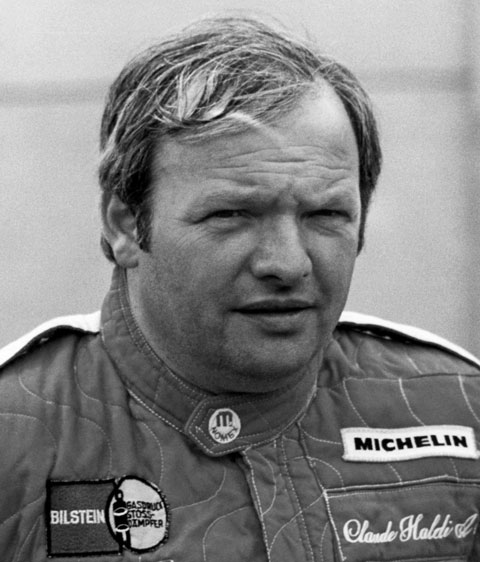
In the seventies, he was one of the best drivers in the GT class. In 1970, he won the overall European Hillclimb Championship in the GT class in a Porsche 911S with class victories in Barcelona, Cesena, Trento and Schauinsland. In the same year, Haldi also finished second overall in the Stuttgart-Lyon-Charbonnières Rally. In 1977, he achieved his only victory in the Sports Car World Championship with Bob Wollek and John Fitzpatrick in the 6-hour race at Hockenheim.
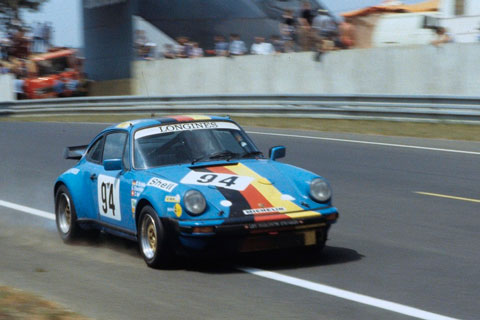
In 1975, he won the Porsche Cup title with prize money of 50,000 marks against teams such as Kremer and Loos, who had much higher budgets at their disposal, and prevailed against a total of 122 drivers from 16 nations. In the same year, Claude Haldi won the GTX class at the 24 Hours of Le Mans in a Haberthür-prepared 930 Porsche Turbo together with Peter Zbinden and the French driver Beguin (starting number 20). They finished 15th overall with this "road Porsche Turbo". Incidentally, this Porsche was the 13th 930 Turbo Porsche ever built and at the same time the official exhibition car at the 1975 Geneva Motor Show, where a Porsche Turbo Type 930 was presented in Switzerland for the first time. The victory at Le Mans in the GTX class was also the very first class victory for Porsche with a turbo engine.
The Lausanne native was also successful in rallies at home and abroad. In 1979, he won the Swiss Rally Championship in a Porsche 930 Turbo. His second place overall with Bernard Chenevière in a Porsche 911S at the 24 Hours of Spa in 1969 and third place at the legendary Targa Florio in 1973 in a works Carrera RSR were outstanding.
In 1979, he was presented with Switzerland's highest award, the "BP Racing Trophy".
As he won everywhere, whether in hill climbs, circuits or rallies, he was certainly the best all-rounder in Switzerland, if not the whole of Europe, and is therefore regarded as the Pirmin Zurbriggen of motorsport. "In the rallies, I was always fascinated by the improvisation and the ever-changing road, on the circuit it was the necessary precision and the high speed and in the hill climbs the extremely high concentration on a short drive after a start with cold tires and brakes."

Despite repeatedly achieving very good results in the World Endurance Championship, he was denied top ten results in Le Mans in 22 participations from 1968-1993. He only saw the chequered flag a total of five times and his best result came in 1979 with 11th place in the overall standings in a Porsche 935 with team-mates H. Loewe and Rodrigo Teran. In 1981, he was very lucky to survive a serious crash when the rear wing of his Porsche 935 broke at 320 km/h on the Hunaudières straight. "At first it was just black in front of my eyes, then I skidded along the crash barriers for a long time and finally it spun the rest of the car a few times. When I finally came to a halt after half an eternity, the car was facing in the opposite direction, in the middle of the track. All that was left of the car was the chassis, the body and engine were in a thousand pieces."
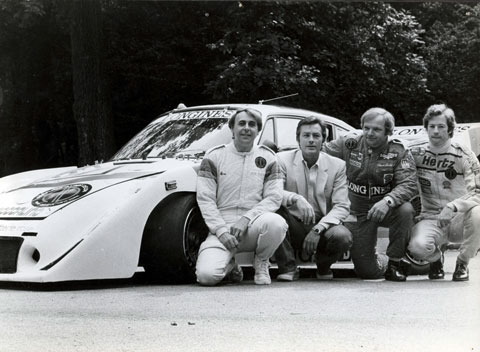
Just a few weeks later, he was hospitalized for three months with open fractures in both legs after a karting accident at a club event in Lyss (CH).
As an amateur racing driver who financed most of his outings himself, he was also able to compete in a few works events for Porsche. He quickly realized: "It's unbelievable what a difference there is between the works cars and the private cars. It's only when you've driven both that you realize that you never have the slightest chance as a private driver."
Since the end of his racing career in 1993, he has managed the family business (apparatus engineering) in Lausanne, which was founded in 1919 and which he never abandoned, even during his racing career. The trained coppersmith owned several industrial companies and remained closely involved in motorsport for many years as Vice President of the Swiss Automobile Club. He also fought for the realization of a Swiss race track in the Moudon area for as long as his health allowed.
Born in Vaud on November 28, 1942, Claude Haldi would certainly have enjoyed the Formula E race in Zurich, but unfortunately he suffered from Alzheimer's in recent months and passed away on December 25, 2017 at the age of 75.