"Nocken Paul" - BMW's 1400 hp heart stopped forever the day before yesterday

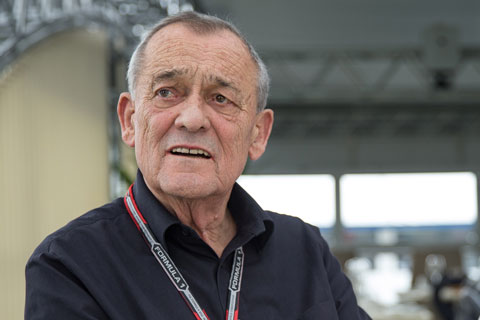
Paul Rosche passed away on November 15 at the age of 82 in his hometown of Munich. "Nocken-Paule", as he was affectionately known, was behind many of BMW's racing engines. He was the father of the 4-cylinder turbo with around 1200 hp, with which Nelson Piquet went down in history as the first turbo world champion in 1983. After attending the Polytechnic, Rosche joined BMW on November 1, 1957. Under Alexander von Falkenhausen, he was one of the six specialists responsible for the development of engine blocks, camshafts, pistons and all other additional engine components.
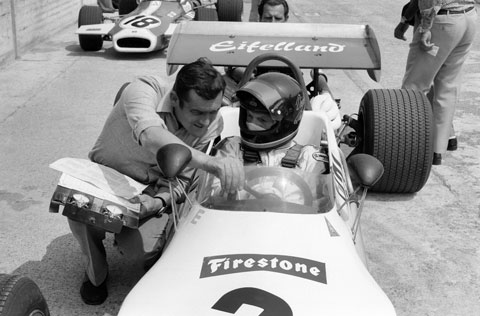
After various series engines came the racing engines. Nocken-Paule became the boss of the hot engines from Munich. After various attempts with its own Formula 2 racing cars, the company finally joined forces with the English racing car manufacturer March in the mid-70s and became the "measure of all things".
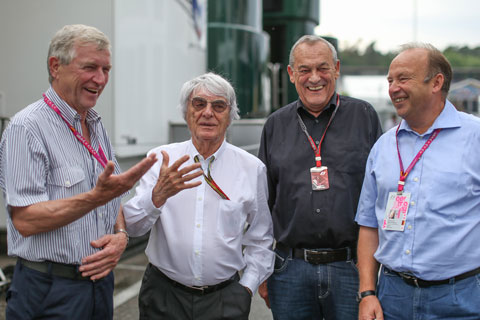
Formula 1 was the goal. Together with Jochen Neerpasch and later Dieter Stappert, they succeeded in convincing the board of directors. Together with Bernie Ecclestone, the 4-cylinder turbo, which was based on a production in-line 4-cylinder block, was installed in the Brabham. However, the start was more than difficult, so that team boss Bernie Ecclestone was already considering switching back to the tried and tested Ford-Cosworth V8.
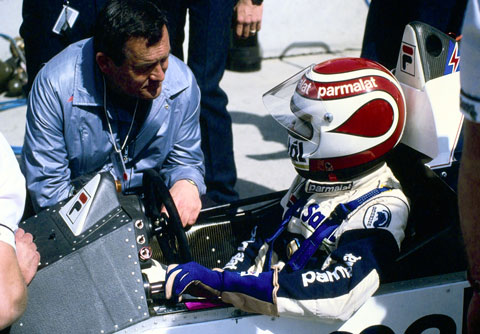
But things turned out very differently. Nelson Piquet won the 1982 Canadian GP and was world champion just one year later. The turbo engines with over 1400 hp for a short time were extremely difficult to drive. BMW withdrew from F1 at the end of 1986.
Rosche, however, found new tasks at BMW and was responsible for the most successful touring car engine. With its engine, the M3 E30 won everything that could be won over the years and the throaty, powerful sound remains like a symphony in the ears of fans to this day.
The engine of the first McLaren sports car, the 6.1-liter V12, was also designed by Rosche. But it was not only used on the road, no, this engine, or modifications of it, also won the 24 Hours of Le Mans twice, once in 1995 in the McLaren sports car and in 1999 in the BMW sports prototype V12 LMR built by Williams.

This also provided the link for the second F1 entry with Williams. Rosche retired in 1999 at the age of 65.
Rosche was an incredibly likeable and humorous person. Together with the prankster Nelson Piquet, they formed a duo where the fun had no limits.

BMW also commemorates its loyal employee in an extensive press release: BMW Group mourns the loss of Paul Rosche.
One of the most influential engineers in the history of the BMW Group has died. Paul Rosche, who worked for BMW in various functions from 1957 to 1999, died on Tuesday at the age of 82 in his hometown of Munich.
"We are all very saddened by this news," said BMW Motorsport Director Jens Marquardt. "Paul Rosche represented and shaped the company and the BMW brand for decades with his passion, his vision and his enormous technical expertise, and not just on the race track. The results of his work - regardless of the vehicle or series - are often milestones in the art of engineering. In Paul Rosche, BMW Motorsport and BMW M have lost an outstanding personality. He constantly redefined the limits of what is technically feasible. We at BMW Motorsport will preserve this spirit. Our deepest sympathy goes out to his family and friends."
42 successful years in the service of BMW
Camshaft calculations for sports engines were always Rosche's favorite field, hence his nickname "Nocken-Paule". He joined BMW in 1957 directly after completing his studies and accompanied the company to Formula 1 twice during his 42 years as an employee.
Before Rosche joined BMW Motorsport GmbH in 1975 as Head of Development of the BMW M1 road and racing engine, he worked in the BMW Research and Development department under Alexander von Falkenhausen. In 1969, he had already designed the two-liter turbo engine with which BMW won the European Touring Car Championship.
In 1980, as Technical Managing Director of BMW Motorsport GmbH together with Dieter Stappert, Rosche laid the foundations for BMW's first Formula 1 involvement and, as engine project manager, played a key role in the success of BMW engines in the turbo era.
Rosche and his team created a potential world championship winner from a four-cylinder production engine with a displacement of just 1.5 liters. 16 valves, a turbocharger and digital engine electronics, used for the first time in Formula 1, helped the engine to achieve an initial output of around 800 hp. The Brabham BMW made its debut at the start of the 1982 season, with Nelson Piquet winning the world championship just 630 days later. The turbo engine, whose potential seemed almost limitless, was responsible for a total of nine Grand Prix victories up to 1987. Rosche once answered the question about the maximum power output of the Formula 1 engine in his own irresistible way: "It must have been around 1,400 hp, we don't know exactly, the measuring scale of the engine brake stopped at 1,280 hp."
Rosche's signature also in the BMW M3 and the BMW V12 LMR
The Formula 1 triumph was the most spectacular, but by no means the only success based on the ideas of the thoroughbred engineer born in 1934. Under Rosche's leadership, the 2.0-liter four-cylinder, four-valve engine was also developed, with which more than 150 race victories and six titles were clinched in the Formula 2 European Championship, as well as the 6.0-liter V12 engine of the 1995 and 1999 Le Mans winners. Rosche's tenure also saw the development of the engine for the first generation of the BMW M3, which became the basis for the world's most successful touring car and a new form of driving pleasure on the road.
After BMW withdrew from Formula 1 at the end of 1987, Rosche remained Technical Managing Director of BMW M GmbH until 1996 and, as Technical Director and Managing Director of BMW Motorsport Limited, set the course for BMW's return to Formula 1 as an engine manufacturer. Rosche retired in 1999.