Scandinavian car culture and 60 years of Amazon at the Swiss Volvo Meeting 2015

Old Swede! Between 600 and 700 Volvo fans from all over Europe made their way to the Kanderarena in Mülenen with their vintage and classic cars at the end of August. The new location of the Swiss Volvo Meeting between Spiez and Frutigen offered participants and visitors a fascinating cross-section of 80 years of automotive innovation from Sweden in midsummer weather. The focus was on the "Amazon" model, which has been cult for 60 years.
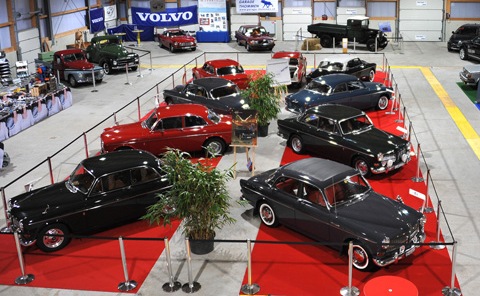
In the festively decorated Kanderarena, where cows and calves usually change hands, for once trouvailles on four wheels were competing for attention. Next to the brand new XC 90 was the oldest Volvo in Switzerland, a 1931 LV 65 truck with a side-steered six-cylinder engine and artfully built wooden platform. A few steps further on was an equally well-preserved P833 pick-up from 1953 - a very rare type that is practically "extinct" in Sweden itself. Vis-à-vis, finally, a representative of the 1960s, a pontoon body in the process of restoration. It showed the skeleton, so to speak, of the clear main attraction, the eight special Volvos of the "Amazon" type, as the 120 /130 series was also known.
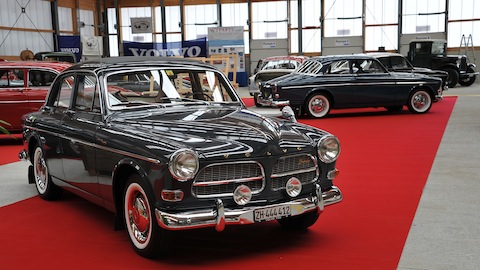
The Amazon was the first Volvo model to be exported to 70 countries and was even assembled in new plants in North America, Belgium and South Africa. However, the successful model got off to a rocky start: designer Jan Wilsgaard was told by Volvo bosses that the car looked like a pin-up girl and was far too pretty. Director Gabrielson even gave him a "suggestion for improvement" to make the design uglier. Fortunately, the young designer didn't listen.
The future looked bright in the swinging sixties. The black movement, the moon landing, Woodstock: old habits were not only cut in the USA, but also in Scandinavia and Switzerland. Women were discovered as a customer group and co-decision-makers when buying a car, and safety no longer had to come at the expense of good looks. Today, the timeless elegance of these Swedish beauties is reminiscent of an era of the dawn of modernity - headrests and seat belts came as standard for the first time, later disc brakes, but above all, the elegant design from a single source continues to impress aesthetes to this day.
The organizers of the Swiss Volvo Meeting also succeeded in presenting the oldest surviving example of the Amazons in Switzerland. With chassis number 42, the black and white notchback sedan P1200 belongs to the pre-series. The four-door model in excellent original condition was imported to Switzerland in 1956 by garage owner Fritz Häusermann and has therefore been in the vehicle fleet of the former Swiss general importer for almost 60 years.
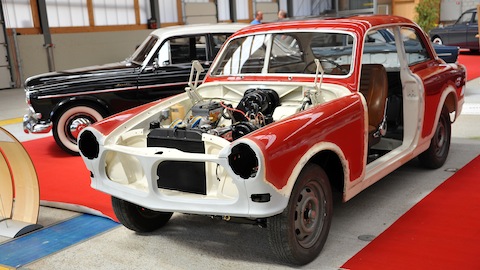
The other exhibits allowed visitors to easily follow the development and special versions: Two Volvo 121s and a 221 station wagon, all built at the end of the 1960s, already ensured brisk progress with around 90 hp. The lowered, red 121 in racing version, on the other hand, later found a second youth: with a modern roll cage, weight optimization, spoiler rear and radical engine tuning, the souped-up grandpa now has over 200 horses under the hood. A beautiful 122S from 1963 with original paint and a rare Webasto folding roof as well as two 123 GTs with overdrive, wide "crown prince" rims and Simons sports exhaust rounded off the exhibition.
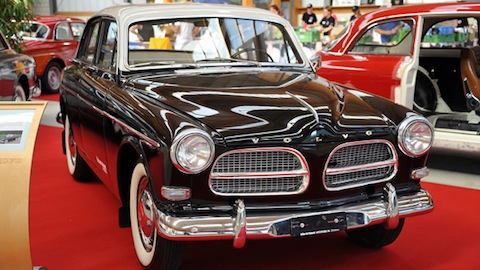
Timeless design, direct feedback During the drive on Saturday, which led from the Kanderarena to the "Bütschelegg" restaurant and viewpoint above Riggisberg, the Volvo jubilees were able to show what they are made of and what still makes them so fascinating today: the fun of timeless design and practical, beautifully designed functionality. All the finished parts have a delicate yet solid appearance. They are designed to be durable and have a very simple construction. The air conditioning system, for example, consists of triangular hinged windows in the door, which direct the wind into the interior if necessary - but also rain.
The heating is powerful enough for Swedish winters. When it's over 30 degrees uphill, as it was this weekend, it can also be used to cool the engine. The drive unit is also a lot louder and reports back complex signals that need to be interpreted correctly. Operation is strictly mechanical, but the vehicle is still immediately perceptible - unlike today's driving, which is wrapped in absorbent cotton and strangely detached from the environment.
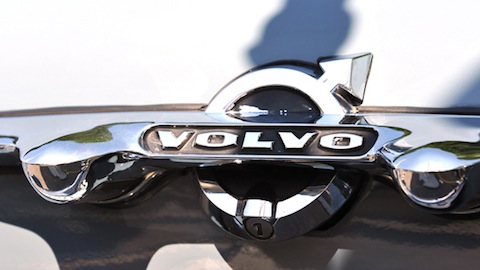
In addition to the good all-round visibility and the high-quality instruments, the eye is delighted by the many details that have been created with dedication and timeless elegance. From the front to the rear, from the tidy "engine room" to the trunk lid. A three-dimensional Volvo logo is emblazoned on the number lighting positioned on the upper edge - the lower half of the ring is the cleverly integrated handle for opening. And inside, the spare wheel stands upright on its side. In the event of a breakdown, there was no need to unload all the luggage, as is usually the case today. There was also a bag with a jack, wheel wrench and breakdown triangle. That was all that was needed at a time when mutual respect was still one of the most important components of safety equipment.