Volvo electric vehicle 1976 - not yet ready for the future
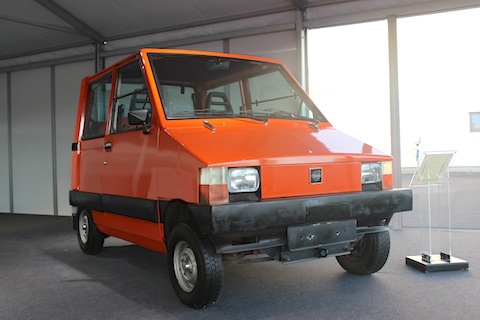
Since the success of the Tesla at the latest, electric cars have left their shy niche and found their way into everyday traffic. At Volvo, a fleet of 300 all-electric C30s went into customer hands in 2010, and in 2019 the first all-electric car will be available to buy off the shelf. However, the Swedes experimented with an electric flea as early as 1976, but it never made it past the prototype stage.
Mini car with an unladen weight of one ton
In 1976, Volvo built two test vehicles that were not given a proper name.

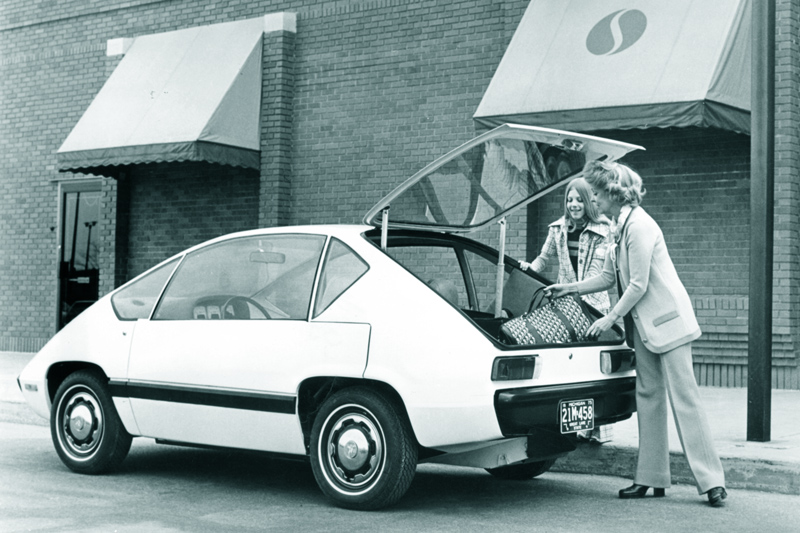
They were simply referred to as "Elbilsprototype" (electric car prototype). An orange-red model had four seats, a yellow one had two seats with a large load compartment. It was probably no coincidence that the latter was yellow, as an electric delivery van would have been ideal for the postal service, as the respective routes were predictable and therefore calculable.
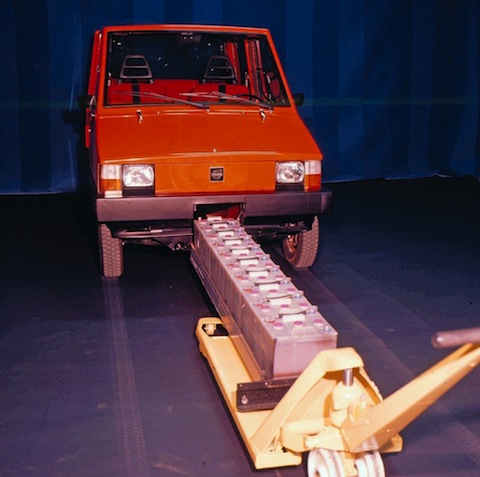
The range was obviously not very long. It is not stated in kilometers, but in hours: around two hours of operation at a cruising speed of 50 km/h is promised. The clever calculator comes up with a range of 100 km. That's not exactly a lot when you consider that the batteries will have to be plugged in all night. Developers at the time were still dreaming of today's fast charging stations.

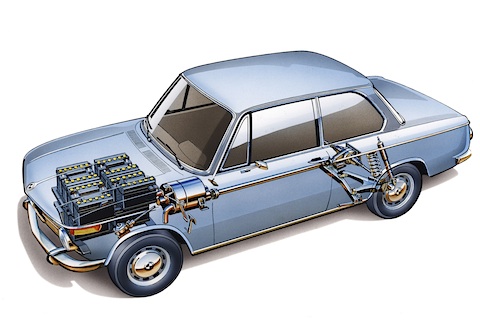
The top speed is given as 70 km/h. The weight of the batteries is put at 300 kg with an unladen weight of around one ton. That was quite a lot for a tiny car with an exterior length of just 2.28 m (Smart I: 2.50 m). If you now add four full-grown people or two passengers plus cargo, the batteries would have run out of breath even faster. Contemporary press photos show ten car battery-like accumulators that are pushed under the car from the front. The control electrics are located under the hood above. The thyristor-controlled electric motors are installed with the rear axle.
Shoebox as the ideal shape
The four-seater was shown at the presentation of Volvo's future electric strategy in Gothenburg. Unfortunately, it was locked, but at least photos of the interior were possible through the open tailgate.
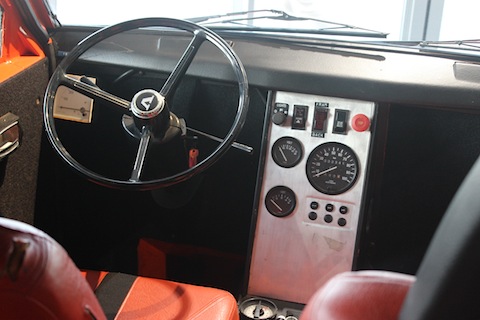
It shows a very simple interior with an aluminum panel as the center console, which houses all the switches and displays. The exterior shape, including the windows, is extremely flat and represents the best possible use of traffic space. A few years later, the functional form celebrated its happy birthday in the Fiat Panda, albeit in a much more original form. This may have stood in the way of the Swedish experimental car. It was not perceived as a serious automobile. The two prototypes were extensively tested in Gothenburg city traffic at the time, and apparently the results were not very promising. The driving performance was sufficient for limited use in the city or as a delivery car. However, the short range, the limited number of charging cycles and the long charging time of the lead batteries stood in the way of series production at the time.
The car is normally housed in the Volvo Museum in Gothenburg. And it is unfortunately not drivable at the moment. Those responsible joked that it was probably an electrical problem...