Aerodynamic optimization 60 years ago

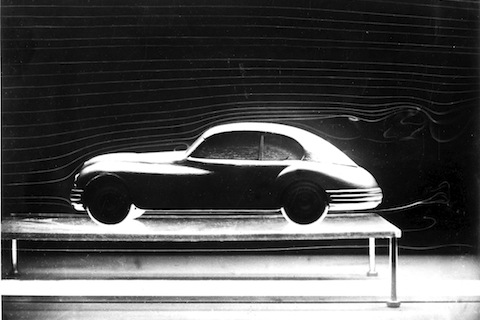
Even 90 years ago, pioneers of automotive aerodynamics- Edmund Rumpler and Paul Jaray - showed what streamlined cars should look like. However, most of the vehicles that wealthy motorists could actually buy in the 1920s were more reminiscent of square carriages than water droplets.
However, car manufacturers understood the physical relationship between air resistance and the power required to achieve a certain speed, so it is no coincidence that the developers of sports cars were particularly interested in aerodynamics.
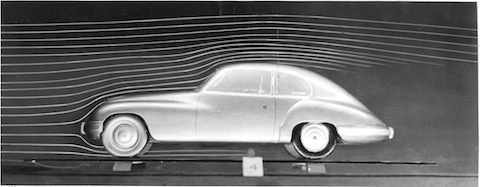
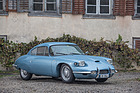
Pioneers in this field included the people at Bristol , who naturally had the relevant prior knowledge, not least because of their background as aircraft manufacturers. However, at that time there were neither huge wind tunnels nor computer simulations to help optimize the car body. Models had to be used for wind tunnel tests and the airflow had to be tested on moving vehicles with attached woolen threads.
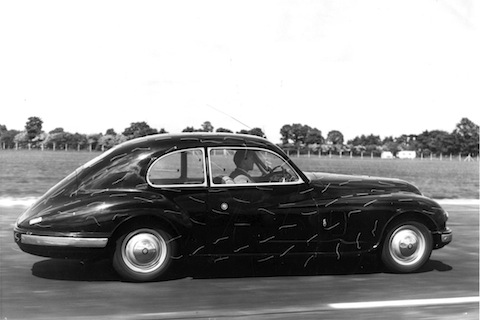
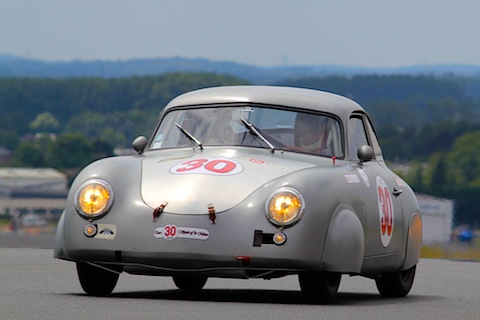
The aerodynamics of the Porsche 356 were also optimized in this way, as pictures in sales brochures from the time show.

Of course, neither the design of the underbody nor the finer details of the bodywork could be effectively checked in this way, but the results are nevertheless impressive, as the Bristol 401 already achieved a cd value of 0.36, while the early Porsche 356 was even just under 0.30.
Interestingly, these values deteriorated in the successor models as other priorities, such as clarity or aesthetic aspects, became more important.