The ultra-fast self-build
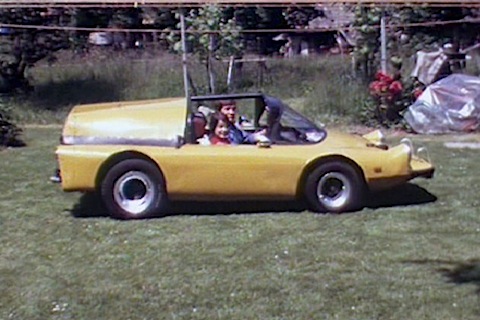
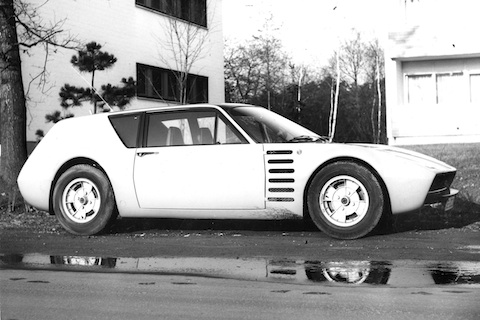
In the past, some things were different and many things were easier. For example, you could build your own from parts from a wide variety of vehicles and even get road approval, as my own example shows.
At the end of the 1960s, the front axle of a BMW Isetta and the rear axle of an NSU TT were installed in a chassis welded together from steel tubes with a diameter of 50 millimeters. The engine was also taken from an NSU TT, and later a racing engine with an open exhaust was fitted, but more about that later. The rear and front drum brakes were actuated by a Jaguar dual-circuit system. The front rims came from the Mini (10 inches), the rear ones from the NSU 1000 (12 inches). The fuel tank was a plastic canister with a capacity of 10 liters.
The chassis was fitted with a plastic body designed according to our own ideas, into which the rear window of a Goggomobil was fitted at the front. Additional stability was provided by a body skeleton made of thin tubes onto which a 0.5 mm thick polyester film was riveted. I laminated the transitions.

A polyester spoiler was constructed at the front to create a sporty look and increase downforce. The radiator grille at the rear was supplied by an Austin Mini 850, the tail lights by a Simca 1000. The headlights came from Austin, the wide beams from Hella. A sanitary pipe with PU insulation was used as the bumper. The "dashboard" was made from 1.5 mm thick sheet aluminum, and instruments from VDO were fitted.
The result was breathtaking. The vehicle weighed around 390 kg and had a top speed of around 200 km/h. The fuel consumption leveled off at seven to nine liters, so that it had to be refuelled every 130 to 150 km; longer trips would not have made sense because of the concentration required at the steering wheel.
Anyone who thinks that the car was only used for short trips and fast mountain passes is mistaken. For a year, the in-house design served as an everyday car in Geneva.

Long journeys were also undertaken, the last one via the Italian highway to Yugoslavia, where the car was then parked near the airport. I probably owe a longer life to this wise decision.

Just imagine that the lightweight two-seater with just under 100 hp from the racing engine had a power-to-weight ratio that gave neither Ferrari, Alfa Romeo nor Porsche sports cars of the time a chance. Although air resistance dampened the rapid acceleration above 100 km/h, below 100 km/h only a motorcycle could pose a threat to the home-made car.