Alpine ride or Alpine race?

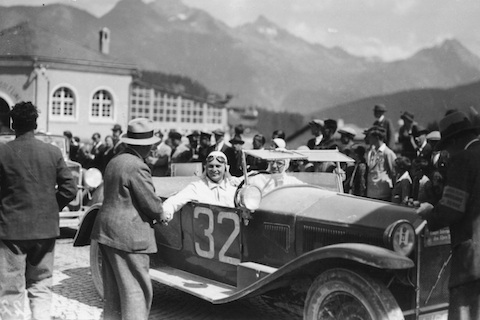
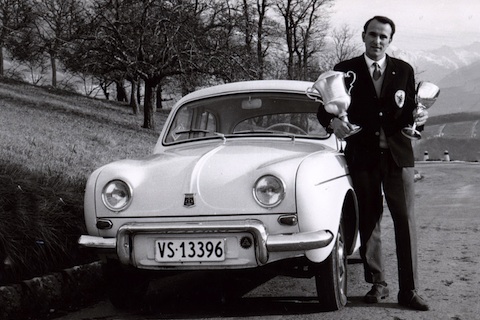
In the first half of the 20th century (or even a little beyond), Alpine drives were popular events to prove the qualities of the ever-improving automobile and to offer drivers sporting challenges. These were no "coffee runs", as some of them had to cover long distances in a short time and the road network 60 or 80 years ago was of course not of the same quality as it is today.
An example of this is the 1928 Reichsfahrt and Alpenfahrt organized by the Allgemeiner Deutscher Automobil-Club. "A total of 2839 kilometers had to be covered on the 6 days of the drive, which corresponds to an average of 473 kilometers per day," wrote the Automobil Revue at the time, pointing out the enormous challenges for the participants, who had to drive almost day and night to cover the required distances.
The joys of the high speeds required for victory were not undivided and the Automobil Revue complained " loudly" on the front page of issue 61/1928 about the sometimes reckless driving, which showed no consideration for speed limits, which at that time were still 12 km/h or even 8 km/h in some cases, or for other road users.
However, the resisting local authorities, farmers and other affected parties in Switzerland did not make it easy for the German speeders and Alpine conquerors either, as a report in the German motorsport newspaper proved:
"It has happened that vehicles have been pelted with stones by local residents, people in the canton of Glarus have used road construction equipment in the hollow lane near Küssnacht - loosely based on Tell! - In the canton of Glarus, boulders were rolled down the embankment in the hollow alley near Küssnacht using road construction equipment so that the roof of a limousine was almost smashed in, herds of cows, pigs and goats were deliberately driven onto the roads - especially in Graubünden - for the obvious purpose of obstructing passage, and when this no longer helped because the vehicles were forcibly forcing their way through, ambulances with old people were placed across the roads to force them to stop. In the canton of Glarus, carts filled with sand were placed across the road behind bends in the road to cause accidents, fire hoses were stretched across the road, and so on. But the police also helped, vehicles were stopped and demanded large sums of money as 'fines' with reference to alleged speeding, front wheels were locked with chains until payment was made, in one special case payment of a large sum of francs was extorted at gunpoint (!)."
Yes, the fighting was tough back then, on both sides. And if today we sometimes get upset about the lack of tolerance and incomprehension of motorsport opponents, this example shows that the world was not always better many years ago.