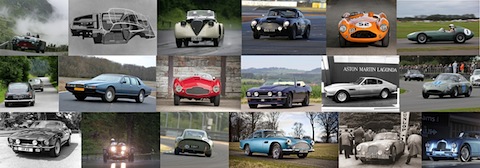
100 years of Aston Martin - a look back
Exactly one hundred years ago today, on January 15, 1913, Lionel Walker Birch Martin and Robert Bamford founded the company Bamford & Martin Ltd. in West London. They also raced the Singer cars that they sold. However, they soon came up with the idea of improving the cars or even designing their own vehicle in order to be competitive.
The first prototype in 1915, which became known as the "Coal Scuttle", was given the name "Aston Martin" because Lionel Martin had recently taken part in the Aston Hill hill climb and a list of fish, wild animals and plants did not produce a suitable brand name.
It was not until 1920 that a second prototype saw the light of day on Abingdon Road, the company's new home. However, Robert Bamford had other plans than building cars and left the company.
Lionel Martin found a new partner in the American millionaire and racing driver Count Louis Zborowski, who had become famous for his"Chitty Chitty Bang Bang" racing cars with Maybach and Mercedes aircraft engines, among other things. However, he was not only a financial backer, but also an active racing driver for the company and thus played a key role in shaping its reputation as a manufacturer of road-going racing cars. Unfortunately, Zborowski died in an accident in 1924.
But he and his car inspired a certain Ian Fleming to write a children's book, which was also called "Chitty Chitty Bang Bang". And it was precisely this Ian Fleming who later invented the famous agent 007, alias James Bond, who in turn preferred to drive an Aston Martin. And so the circle closes.
Lionel Martin was now without a partner and without money. In 1925, Aston Martin went into receivership and Lionel Martin had to leave the company. He died in a bicycle accident in 1945 at the age of 67. His former business partner Bamford had already died in 1942 at the age of 59.
The company moved to Feltenham in 1926 with new money from Lord Charnwood and the engineering expertise of Messrs Renwick and Bertelli. New racing cars, which were successful in many car races including LeMans and the Mille Miglia, were created.
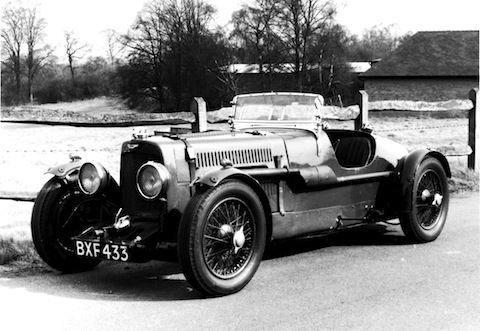
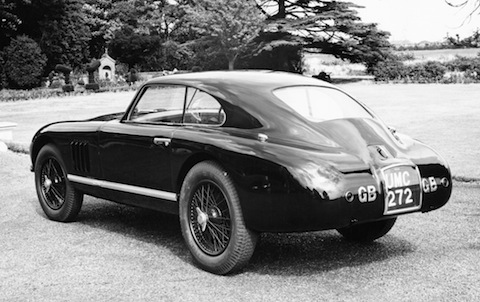
From 1932, father and son Sutherland ran the company. However, despite winning races, they struggled to generate enough money from the hundreds of cars they sold. Moreover, Sutherland Junior and Signore Bertelli did not get along, and so the latter was replaced by the talented Claude Hill. Initial plans for a new streamlined saloon called the Atom were drawn up. Then war broke out.
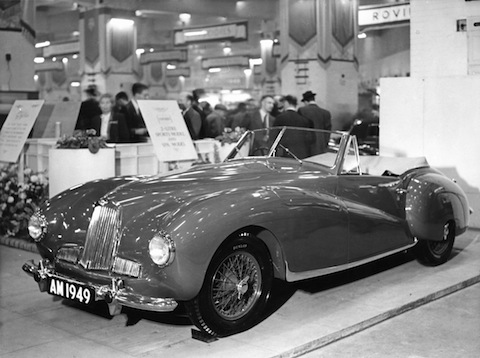
When peace was restored, Aston Martin's most dazzling era began with the arrival of tractor manufacturer David Brown. Although he liked the Atom, it remained a prototype (which still exists today). Brown wanted to see a sportier vehicle from Hill. The result of the joint new strategy was the 1948 Aston Martin 2 Litre Sports, unofficially known as the DB1. It was the first vehicle in a long line of successful models.
However, "successful" did not necessarily mean that the company also made money. The following anecdote is therefore often told:
David Brown was asked by a good customer, who already had several Aston Martins, whether he could get the next car at cost price because of his long-standing loyal clientele. Brown replied: "Of course! If they want to pay that much more!"
Unfortunately, the financial difficulties and constant shortages meant that Brown had to sell his company in 1972 and the abbreviation DB disappeared from the model designations.
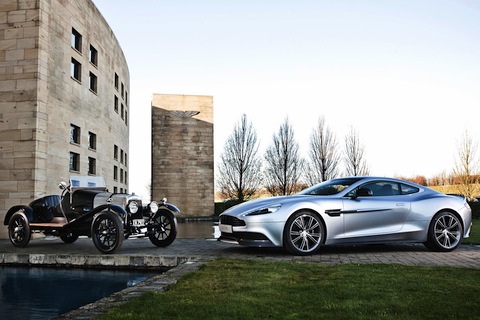
To mark the 100th anniversary, historic and current models are coming together in Gaydon, the current headquarters of Aston Martin, with the oldest existing Bamford & Martin car, which is the fourth prototype A3 from 1921. The two founders would never have dreamed of this ...
The easiest way to find out more about Aston Martin is to visit the Aston Martin topic pageon Zwischengas.