Autonomous cars will replace classic cars

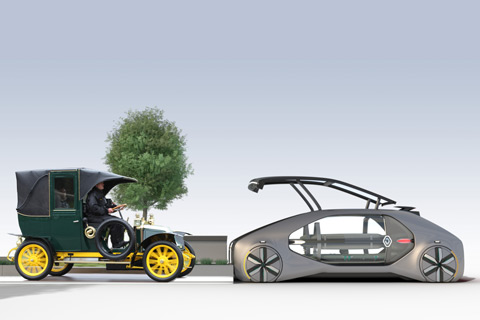
Of course, there are doubters and skeptics who do not believe that autonomous cars will one day dominate our roads. Technical and regulatory problems seem to be too great, and even an acceptance crisis from the consumer's point of view is conceivable.
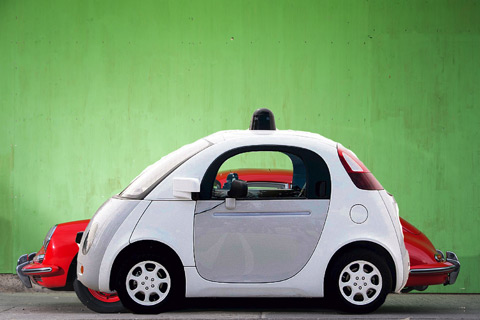
However, it is highly likely that the driverless vehicle will prevail, because the advantages attributed to it are simply too great: better utilization of traffic space, individual mobility for everyone (including children and grandparents), transport efficiency, safety (fewer deaths and injuries on the roads), ecology, etc. The list of advantages will also unite political opponents behind the self-driving car, for a better future. The technical hurdles can be overcome anyway; test vehicles are already covering hundreds of kilometers autonomously without any problems, even if not all the weak points have been eliminated.
Actually, the only thing that is still debatable is when the fully autonomous car will become established. However, this is also where the problem begins for us traditionalists who still like to turn the steering wheel ourselves and want to drive old cars that no longer meet modern safety requirements in normal road traffic. In order to make life easier for modern self-driving vehicles, the authorities will adapt roads, traffic signals and even other road users to ensure optimum connectivity and that the autonomous car can rely on the clearest possible information about its surroundings.
In the interesting book "Autonomous Driving", recently published by Professors Herrmann, Brenner and Stadler (see book review) , the authors even recommend that the switch from conventional vehicles to autonomous private transport should be encouraged by legislation. In a step before that, they suggest a separation of conventional and autonomous traffic, because mixed operation is tricky for all parties involved.
In 2035, a classic car driver will hardly be able to join the steady flow of self-driving vehicles, but would also substantially reduce the efficiency of autonomous driving if he did. Optimized utilization of traffic space can only be achieved when all vehicles are able to talk to each other and react to as few unforeseen eventualities as possible. An old car that is neither involved in "radio communication" between the cars in traffic nor able to read the traffic control information that may no longer be visually visible at that time will inevitably be replaced.
As already mentioned, it is unclear when this change will take place. We certainly have 15 to 20 years until then, but even if it is 25 or 30 years, we will feel the effects of innovation in the present much sooner. Certain roads will be closed to classic cars. This is not even a new development, because even today very old cars that do not have four-wheel brakes are no longer allowed to drive on the highway, even if they could reach the required 80 km/h.
There will be fewer and fewer potential buyers and users of classic cars, which in turn will probably affect the value of the vehicles. If the popularity of old cars really does decline, the service industry around them will also shrink again, making it more difficult to maintain the roadworthiness of the vehicles.
In principle, it is conceivable that the entire classic car movement will return to the level we had in the 1960s, when old cars were the hobby of a few enthusiasts who were either mechanically very talented or wealthy enough to be able to afford such an exotic hobby. Perhaps one day there will only be a few closed roads on which historic means of transportation are tolerated. They will be transported there by autonomous towing vehicles on trailers to enable a few hours of nostalgic driving, for a fee of course.