Classic pearls of the future - Mercedes-Benz SL 500 R230


Its predecessor, the R129, had been in production for twelve years, and even the W107 for 18 years, so expectations of the Mercedes-Benz SL of the R230 series were correspondingly high when it was presented to the press in July 2001 at the Deichtorhallen in Hamburg. Naturally, the Daimler engineers packed everything into the new sports car that was contemporary and feasible, the most visible of course being the folding roof, which made the hardtop that was still standard on the predecessor just as obsolete as a fabric roof.

Although it had only grown minimally compared to its predecessor, the new SL R230 looked significantly more powerful than the R129. It was initially available as the SL 500 with 306 hp, later came the SL 55 AMG with 476 hp and supercharger, followed in 2002 by the SL 350 with 245 hp and in 2003 the SL 600 with 500 hp (V12 biturbo). So the SL of the 21st century did not have to suffer from a lack of power. Nor did it lack assistance systems, such as Distronic, a distance control cruise control system or the Teleaid emergency call system. The brakes were electrically operated for the first time in the R230 (drive by wire).

Inside, there was leather and wood, but also some plastic, beautifully designed instruments and plenty of switches - after all, the many electrical and electronic helpers also had to be operated.

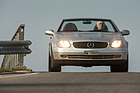
With its four-eyed face and long hood, the SL 500 looked both modern and classic, it looked good open and closed, and the folding roof only resulted in a comparatively small hump.

Mercedes sold 169,434 cars of the 230 model series (mainly in the USA) by the end of 2011. The SL was updated twice, first gently at the end of 2005 and then again at the end of 2008, when it was given a completely new front end with a new radiator grille and large integral headlights. The successor R231 continued the previous lines in a similar style.
The R230 was therefore a contemporary modern roadster with plenty of comfort and the technically feasible under the hood. On the engine side, it was still able to draw on the full range of eight- and twelve-cylinder units. This certainly makes it a classic pearl of the future; after all, all of its predecessors also became beloved second and collector's cars. Whether we will have solved the ageing problems with the complex electronics and the associated maintenance problems in 2031, when the first R230 becomes a classic car, is another question.
More classic pearls ofthe future can be found in our popular theme channel of the same name. More pictures of the R230in the picture archive.