The diesel power explosion

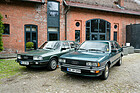
Until the 1950s, a diesel engine in a passenger car was still more than exotic. Although the Swiss company Saurer had already installed one of its diesel engines in a Plymouth in 1935 in a pioneering achievement, car buyers at the time were not yet ready for the powerful diesel engine in a civilian road car.

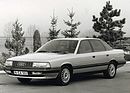
It was primarily the Mercedes Benz brand that helped the diesel make its breakthrough. In the 190 D, the OM 621 engine produced 50 hp from 1897 cm3. The increase in performance was slow. Thanks to the turbo diesel, the 300 TD was able to produce 125 hp from three liters.
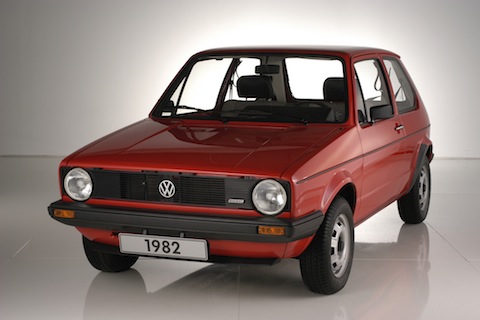
Then Volkswagen came along with the Golf Diesel (pictured above) in 1976 and planted the diesel engine in the compact class. Initially, it produced 50 hp from a displacement of 1.5 liters, but this was increased to 70 hp with the turbo. Outputs of 50 hp per liter were therefore achievable in the seventies.

A lot has happened in diesel engine construction since then. Most vehicle manufacturers, even Alfa Romeo, Citroën and Porsche have followed suit. In 1981, Mercedes Benz celebrated the millionth diesel W123. In many countries, diesel engines became the most popular engine variants.

New injection systems, ever more complex and elaborate forced ventilation and engine control systems led to ever quieter engines and increasing performance.

In the new VW Passat( B8), Volkswagen now offers a diesel engine with 1968 cm3 and 240 hp. The power per liter has therefore increased from 30 to 50 hp per liter to 120 hp per liter in the last 40 years, the torque of 500 Nm is likely to overtax some manual gearboxes and many manual gearboxes, which is why the car is (for the time being?) only offered with a dual-clutch manual gearbox (DSG) and four-wheel drive.
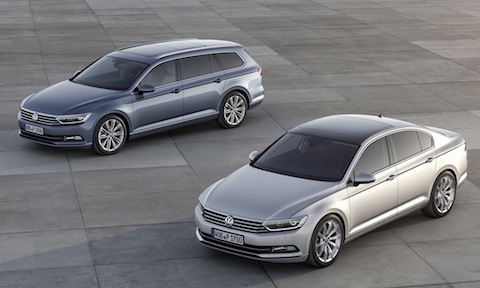
A few years ago, 120 hp per liter of displacement were top values even in petrol engine construction, so it is all the more astonishing that the diesel is now following suit so rapidly. And this with incredibly low fuel consumption. On average, the Passat consumes 5.3 liters per 100 km, even with all-wheel drive. Five times the performance with the same consumption as 40 years previously, and this with twice the weight and all-round drive. Impressive!