An ode to the in-line six-cylinder engine

Soon it will probably be history, the six-cylinder in-line engine. BMW, whose flagship for decades was this engine design, is gradually replacing the silky-running traditional engine with turbocharged four-cylinder engines in order to comply with environmental regulations, but probably also to meet the objectives of financial controllers. BMW fans will weep wistfully for it, because BMW had developed the straight-six to perfection, made it economical and enormously powerful.
At the beginning of automotive history, the cylinders in most cars were arranged in rows. We still remember the beautiful in-line eight-cylinder engines from Bugatti, to name just one example.
The first six-cylinder engine from BMW naturally carried its cylinders proudly one behind the other; it was installed in the BMW 303 and came to life in the BMW 328.

Later, the in-line six-cylinder was the optimum for most traditional brands, even Audi installed one in the Audi Front.

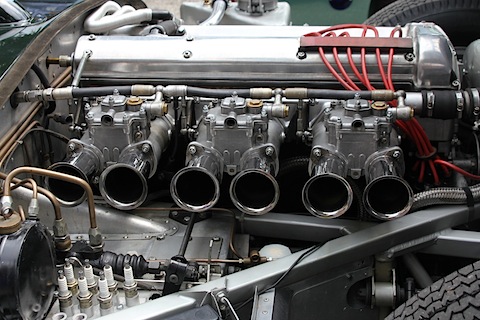
Jaguar achieved Le Mans victories with the narrowly built engine(C-Type, D-Type, picture above).
Mercedes-Benz developed several generations and again relied on the straight-six in the vehicle generations of the 1980s. People in Sindelfingen are said to have said at the time that the guys from Munich would still be amazed.
And the engine with six in-line cylinders was even available in transverse design, for example in the Austin Princess.

However, one manufacturer after another switched to the V6 camp, as this design allowed for shorter and more compact engines that could be better integrated into modern car designs. Ford made an early start, Audi and Mercedes switched to V6 engines, as did many other manufacturers.
And so the in-line six-cylinder engine will probably disappear one day, even though the advantages of this design are clearly visible. The design is simple, forces and torques of the first and second order can be compensated for by machine dynamics (i.e. without additional balancer shafts), production is relatively inexpensive and the basic design allows modular production of engines with two to six/eight cylinders. The sound pattern and the achievable running smoothness are also incomparable; anyone who has ever driven a BMW with an in-line six-cylinder engine will know what I'm talking about.
If you would like to listen to the acoustic world of BMW inline six-cylinder engines, these sound samples are recommended ...