Was this my last emissions test?


Every year for vehicles without an exhaust aftertreatment system—and every two years for vehicles equipped with a catalytic converter but without an approved on-board diagnostic system—Swiss law requires an emissions test. These values were originally specified by the vehicle’s importer during the vehicle’s type approval process and apply to cars registered after January 1, 1976.
Mandatory emissions testing was introduced in 1986 to ensure that only vehicles with properly functioning fuel systems and exhaust systems are allowed on the road. The measure fell outside the regular inspection interval and provided repair shops with a good opportunity to generate additional work by addressing potential emissions issues in customers’ vehicles. For motorists, this meant another mandatory trip to the repair shop or at least to a service center. The automotive industry likely welcomed the regulation; there was little resistance from that quarter. It also fit perfectly into the political climate, in which forest dieback and acid rain dominated the discourse—the tests allowed for a demonstration of goodwill and a willingness to cooperate. So far, so good.

Today, the situation looks very different. When the Federal Council partially lifted the general, mandatory emissions testing requirement at the end of 2012, approximately 60 percent of registered vehicles subject to testing were already equipped with the aforementioned On-Board Diagnostics (OBD) system. For these vehicles, the requirement for an annual or biennial test at a testing station was eliminated, since the OBD system automatically logs any errors and alerts the driver via the warning light.
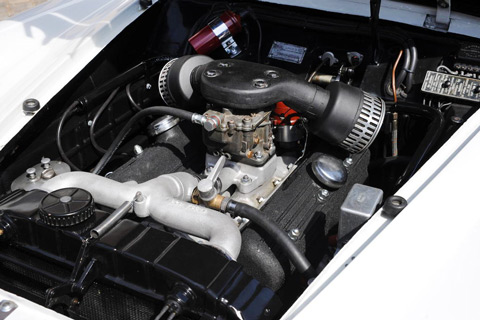
Today, that percentage is likely to be significantly higher. Whether at an independent repair shop or a dealership with a healthy customer base, it’s rare to see a vehicle that requires an old-school emissions test. As a result, many garages have discarded the corresponding testing equipment. In addition to the lack of demand, modern-trained mechanics are no longer accustomed to working with carburetors and are no longer able to interpret the readings or adjust the fuel mixture accordingly. The main reason, however, is that maintaining the equipment itself is no longer cost-effective. Just calibrating the tester—a regulatory requirement performed by a calibration inspector, whose services must be billed according to the fee schedule—can cost up to CHF 1,000 to 1,200 annually, plus travel expenses. With fewer than one car per month, the effort is hardly worth it.

Recently, I drove my Jaguar XJ12 to my trusted service center—a tire specialist with a classic gas station and repair shop, where they offer service work and wheel alignment in addition to tire sales, a trade that’s becoming increasingly rare. That’s exactly why I find things here that are close to my heart. For example, an emissions tester.
Managing Director Wolfgang Sieber of Pneu Schaller in Oberrieden is familiar with the issue. About three cars a month still come into his shop for such an emissions test. It’s only just barely profitable for him. That’s because, as a service center, the Oberrieden location also serves some classic cars, which means it’s rarely just about an emissions test—it often involves additional maintenance and repair work as well. And in the rare cases where a customer still drives an older car, various brand representatives also use the equipment in Oberrieden.

What’s more, this workshop is set up exactly as any dedicated classic car owner would want it to be: you speak directly with the technician working on the car, stand together under the lift, and the exchange of experience and knowledge flows both ways. Or as Sieber emphasizes: “I’m always learning something new through direct contact with customers. The owners’ wealth of experience is immeasurable; it would be a huge mistake not to draw as much from it as possible. I couldn’t even imagine working in a large garage without direct contact!” Sieber also looks after a large car collection belonging to a well-known enthusiast in the Lake Zurich region and knows what he’s talking about—especially when it comes to classic car tires and the special care required for spoked wheels.

The Jaguar passes the emissions test without any intervention whatsoever. Perfectly maintained and properly warmed up, all it takes is to insert the probe into one of the two exhaust pipes. The readings are exactly where the maintenance log specifies. After more than four decades, the catalytic converters are apparently still doing their job. That’s good to know and also suggests that the fuel mixture is being properly regulated. The emissions test certainly has its advantages, no question about it.
That means peace of mind for another two years. But who knows—maybe the emissions test will be abolished in the meantime. There have been discussions about requiring it only once every six years. That wouldn’t help the situation, though: Since most of the affected cars will eventually be classified as classic cars anyway, the test would effectively be required only once every six years—the testing equipment would be used even less frequently, making its operation even more pointless and costly.

Wolfgang Sieber enters the readings into the document, stamps it, and quite rightly remarks that we’ll probably see each other again anyway. And he’s absolutely right, of course, because the Jaguar has also gotten new tires—and at some point, those will need replacing, too. After all, given the minimal tread depth—unlike the uncertain emissions test—it’s guaranteed that everything will stay the same in the future, which is a good thing.