To the engineer ...

“… nothing is impossible,” is Gyro Gearloose's motto. Which, in and of itself, isn't wrong—as long as there's enough time and money. With those resources, engineers can push the boundaries, as Mercedes engineers proved 50 years ago: In 1976, a five-cylinder turbo diesel in the C 111-II D set a world record triple on the Nardò high-speed track: 10,000 kilometers at an average speed of 252 km/h.

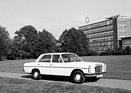
A full 40 years earlier, the Daimler team had already introduced the first production diesel passenger car, the 260 D (W 138)—shortly thereafter, Hanomag followed suit with a record-breaking diesel. The inventor, Rudolf Diesel, probably could never have imagined this.
It was a tragic start for the self-igniting engine, which ran for the first time in 1894: The inventor fell overboard under unexplained circumstances during the crossing to England and was later spotted dead… but never recovered. Nevertheless, the diesel engine went on to enjoy a successful career, especially in ships, locomotives, and heavy-duty vehicles.

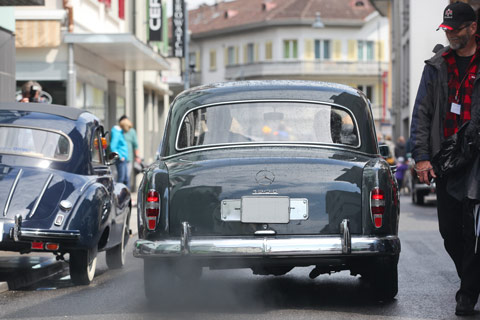
In passenger cars, the “stinker” was long frowned upon, especially in car-loving America. But when more fuel-efficient cars were in demand as a result of the oil crisis, engineers really stepped on the gas. With the turbo diesel, engineers got the sluggish naturally aspirated engines up to speed and made them popular—and with direct injection, diesel engines became torque monsters.
But that was the beginning of the end, because the rapid spread of diesel led just as quickly to its disrepute. First it was too dirty; eventually, it was deemed too toxic. The particulate filter had to be introduced to tackle the fine particulate matter problem, followed by the expensive urea solution to combat nitrogen oxides. All of this was feasible for the engineers, but diesel became increasingly expensive.

Poor air quality is no longer a hot-button issue today, and driving bans are largely a thing of the past. Still, it did the diesel engine no good: the automotive diesel is practically dead. Hybrids are in demand, and the combination of a gasoline engine and an electric motor is currently considered the best compromise between fuel economy, performance, and cleanliness. Diesel is left with only its traditional strongholds in trucks and ships. A tragedy for the art of engineering.