On the road in the Bugatti 32 "Tank"

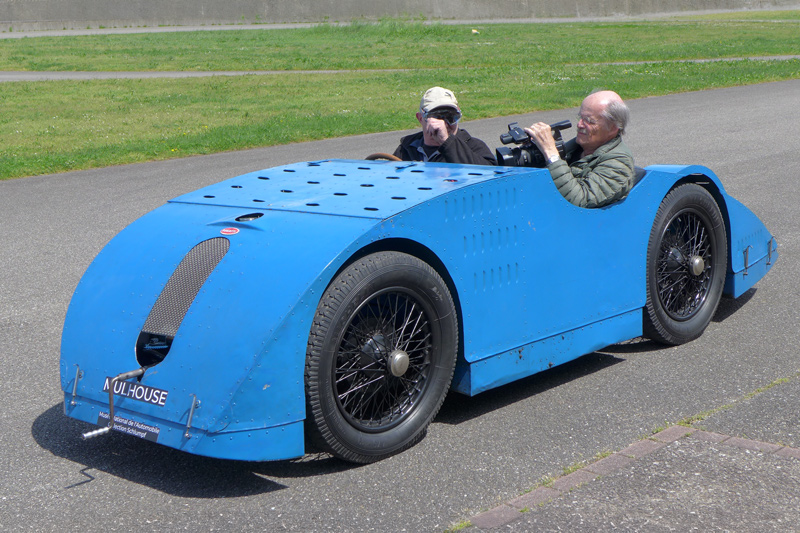
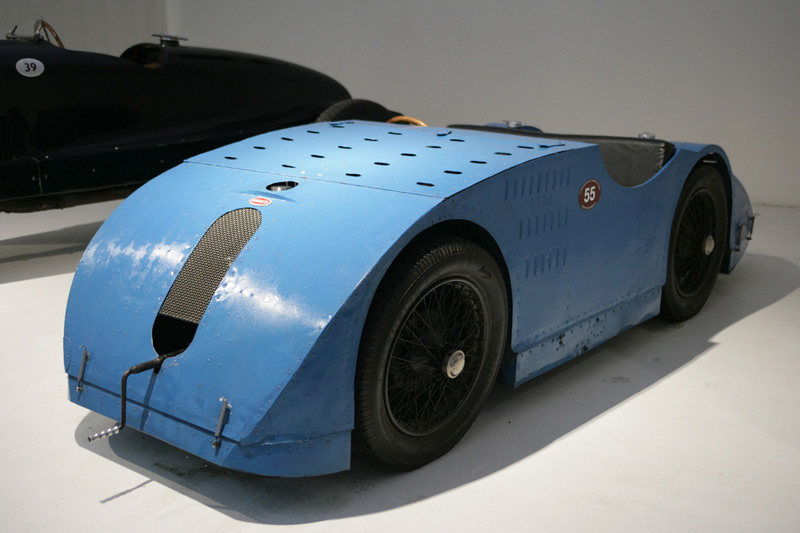
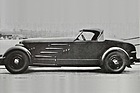
At the 50th Rétromobile Paris , the Pursang company from Argentina exhibited a replica of the legendary Bugatti 32 "Tank". At the same time, the original from the Musée de l'Automobile in Mulhouse was also on display one floor below.
I recently had the opportunity to drive a few laps around the museum's small circuit in the only original Bugatti 32 Tank still in existence. An experience in a class of its own.
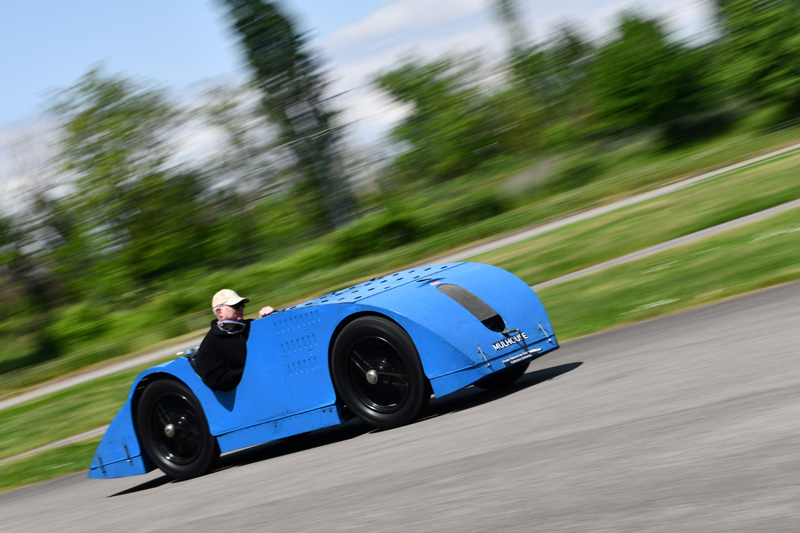
Keyword threading: This word is often used by way of introduction when journalists have the opportunity to track test a racing car from the 1960s onwards. In the case of older racing cars, such as those from the 1920s, the term "getting in" was still used. It would not always have been wrong to get in yourself.
This is quite different to being a passenger in the revolutionary Bugatti 32 from 1923: "getting in" is definitely the right thing to do - and that's not all. You also have to make sure that your right leg doesn't come into contact with the openly rotating drive shaft, but also that you don't get blisters from the very hot exhaust. The best way to do this is to first climb onto the seat over the side of the bodywork, slowly bend your knees, stretch your left leg along the bodywork and then place your right leg over the left. Now you are, so to speak, part of the car, which is only 1.2 meters wide and 3.93 meters long.
Welcome to the mechanic's seat of the Bugatti 32 Tank! And off you go. The mechanical noises are infernal, my whole body vibrates with the vehicle, heavy metal on wheels. The acceleration is quite decent with the approx. 100 hp for 800 kg. The first right-hand bend: hardly any lateral inclination, but it presses you against the bodywork. So far, so good. But now it's time for a left-hand bend. There's nothing to lean against on the right, especially as the drive shaft rotates openly between the front passenger and driver and is also shifted (the gearbox is in front of the rear axle, transaxle).
So you cling to the thin aluminum sheet of the body flank with your left hand and hope that it doesn't give way. In addition, the wind hits you full in the face - there is not even the slightest trace of a wind deflector in front of you - it would be even nicer if the innovative aerodynamics were disturbed in this way (it's just too bad that the driver's upper body and head were not shaped in a wind tunnel). And all this at perhaps 80 km/h, which seems like 160.
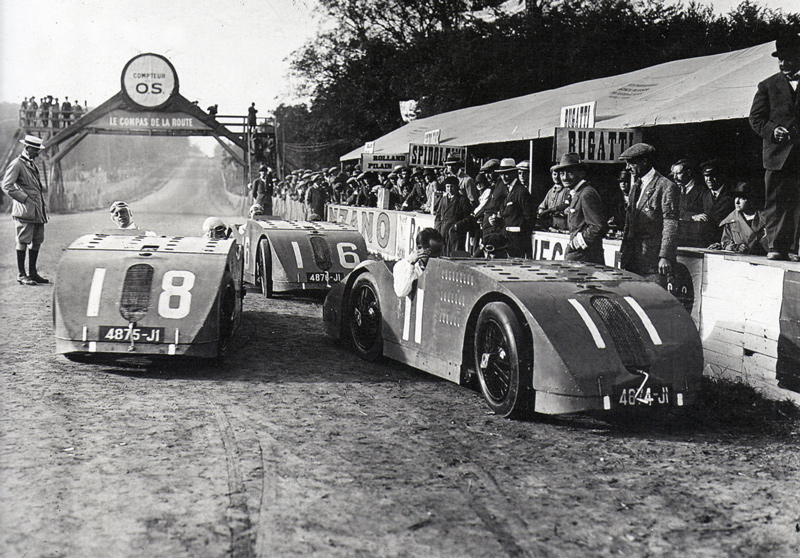
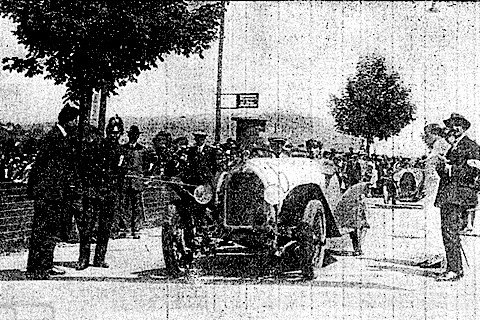
It's hard to imagine what it would have been like on July 2. It's hard to imagine what it must have felt like on July 2, 1923 at the Tours Grand Prix over 35 laps of 22.846 kilometers each, with an average lap speed of 122 km/h: a 6-hour chase over asphalted but very dusty national roads, past endless wooden palisade fences, past the large grandstands and the pits on the start and finish straight.
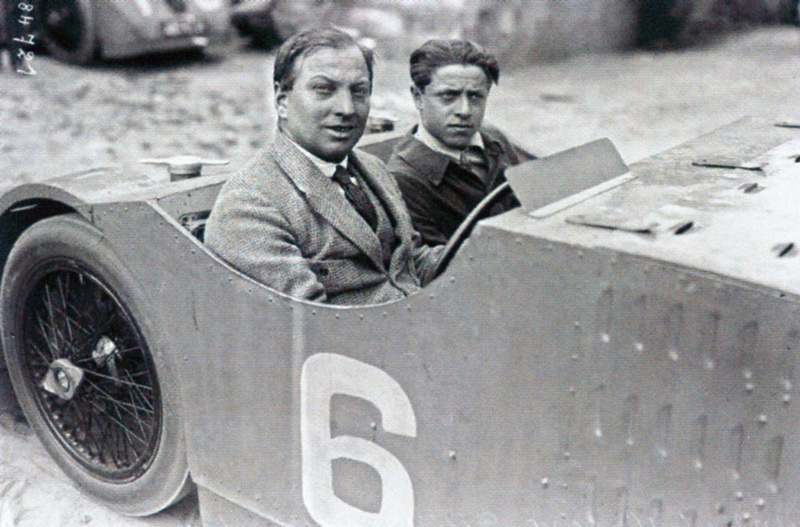
Now it's time to brake again for the tight Membrolle bend, turn the car around and maintain momentum for the following climb. And don't forget: You're not sitting in the next seat for pleasure, there's a job to do! You are responsible for keeping the fuel and oil pressure in the green zone ...
Wait, we're not in Tours but in Mulhouse, on the museum circuit.
The ride is coming to an end. Slightly dazed, I unthread myself from the aluminum body and am one automotive adventure richer. A "Grand merci" goes to your chauffeur from the museum's restoration team, who made this unforgettable experience possible.