DKW Front 1931 to 1939 – front-wheel drive and (almost) self-supporting wooden body


You have only
1 out of 49
images seen in high resolution




Summary
DKW - aren't they those cute Volkswagen competitors that helped shape the Swiss street scene in the 1950s and early 1960s with their characteristic two-stroke noise and subtle oil plume? Yes, exactly - and they have an interesting pre-war history.
This article contains the following chapters
- Prehistory
- The saving front-wheel drive
- Ice racing instead of a salon: when DKW almost beat Bugatti
Estimated reading time: 6min
Preview (beginning of the article)
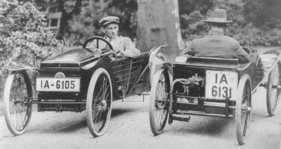
DKW - aren't they those cute Volkswagen competitors that helped shape the Swiss street scene in the 1950s and early 1960s with their characteristic two-stroke noise and subtle oil plume? Yes, exactly - and they have an interesting pre-war history. The DKW two-stroke engine was originally based on a 0.1 hp toy engine designed by engineer Ruppe and launched in 1919. It became known under the effective advertising name "Des Knaben Wunder", a popular derivation of the company name DKW, which had previously been created when the company - founded in 1902 by the Danish engineer Rasmussen in Chemnitz - briefly built steam-powered cars (DKW). Ruppe then built a larger version of the engine with 122 cm3 and one horsepower, which Rasmussen mounted on the luggage rack of a bicycle as an auxiliary engine.
Continue reading this article for free?
Images of this article


_RM.jpg)